
Miguel Marquez: Typographic Installations on Sydney’s Discarded Objects
How Miguel Marquez (Michael Pederson) turns abandoned carts, furniture, and street junk into wry adhesive-letter installations about waste and attention.
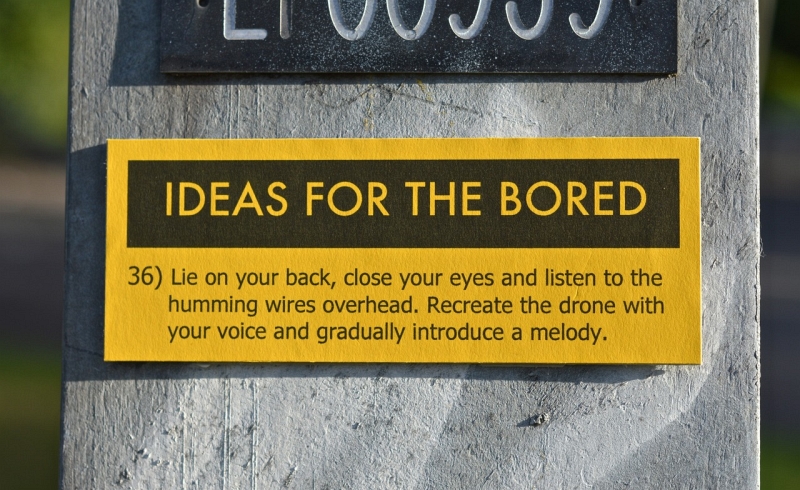
On the streets of Sydney, litter and lost furniture usually read as failure: someone abandoned a cart, a couch, a television, and walked away. Australian street artist Miguel Marquez—the public name used by Michael Pederson—treats those leftovers as stages. With self-adhesive letters, he attaches short, ironic, and sometimes tender phrases to objects already sitting in public view. The materials are cheap. The placement is temporary. The effect is sharper than most murals because it hijacks what people already notice and refuse to look at.
This body of work, often documented under the banner Miguel Marquez Outside, belongs to a wider practice of small urban interventions: text that looks almost official, humor that arrives without paint bombs, and a quiet argument about what the city discards. In the mid-2010s, when galleries and blogs circulated these photographs widely, the project felt like both street art and environmental nudge—proof that pollution awareness does not need a billboard if the trash itself can speak.
Why discarded objects make strong canvases
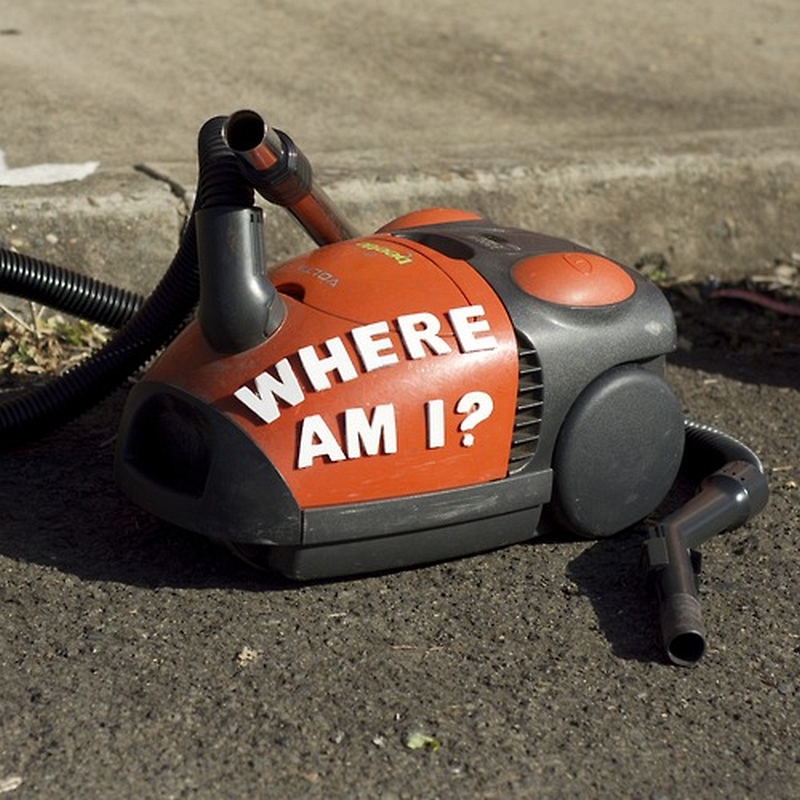
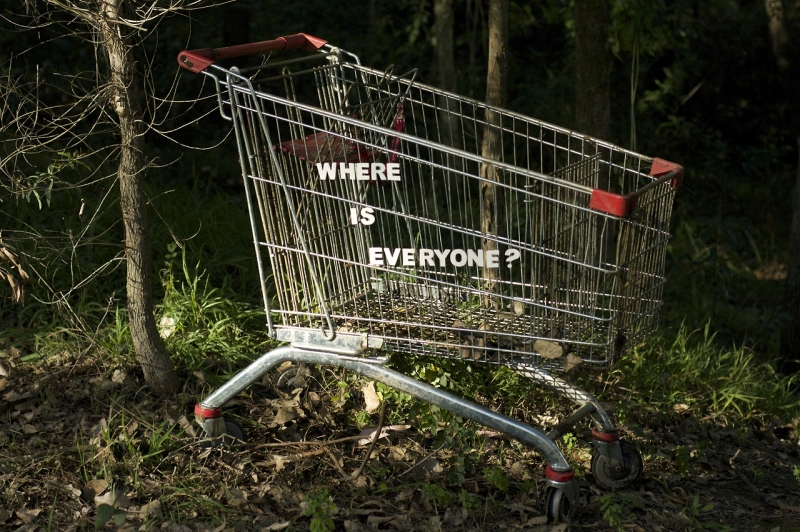
A blank wall asks for spectacle. A shopping cart already carries social meaning. Pederson’s typographic installs lean on that meaning. An abandoned trolley is not neutral; it signals neglect, retail overflow, or a night gone wrong. Add a line of lettering that asks where everyone went, and the cart stops being anonymous scrap. It becomes a character with a complaint.
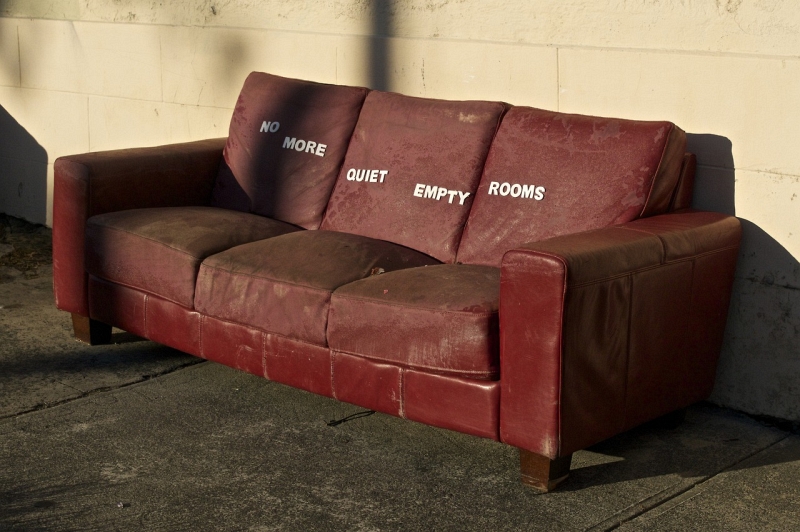
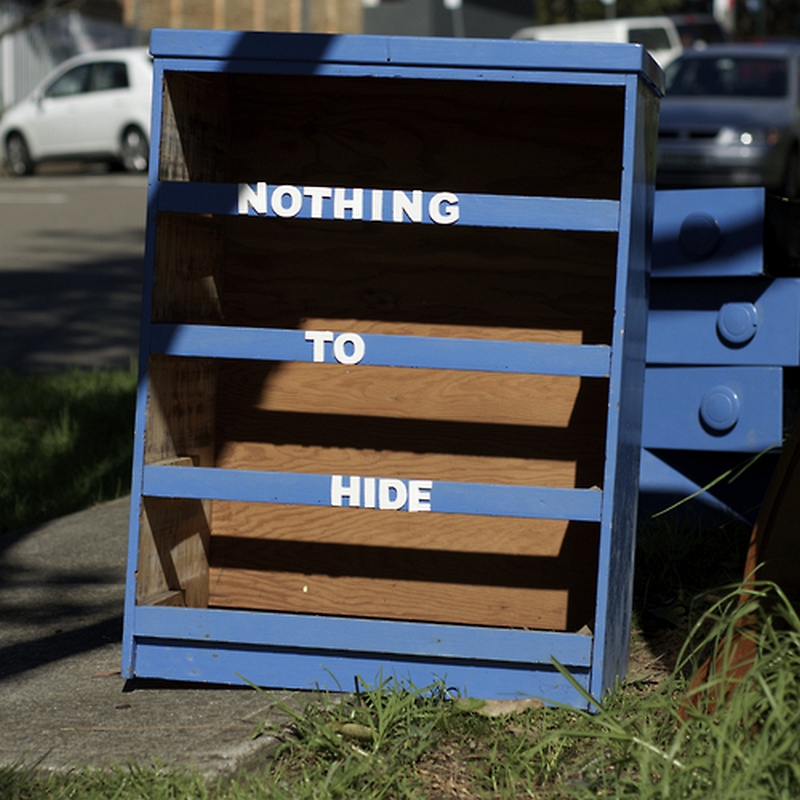
The same logic applies to sofas left on the curb, televisions with cracked screens, and household junk that cities tolerate until collection day. These objects are already performing in the street. Typography only gives them lines. Because the letters are adhesive rather than spray paint, the work reads as temporary and non-destructive—closer to a note taped to a fridge than to a permanent claim on architecture. That restraint matters. Pedestrians often mistook the pieces for real municipal signage before the joke landed.
The environmental message is folded into the comedy. Litter is usually framed as a moral failure of “someone else.” When the litter talks back—wistful, sarcastic, lonely—viewers become partners in a dialogue the artist starts and then leaves behind. The goal is less a lecture than a pause: why is this here, and what does it say about how we treat the shared street?
Working with refuse also flips the usual street-art economy of attention. Instead of competing with billboards for scale, Pederson competes with invisibility. The objects were already there; the letters make looking unavoidable for a second. That second is the artwork’s real medium.
Typography as street theater
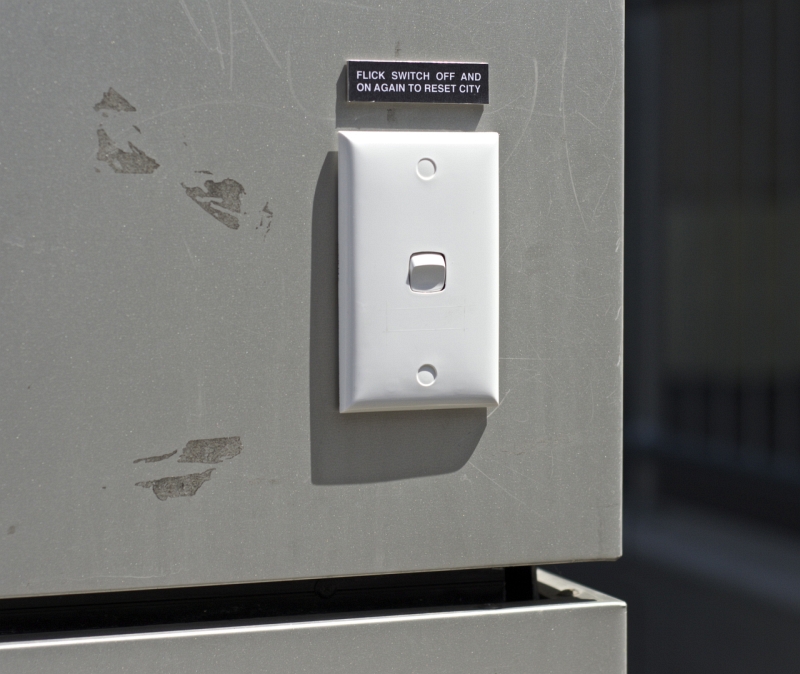
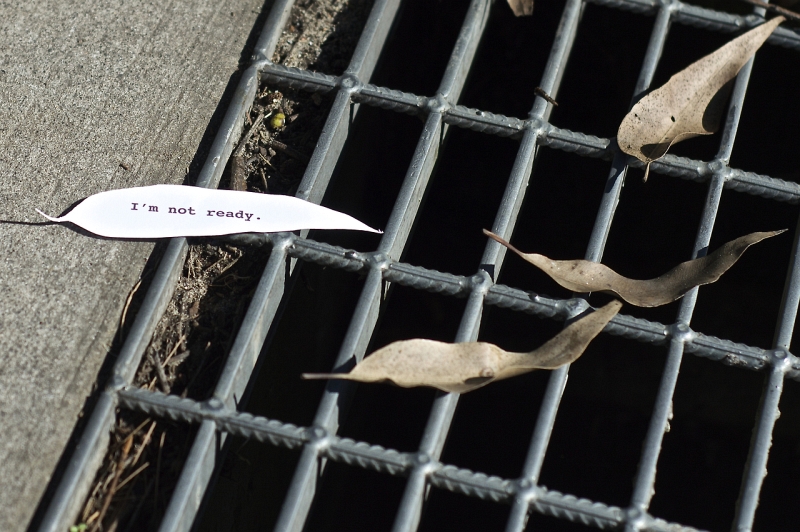
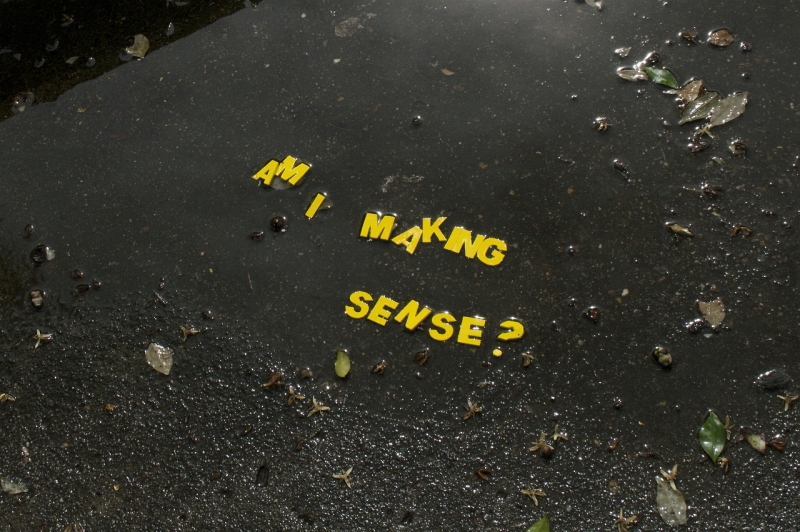
Pederson’s lettering is not calligraphic flourish. It is plain, readable, and often arranged to mimic the authority of public notices. That official tone is half the joke. When language that sounds like a rule appears on something that should not be there, the mismatch does the work. Viewers slow down because the form of the text promises information, while the content delivers feeling or absurdity.
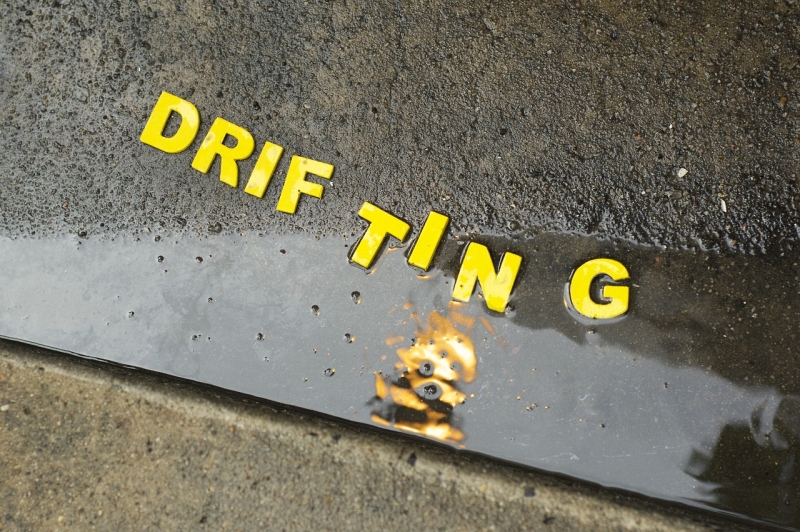
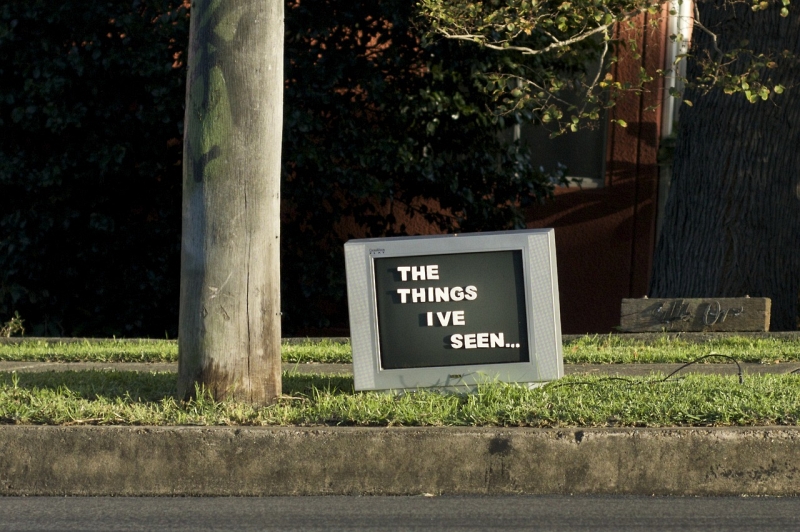
Short phrases matter more than essays. Street viewers have seconds, not gallery minutes. A line that sounds like a confession from a discarded TV—“the things I’ve seen…”—or a couch mourning quiet empty rooms works because it is specific enough to stick and open enough to invite projection. The object supplies biography; the letters supply voice.
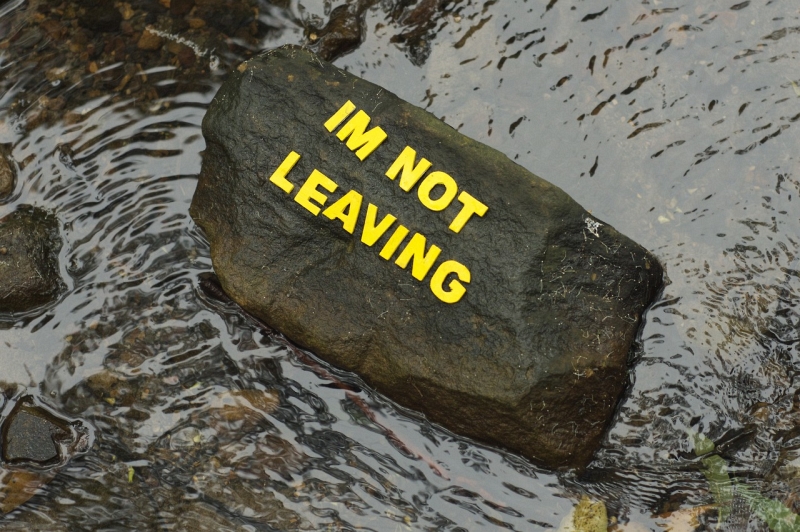
Context is everything. A phrase that would be cute on a gallery label becomes cutting when glued to a rain-soaked mattress. Pederson’s practice depends on walking, looking, and choosing sites where the city’s leftover inventory already tells a story. The artist does not invent the mess. He edits it with language.
There is craft in the install itself: spacing letters so they read from a few steps away, choosing a surface clean enough for adhesive to hold, and leaving the piece without a signature that would turn the object into branded merchandise. Anonymity keeps the fiction intact. If the cart is speaking, you should not immediately hear the artist clearing his throat.
Pollution awareness without the sermon
Environmental campaigns often fail because they scold. These installs sidestep that tone. They do not demand recycling bins in neon type. They make the waste personal and slightly ridiculous, which is a more durable way to lodge an idea. If a cart can ask where its people went, the viewer may also ask where responsibility went.
Sydney’s sidewalks, laneways, and curb strips become an informal exhibition space. The audience is not ticketed; it is anyone walking to work. That democratic distribution is part of the politics. Art about pollution that only lives inside climate conferences never meets the cigarette butt it is arguing about. Pederson’s pieces meet the butt, the couch, and the cart where they already rest.
There is also an ethical quietness to adhesive letters. They do not scar brick. They do not claim ownership of a wall. They ride the life cycle of the object: when the junk is collected, the artwork leaves with it. Ephemerality is not a flaw; it is the correct medium for a subject about things we throw away.
Photography then extends the lifespan. The street piece may last a day; the image travels for years. That split—temporary object, durable document—is common in interventionist art, and it explains why this gallery still feels immediate: you are looking at encounters that were designed to vanish.
How to look at these photographs
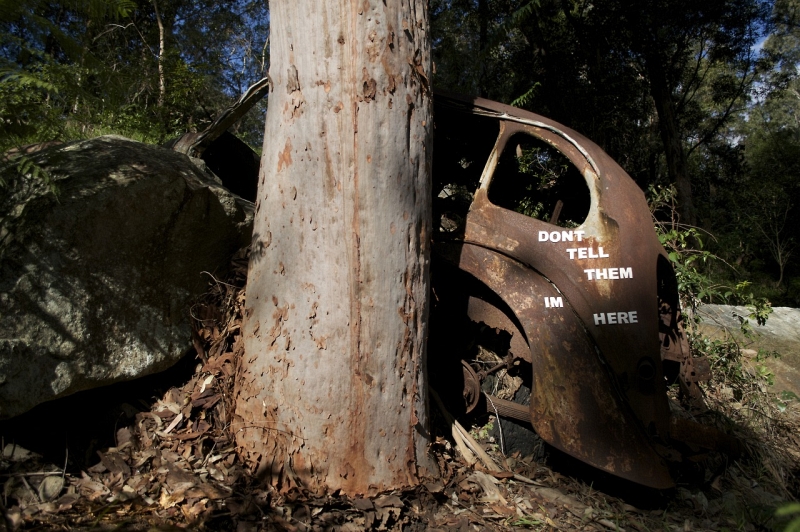
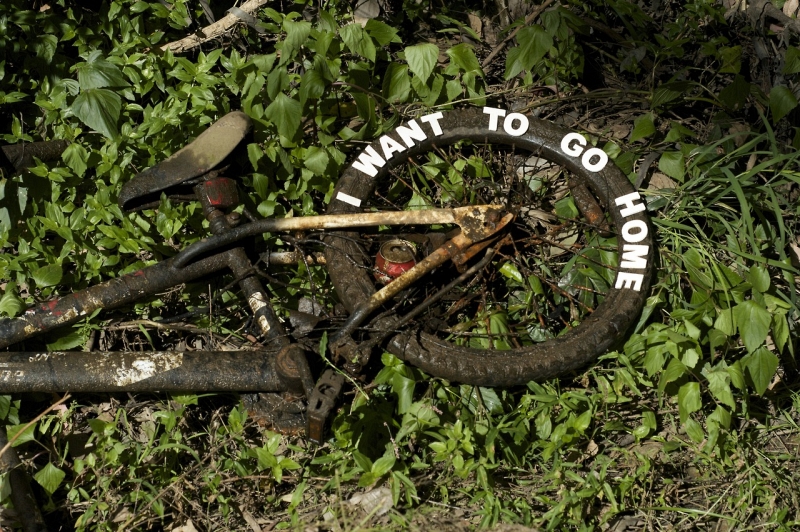
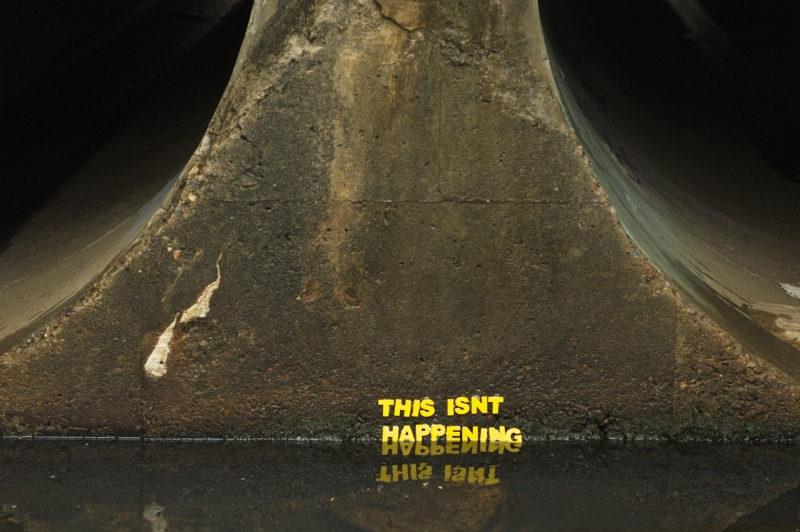
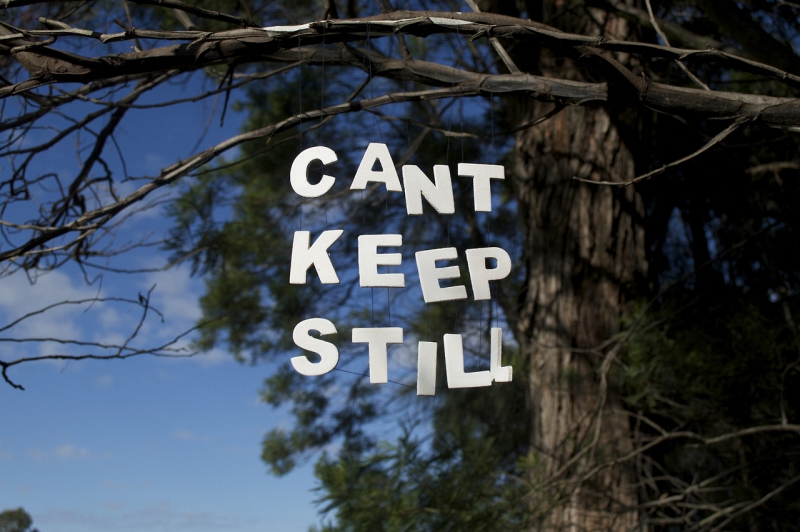
The images in this gallery are documents of encounters, not studio setups. Read each frame for three layers: the object’s original function, its current state of abandonment, and the sentence forced onto its surface. The best pieces balance those layers so none of them feel decorative. If the lettering were removed, the object would still look sad or comic; if the object were replaced by a clean blank board, the phrase would lose half its sting.
Notice scale. Many of Pederson’s interventions are small enough to miss if you are rushing. The photographs often frame the work tightly so the joke survives the screen, but on the street the pleasure was discovery—catching a line of text where you expected only junk. That hide-and-seek quality connects this series to Pederson’s later miniature urban inventions, which continued the same habit of planting quiet surprises in ordinary Sydney corners.
Also notice tone. The work can be wry without being cruel. Discarded objects already carry stigma; adding language could easily tip into mockery of poverty or mess. The stronger pieces sound like the objects speaking for themselves, not like a clever outsider dunking on other people’s trash. When you browse the gallery, ask which pieces feel empathetic and which feel merely snarky—that difference is where the ethics of the project live.
What the project still teaches
Street art does not have to dominate a facade to change how a block feels. A handful of letters on a cart can recalibrate attention more efficiently than a mural that announces itself from a block away. For designers and writers, the lesson is economy: choose a charged host, keep the copy short, and trust the audience to complete the meaning.
For anyone thinking about waste, the lesson is visibility. Pollution is not only a distant landfill problem; it is a daily street texture we normalize until something—humor, language, a photograph—makes it strange again. Miguel Marquez’s discarded-object texts do that work without asking viewers to sign a petition first. They ask for a double take. That is often where better habits start.
If you walk your own city looking for similar leftovers, ask what a single honest sentence would sound like coming from that object—not as vandalism, but as a way to see the sidewalk as a conversation already in progress. The gallery below and beside this text is a record of how one Sydney artist answered that question with adhesive letters and a willingness to leave the punchline in public.

Comments
Continue reading
Still-Life Photography by Margareth Perfoncio
São Paulo photographer Margareth Perfoncio’s still lifes of food and flowers—Old Master light, dark wood, and tables that feel inevitable.

Meaningful Love Quotes for Inspiration (and Ink)
Meaningful love quotes that still feel true — short lines for tattoos, gifts, and everyday reminders, with placement and wording tips.
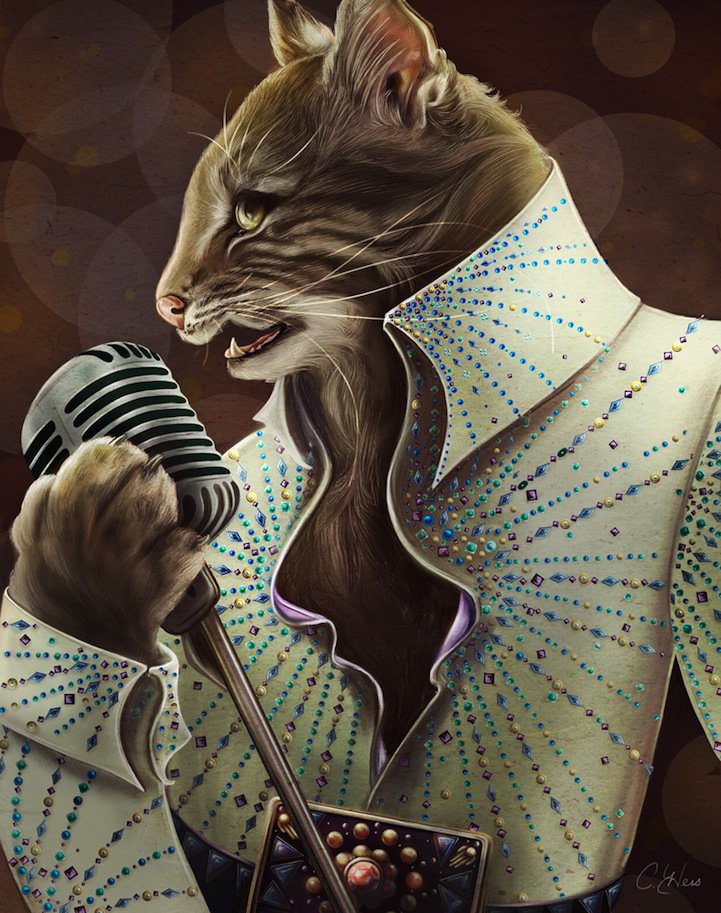
Christina Hess’s Animals From History: Costumed Pets as Playful Portraits
Illustrator Christina Hess reimagines historical icons as ornate animal portraits—Elvis Petme and friends—mixing puns, costume detail, and soft history lessons.