
Christina Hendricks for Flare Magazine, May 2013
Period context for Christina Hendricks’s Flare May 2013 cover—Max Abadian’s shoot, Stella McCartney citrus, and her quotes on floristry, pencil skirts, and rejection.
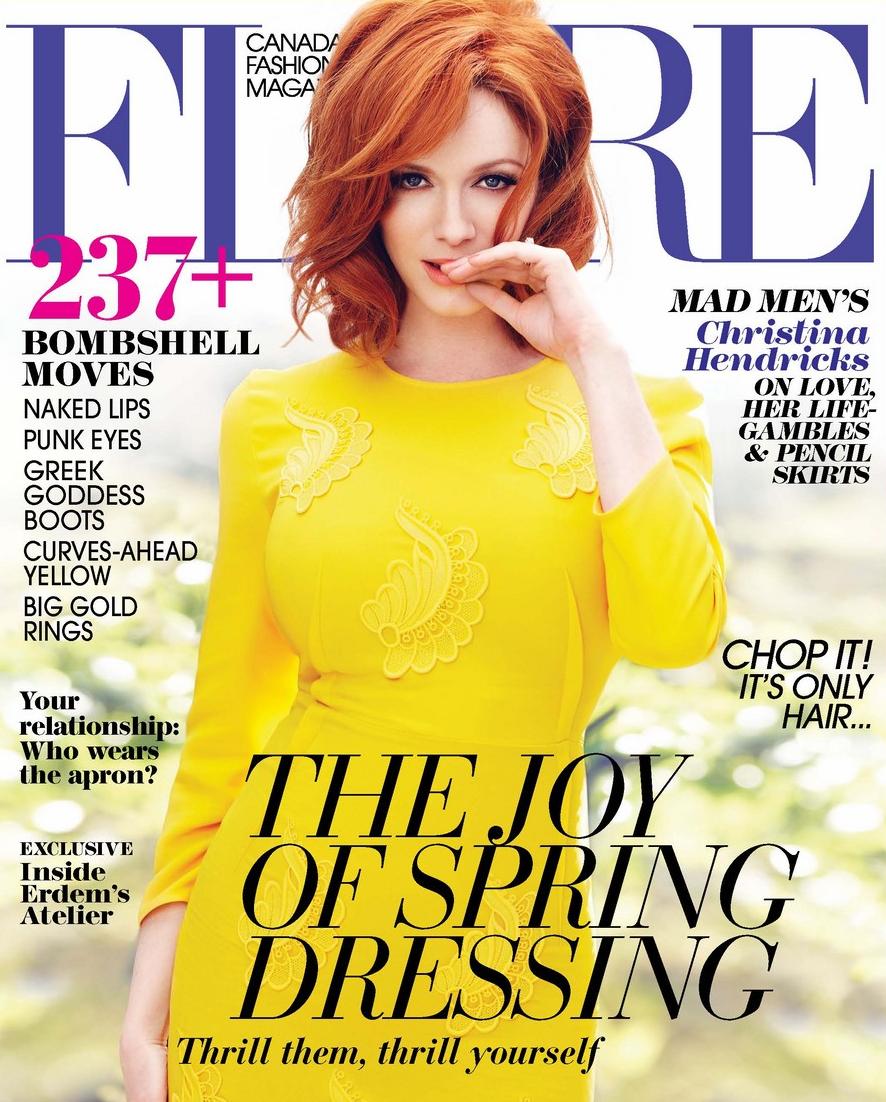
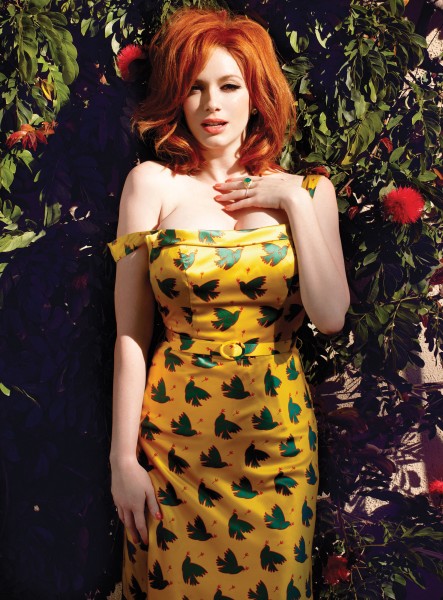
In early April 2013, Canadian fashion magazine Flare put Christina Hendricks on its May cover in a citrus Stella McCartney sheath and released a Max Abadian pictorial that entertainment and style sites treated as spring newsstand bait. The timing was deliberate. Mad Men was heading into its sixth season. Hendricks—already inseparable from Joan Harris’s red hair, pencil skirts, and office authority—was using magazine pages to talk about more than television glamour: floristry dreams, Hollywood rejection, and the clothes she had learned to love off-set.
Read the package as a 2013 editorial event, not as a later career retrospective. The photographs sell colour and silhouette. The interview, as quoted across contemporary coverage, sells a working actress’s practical philosophy about casting, confidence, and what she wanted to do with her hands when cameras were not rolling.
Why Flare wanted her that spring
By May 2013, Hendricks was one of prestige television’s most recognisable faces. Joan’s wardrobe had already influenced how fashion media talked about curves, vintage tailoring, and the politics of being looked at in a workplace drama. Flare, a Canadian title with a fashion-first remit, needed a cover subject who could carry both seasonal colour and a conversation about craft. Hendricks supplied both: flame-red hair against a sunny Stella McCartney dress, and interview answers that refused to treat fame as uncomplicated triumph.
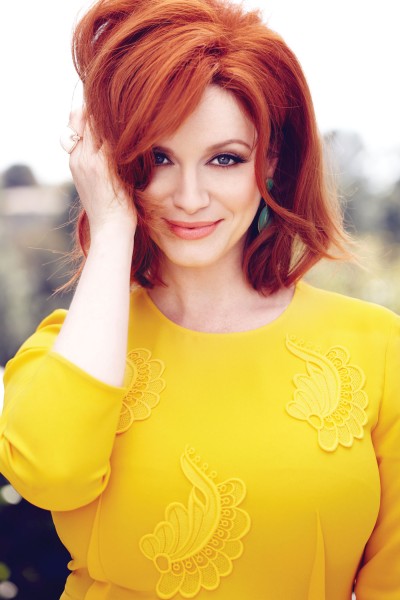
Period reports named photographer Max Abadian and stylist Lawren Sample as the creative leads. The cover choice—a bright, citrus-hued Stella McCartney piece from the designer’s spring 2013 collection—was widely singled out by outlets such as The Hollywood Reporter precisely because it flipped the expected palette. Instead of defaulting to jewel tones that echo Joan’s wardrobe, the magazine pushed yellow-orange heat against redhead contrast. Fashion blogs treated the juxtaposition as the point: spring magazine logic, not period-drama cosplay.
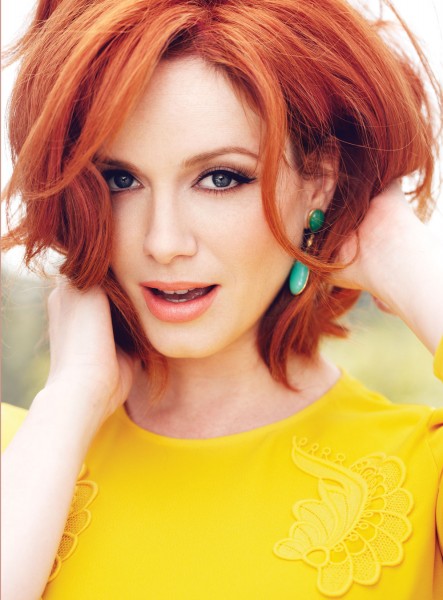
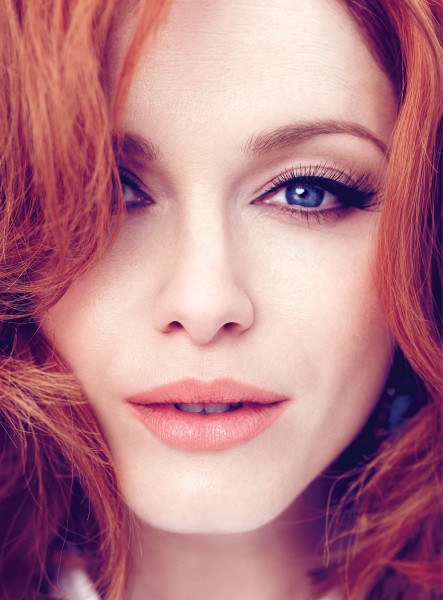
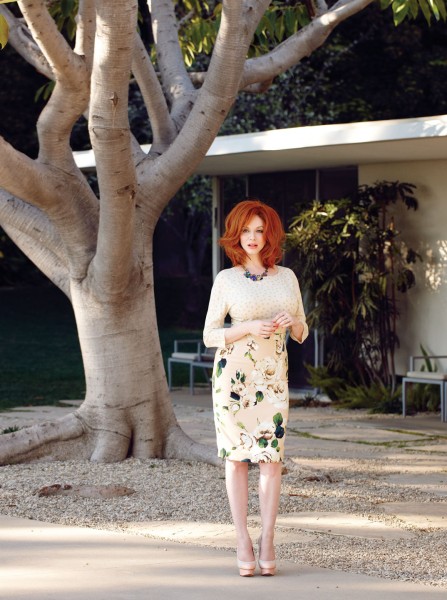
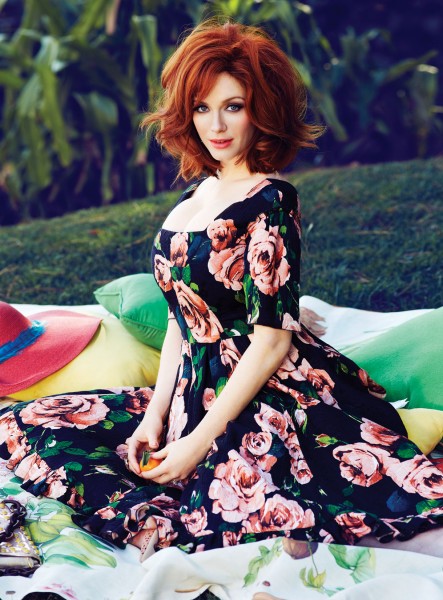
Inside the shoot, coverage described a broader celebration of spring dressing—florals, pin-up silhouettes, bright colour, patterned fabrics—with big hair, smoky eye, soft lip, and turquoise jewellery accents appearing across the gallery. Whether individual frames leaned more Hollywood pin-up or fashion editorial, the commercial intent was clear. Flare wanted a cover that stopped thumbs on phones and racks alike while Hendricks’s sixth-season visibility was peaking.
The florist story that traveled farthest
Of all the lines from the Flare interview, the floristry anecdote circulated widest. Hendricks told the magazine she had always wanted to be a florist—because, unless you are buying flowers for a funeral, people walk into a flower shop for a pretty happy reason. After the first season of Mad Men, during the long wait before the series returned (Matthew Weiner finishing The Sopranos), she actually took a job in a florist’s shop.
“I always wanted to be a florist,” she said. “In fact after the first season of Mad Men, I worked at a florist. We had to wait a year to shoot because Matthew Weiner was finishing The Sopranos. And all these actors that I’d worked with would come in and say, ‘Oh… Everything OK’ And I said ‘No! I’ve just always wanted to work at a florist.’ And they would say, ‘OK, can you help me pick out a bouquet?’ And I’d be like, ‘I’ll make you one!’ I’ve always been pretty good at it.”
She named peonies and delphiniums among favorites and described preferring garden-style arrangements—less formal, sometimes with a berry, “an English-garden kind of situation.” The story worked in 2013 media because it humanised a performer the culture often reduced to silhouette. It also fitted Flare’s spring mood: flowers as both metaphor and literal side hustle. For readers years later, it remains the cleanest period detail from the feature—specific, funny, and tied to the show’s early production calendar rather than vague celebrity hobbies.
Pencil skirts, confidence, and Joan’s afterlife
Fashion coverage of the Flare package inevitably circled back to Joan. Hendricks told the magazine that playing the character had taught her more confidence and trust in her own decisions—and, more concretely, about pencil skirts. She said she now had “like, 75” of them, and wondered why she had not known about the skirt before. The line was perfect magazine copy: wardrobe as character education that spilled into real closets.
That detail mattered in 2013 because Mad Men was still mid-run cultural furniture. Viewers were not looking at Joan as a finished icon; they were watching her negotiate power season by season. Hendricks’s off-screen affection for the silhouette blurred character and performer in a way fashion titles love. The Flare pictures, with their spring florals and saturated colour, were not recreating Sterling Cooper offices. They were showing what a modern cover subject who had absorbed Joan’s lessons about presence might look like under studio light.
What she said about rejection
The interview also carried a blunt professional realism that entertainment sites repeated alongside the florist quotes. On auditioning, Hendricks said she had been rejected “a million times,” and that she was used to it. “You’re either right for it or you’re not right for it. You could leave thinking you had the best audition in the world and they say you don’t look like the person I imagined. It has nothing to do with your talent. Someone could have just broken up with a redhead the other day and not want to hire me.”
Those sentences are useful period evidence because they refuse both self-pity and motivational-poster vagueness. Casting, in her framing, is fit and fantasy as much as merit. For a cover package built on beauty and glamour, the remark kept the industrial facts of acting visible. Magazines of the era often printed that mixture without resolving it: desire on the cover, work talk inside.
Film roles around the May 2013 issue
Flare’s timing overlapped with Hendricks’s push beyond television. Contemporary reports around the cover noted her work with Elle Fanning in Sally Potter’s Ginger & Rosa, and upcoming projects that positioned her for larger film leads—including Ryan Gosling’s then-forthcoming directorial feature (widely discussed at the time under the working title How to Catch a Monster). In quotes circulated with the Flare package, she spoke candidly about feeling intimidated when Gosling asked her to join: of course yes, but also “why me?” and a fear of disappointing him. She described being involved in casting and costume conversations and called it the largest role she had taken to that point.
That career frame keeps the May 2013 cover honest. It was not a random beauty portrait. It was a visibility spike for an actress mid-Mad Men and mid-transition, sold through colour photography and interview soundbites about craft, clothes, and the odd side job that made co-stars ask if she was all right.
She also told Flare she still lived a relatively normal public life—able to take out the garbage, walk down the street, eat ramen—without the siege paparazzi culture attached to some A-list peers. Whether readers found that modest or strategic, it fitted the feature’s tone: glamour with a claim to ordinary hours.
How to read the gallery now
For anyone searching the shoot years later, keep the calendar fixed. May 2013 Flare. Photographer Max Abadian. Stylist Lawren Sample. Stella McCartney citrus on the cover. Quotes about floristry, pencil skirts, and audition rejection. Sixth-season Mad Men in the background. Film work expanding beside television fame. Nothing after that timeline needs to be imported for the page to make sense.
The lasting image from the package is still the simplest one: Hendricks in spring colour, red hair against yellow-orange fabric, looking less like a costume recreation of Joan and more like a working actress enjoying a magazine’s seasonal brief. If one spoken detail organises the rest, it is the florist shop story—proof that even at the height of a defining role, she preferred to explain herself with peonies, delphiniums, and a bouquet made for a startled co-star.

Comments
Continue reading
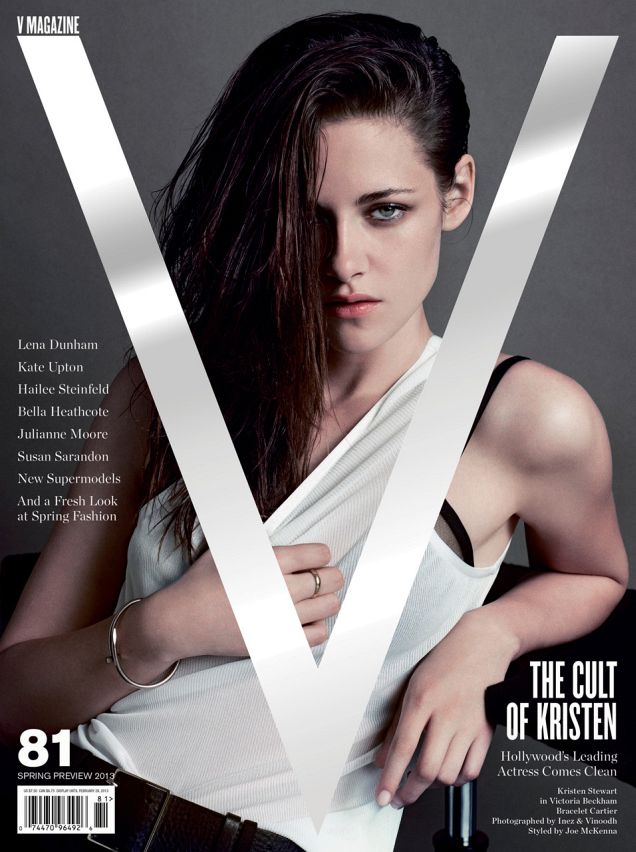
Kristen Stewart for V Magazine, Spring Preview 2013
V81’s Wild at Heart cover story—Kristen Stewart shot by Inez & Vinoodh, styled by Joe McKenna, in pale minimal spring glamour.
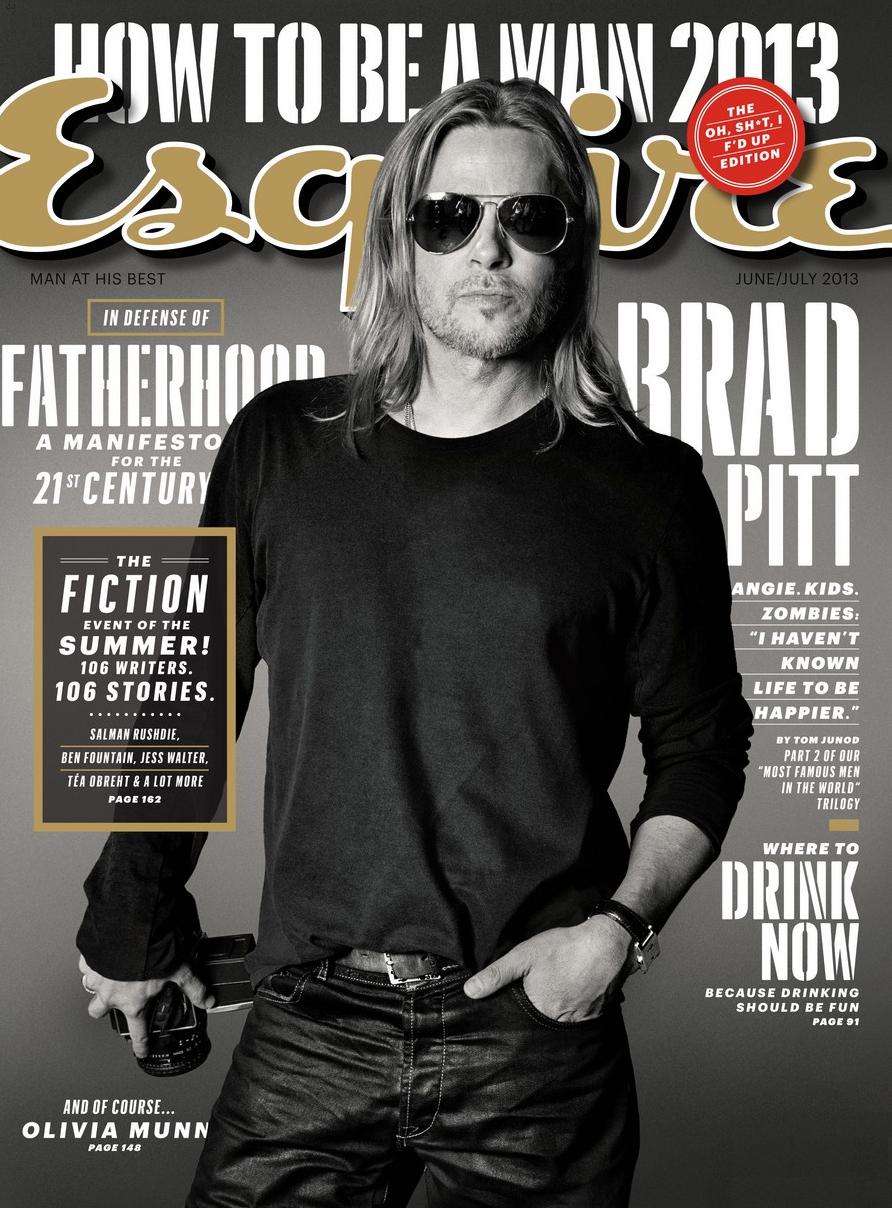
Brad Pitt for Esquire US, June/July 2013
Max Vadukul’s monochrome Esquire cover portraits—camera prop, aviators, Tom Junod’s “A Life So Large” summer 2013 package.
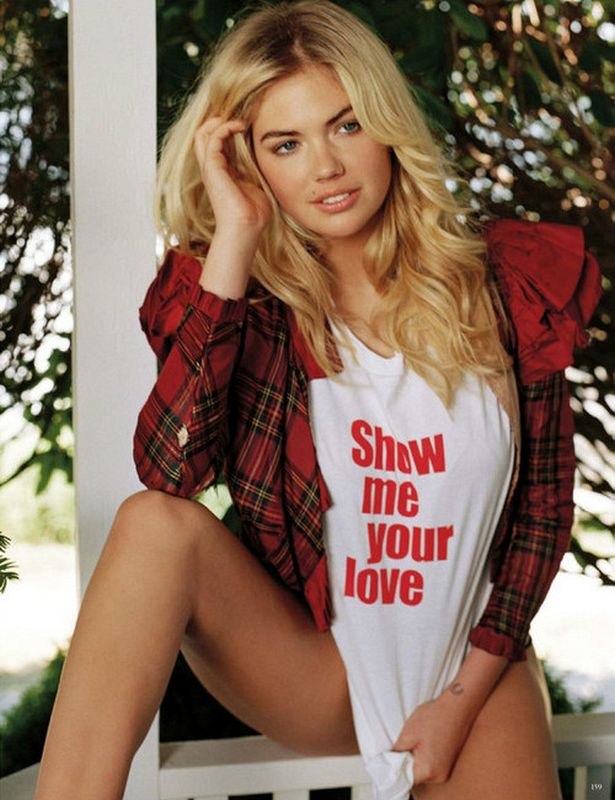
Kate Upton for Vogue Germany January 2013: Bruce Weber
Bruce Weber and Anne Christensen’s January 2013 Vogue Germany feature—outdoor European wardrobe romance, from Ackermann to Eres.