
How to Choose an Air Conditioning System: Capacity, Layout, Efficiency
A practical buyer’s guide to packaged vs split systems, correct sizing, placement, efficiency ratings, and installer checks—without contractor hard sell.

Choosing an air conditioning system is less about chasing a brand slogan and more about matching three stubborn facts: the size and layout of your rooms, the climate you actually live in, and the installer who will size, place, and commission the equipment. Get those right and repairs become rarer. Get them wrong and you pay twice—once for hardware that never quite fits, and again for energy and service calls that follow.
This guide stays with practical buyer criteria. It does not recommend a particular Melbourne contractor or product line. Use it as a checklist before quotes arrive.
Start with the job, not the catalogue
Before you compare outdoor units, write down what the system must do. Whole-house cooling through existing ducts is a different project from cooling one sun-struck bedroom. A small commercial suite with long opening hours has different runtime and noise constraints from a quiet apartment. Note ceiling heights, west-facing glass, kitchen heat loads, attic insulation quality, and whether you already have a furnace or duct network.
Those notes become the brief you hand to any licensed installer. Vague briefs produce vague quotes. Specific briefs make it harder for a salesperson to upsell capacity you do not need—or undersize a system that will run flat-out all summer.
Packaged versus split: what the labels mean
For central air, buyers commonly face two architectures.
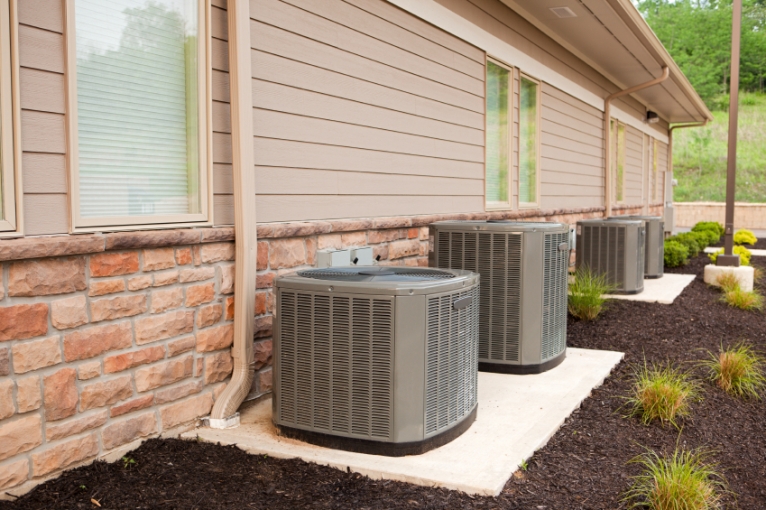
Packaged unit. Compressor, condenser, and evaporator sit together in one outdoor cabinet, often on a roof curb or a ground slab beside the building. Packaged equipment can suit homes and small commercial spaces where keeping major components outside simplifies indoor plant rooms. Convenience and footprint are the usual arguments in its favor. Access for service, structural support for roof mounts, and weather exposure are the practical questions to ask.
Split-system unit. The evaporator lives indoors; the compressor and condenser sit outdoors in a separate cabinet. Splits are a frequent choice when a home already has heating plant but no cooling, or when you want indoor equipment quieter and sheltered. Refrigerant lines and electrical runs between cabinets must be planned carefully; shortcuts here show up later as efficiency losses and service headaches.
Neither layout is universally “better.” Match layout to building fabric, available outdoor space, noise neighbors, and how service technicians will reach filters, coils, and drains.
Capacity: undersize and oversize both fail
An undersized system never catches up on the hottest afternoons. An oversized system cools too quickly, short-cycles, and may leave humidity high while wasting electricity and stressing the compressor. Correct capacity is calculated from heat gain—not from a rule of thumb based only on floor area.
Ask any quoting contractor to show the assumptions behind the tonnage or kilowatt rating: insulation levels, window performance, orientation, occupancy, and duct leakage allowances. If two quotes differ wildly on size for the same house, treat that as a red flag, not a bargain opportunity. Push for explanation before you push for discount.
Placement and airflow are part of the product
Hardware alone does not cool a building; airflow does. Outdoor cabinets need clear intake and discharge paths—no dense landscaping, stored timber, or debris packed against fins. Indoor supply and return paths need the same respect: furniture, curtains, and closed doors can sabotage a well-chosen unit.
During design, walk the proposed outdoor location at the hottest time of day. Ask about vibration pads, condensate drainage, and how far fan noise will travel toward bedrooms or neighbors. Inside, confirm that vents serve the rooms you actually occupy, not only the rooms that were easy to duct twenty years ago.
Efficiency ratings without the marketing fog
Seasonal efficiency labels—commonly discussed as SEER or local equivalents depending on market and era—exist so you can compare running cost potential, not so you can collect badges. Higher efficiency usually costs more at purchase and can repay that premium if you run the system hard through long cooling seasons. In mild climates with short summers, the payback math changes.
Compare like with like: same capacity class, similar features, and realistic runtime. A high rating on a poorly installed, leaky-duct system will not save you. Installation quality and duct sealing often move the bill as much as the nameplate rating.
Noise, maintenance, and controls
Noise matters once the novelty of cold air fades. Ask for sound data on outdoor units and for indoor fan settings that can run quietly at night. Maintenance access matters every season: filters you can reach, coils that can be cleaned, drains that will not silently overflow into a ceiling cavity.
Controls should match how you live. Simple programmable thermostats still outperform expensive “smart” interfaces that nobody in the household understands. Zoning helps large or multi-level homes if dampers and controls are commissioned properly; poorly set zoning creates hot and cold rooms and endless finger-pointing.
How to choose the people who install it
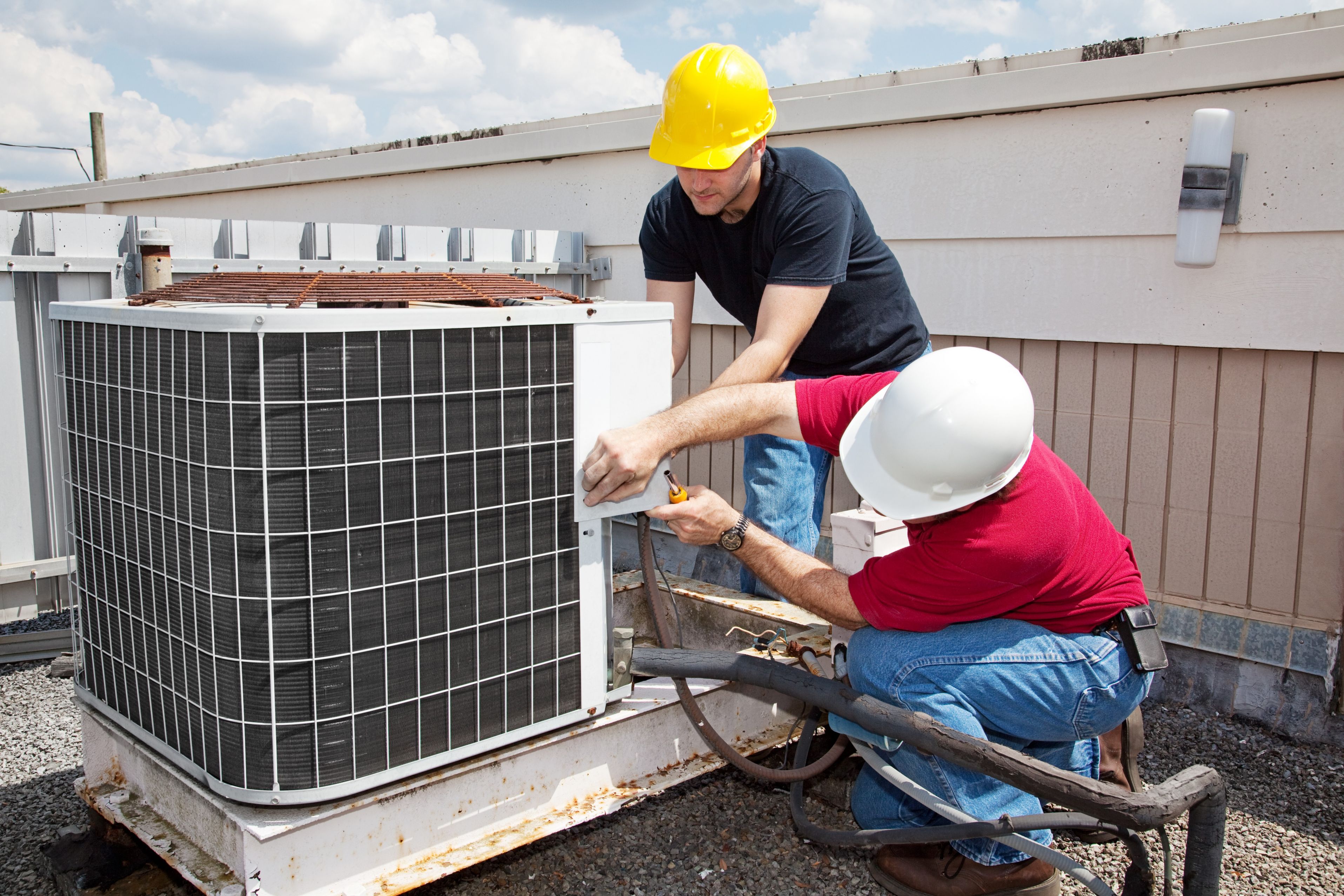
Licensing, insurance, and relevant air-conditioning experience beat glossy brochures. Ask who will do the load calculation, who will braze and evacuate refrigerant lines, and who will return for commissioning checks. Read recent reviews for patterns—missed appointments, unexplained extras, or praise for tidy work and clear explanations.
Get written scope: equipment model numbers, warranty terms for parts and labor, duct modifications, electrical upgrades, condensate provisions, and what happens if asbestos, inadequate circuit capacity, or rotten timber appears mid-job. Fixed prices with clear exclusions are easier to compare than optimistic ballpark figures.
A short decision checklist
- Define rooms, occupancy, and problem heat loads in writing.
- Decide whether packaged or split architecture fits the building.
- Insist on a capacity rationale, not a square-metre guess.
- Inspect outdoor and indoor airflow clearances before signing.
- Compare seasonal efficiency against your real climate and runtime.
- Weigh noise, filter access, and control simplicity.
- Hire licensed, insured installers with comparable written scopes.
When two options still feel close, prefer the quote that explains trade-offs in plain language over the one that only promises the coldest air at the lowest headline price. Comfort is a system result. Choose the system—and the team—as if you will still be living with both in five summers’ time.

Comments
Continue reading

Funny Animal Signs That Warn People (While Animals Ignore Them)
From a seagull on a no-birds disc to classic zoo and park ironies—why animal warning signs get funny, and what the rules are still for.

How to Find Local Amenities on Vacation: Mechanics, Haircuts & More
Locate trustworthy local services and everyday spots while traveling or settling in—using publications, reviews, map apps, neighbor tips, and low-pressure exploration.

Kristen Stewart for V Magazine, Spring Preview 2013
V81’s Wild at Heart cover story—Kristen Stewart shot by Inez & Vinoodh, styled by Joe McKenna, in pale minimal spring glamour.