
Black and White Landscapes by Gavin Dunbar: Minimal Long Exposure Seascapes
Edinburgh photographer Gavin Dunbar’s monochrome long-exposure landscapes—less-is-more composition, ND filters, coastal fieldwork, and layered black-and-white processing.
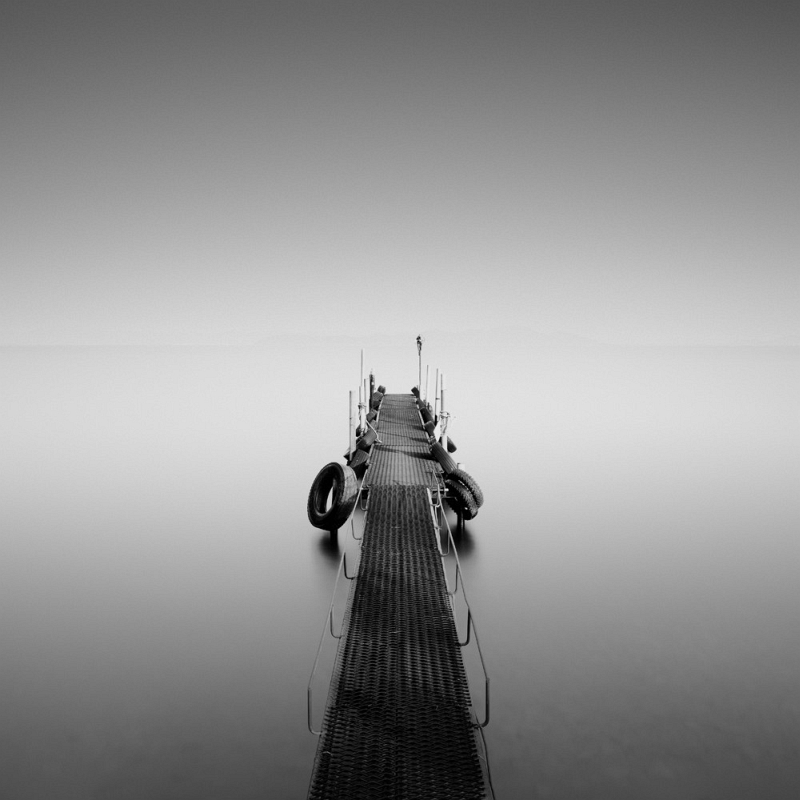
Gavin Dunbar works from Edinburgh, Scotland, in a photographic language built on patience: long exposures, minimal compositions, and a disciplined preference for black and white. He has described the approach as less is more—not as a slogan pasted onto busy pictures, but as a working method that removes whatever the frame does not need. The result is a body of seascapes, landscapes, and occasional architectural studies that feel suspended between documentary place and quiet abstraction.
Dunbar is largely self-taught. He has noted that he does not come from a formal design or art-school background; the craft arrived through looking, testing filters, and refining a process until the prints matched the calm he was after. For viewers who meet his work through a single monochrome landscape, that calm can read as simple. Underneath it is a specific set of technical and editorial choices about time, tone, and what counts as a subject.
Less is more, practiced literally
Minimalist landscape photography fails when it is only emptiness with a watermark. It works when the remaining elements are in deliberate relation: a post, a rock, a pier end, a distant headland—placed against sea and sky that have been smoothed by time. Dunbar’s strongest frames often reduce a coastal scene to a few tonal masses. The square crop he has frequently used intensifies that reduction. Corners become equal; the eye cannot escape into a wide cinematic sweep; every object must earn its place inside a balanced field.
“Less” also means fewer competing stories. Color can insist on weather drama, tourist detail, or the literal green of a headland. Black and white lets him push tones toward graphic clarity—bright water, dark structure, mid-gray atmosphere—without pretending the photograph is a weather report. He has spoken about preferring monochrome because everyday life is already saturated with color, and because grayscale offers freedom to shape feeling through the full range from black to white.
Long exposure as a way of seeing
Neutral density filters are central to this kind of work. By cutting light, they allow shutter speeds that stretch from seconds into minutes when conditions and intent require it. Moving water turns milky or glasslike; clouds streak or soften; anything solid—stone, wood, metal—stays sharp and begins to look almost floated against the blurred world. Dunbar has described long exposure as a way to move away from everyday reality rather than to record a location with tourist precision. In many images, the specific place becomes secondary to the arrangement of forms.
That attitude changes fieldwork. Instead of racing golden hour for one heroic sky, the photographer can wait inside a longer duration, adjusting composition while the exposure accumulates. Dunbar has said the process feels relaxing and therapeutic precisely because it refuses hurry. In an era of rapid burst shooting, that slower tempo is itself an aesthetic decision: the photograph shows time passing, not only a fortieth of a second snatched from it.
Scotland’s coast as a studio
Living in Edinburgh puts coastline within reach, and Scotland’s weather—often dismissed by visitors—supplies the cloud structure long-exposure workers need. Flat blue skies can leave minimal seascapes looking empty in the wrong way; layered gray weather gives gradients to shape in post. Dunbar has also photographed farther afield, including Japan, citing both Scotland and Japan among preferred places for the kinds of subjects his style favors: clean horizons, strong simple objects, and atmospheres that accept abstraction.
Coastal minimalism still demands respect for tide, wind, and footing. Tripods sink in wet sand; spray finds lens surfaces; incoming water rearranges the foreground mid-exposure. The serene print hides that logistics. Part of reading work like Dunbar’s honestly is remembering the practical choreography behind the stillness.
From RAW file to monochrome print
Dunbar’s publicly discussed workflow has often included Lightroom for RAW foundation work, a dedicated black-and-white conversion tool such as Silver Efex Pro for tonal interpretation, and Photoshop for blending. He has described making multiple conversions of a single file—one lighter, one darker, one closer to middle—and masking them together so sea, sky, and subject each receive the density they need. That approach treats monochrome not as a preset but as a construction, closer to darkroom burning and dodging than to a one-click filter.
High contrast appears frequently in the finished look: dark structural elements against luminous water, or pale forms held in deeper atmosphere. Contrast is not automatic aggression; it is how minimal subjects stay readable. Without enough separation, a lone rock dissolves into gray weather. With too much, the image becomes a poster. The craft sits in that middle negotiation.
Architecture and the same grammar
Although seascapes dominate many showcases of his work, Dunbar also turns the long-exposure, monochrome grammar toward architecture and other quiet structures. A fountain, a temple detail, a built form isolated against softened surroundings—these subjects follow the same rule set: isolate, wait, reduce, tone. Awards attention around 2013–2014 in competitions such as PX3 and related fine-art categories reflected how consistently that language traveled across subject types, not only across Scottish beaches.
For photographers learning from the work, the transferable lesson is not “buy a ten-stop filter and desaturate.” It is editorial. Choose one subject that can hold a frame alone. Give moving elements enough time to change character. Convert with intention so gray values support the composition’s geometry. Crop until nothing optional remains.
Looking at one frame carefully
Return to the landscape study above and try a slow inventory. Where is the darkest mark? Where is the brightest field? Does the horizon sit high or low, and what does that do to the weight of sky versus land or water? Is the main subject centered for emblematic calm, or offset to create tension inside the square? Those questions matter more than guessing the exact headland name. Dunbar’s own comments have sometimes treated location as nearly irrelevant once the exposure transforms the scene; the photograph asks to be read as form and tone.
If you work in color landscapes most days, try a short assignment in his spirit: one foreground object, one stretch of moving water or sky, a locked tripod, and a conversion that you build in layers rather than accept from a default. You may not chase Dunbar’s exact palette. You will learn quickly whether your compositions still hold when hue is gone and time is allowed to blur what will not stay still.
On the Scottish coast, clouds keep moving whether the shutter is open or not. The quiet in these pictures is not the weather’s invention. It is the photographer’s.

Comments
Continue reading
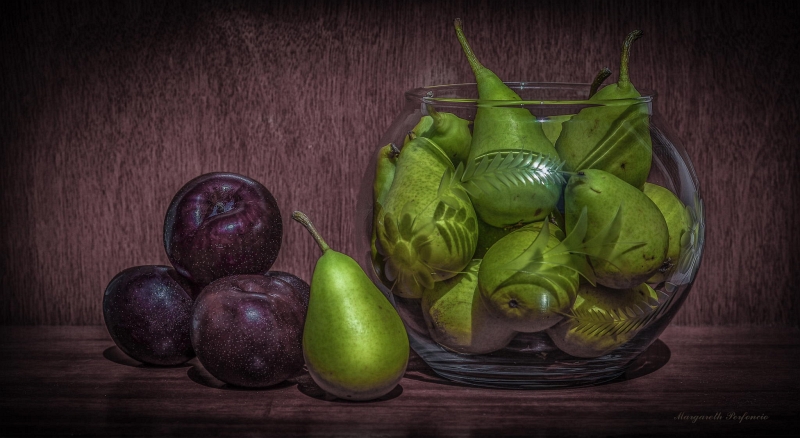
Still-Life Photography by Margareth Perfoncio
São Paulo photographer Margareth Perfoncio’s still lifes of food and flowers—Old Master light, dark wood, and tables that feel inevitable.

Meaningful Love Quotes for Inspiration (and Ink)
Meaningful love quotes that still feel true — short lines for tattoos, gifts, and everyday reminders, with placement and wording tips.

Christina Hess’s Animals From History: Costumed Pets as Playful Portraits
Illustrator Christina Hess reimagines historical icons as ornate animal portraits—Elvis Petme and friends—mixing puns, costume detail, and soft history lessons.