
Julien Mauve’s Back to Childhood: Toys in Adult Life
Paris photographer Julien Mauve found his old toys in a grandparents’ attic and staged them inside adult life—a 2012 series that mixes nostalgia, humor, and reinvention.
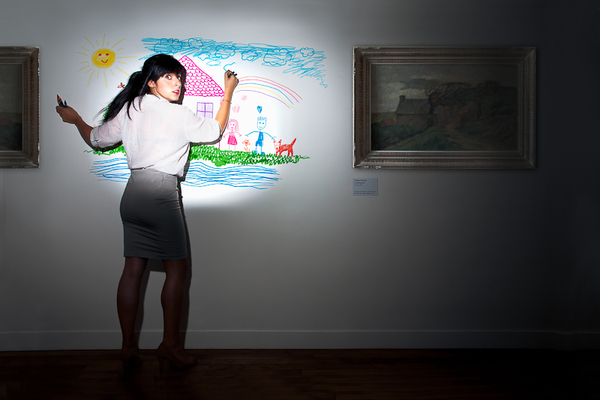
In 2012, Paris photographer Julien Mauve opened a box in his grandparents’ attic and found the toys of his childhood still waiting. Most people would have smiled, closed the lid, and moved on. Mauve kept the objects out and began staging them inside adult life—not as nostalgia props on a shelf, but as tools actors might still use. The series that followed, Back to Childhood, asks a simple visual question: what happens when grown bodies treat playground things with the seriousness of ordinary days?
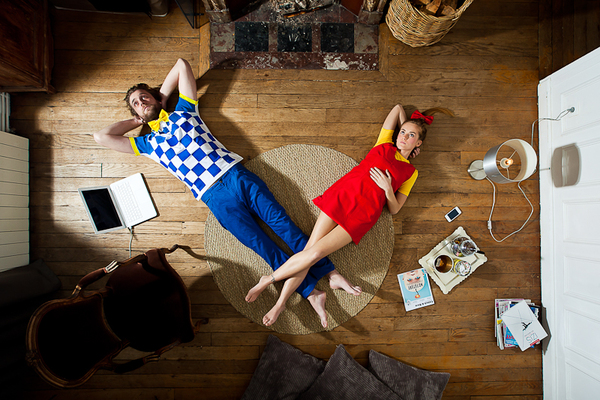
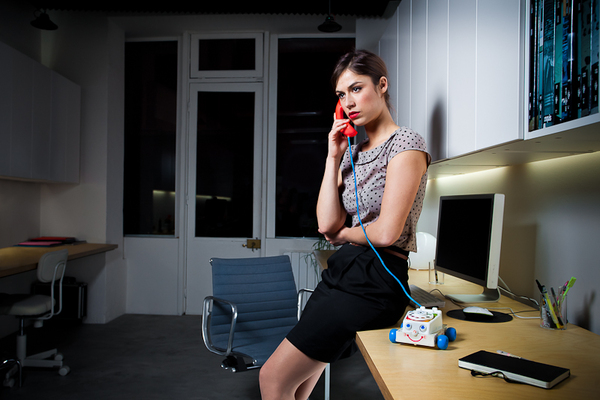
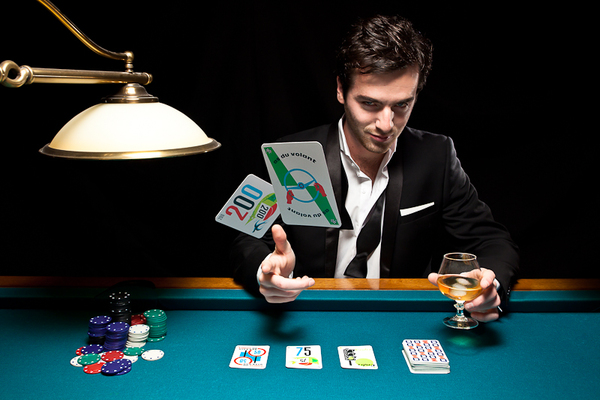
The answer is equal parts tender and comic. A Twister mat becomes a dance floor. Plastic figures and soft toys share rooms with the postures of work, love, boredom, and ritual. Friends and family posed for him. The photographs traveled widely online because the toys were familiar across generations, and because the joke never fully cancels the ache. For viewers who land on this page looking for that series, the images below are the work; the paragraphs around them sketch why the premise still holds.
The attic as studio brief
Finding childhood objects is a common memoir beat. Mauve’s contribution was to refuse pure sentimentality. He treated the toys as a cast and adult space as a set. The attic discovery supplied authenticity—these were his toys, not a prop-house rental—but the pictures are constructed, not documentary snapshots of play. Models commit to the scene. Lighting stays clean enough that the absurdity reads clearly. Composition keeps the toy large enough to matter; a tiny object lost in a wide room would only whisper.
Around the same years, Mauve was building a broader early practice that included other narrative series. Back to Childhood remains the project people still cite first, because its premise is instant and its execution is patient. You understand the rule in one glance, then you stay for the variations. That combination—easy hook, careful follow-through—is why the work survived the first viral wave and still reads as a coherent photo essay rather than a one-note meme.
Toys as a miniature adult world
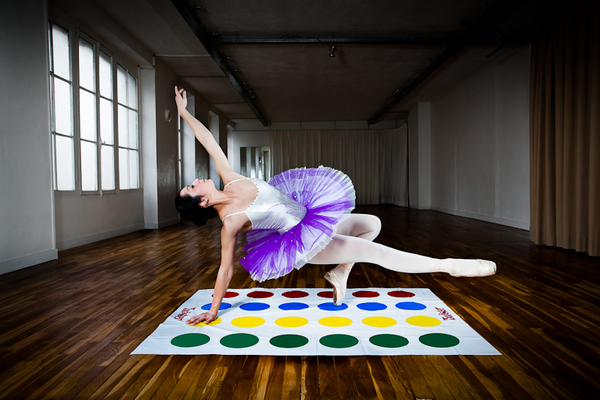
Roland Barthes, writing on French toys in Mythologies, noted how playthings often shrink the adult world into child-sized copies—preparation, he suggested, for accepting the roles ahead. Mauve flips the scale relationship. Adults reclaim the miniature and force it into full-size rooms. The effect is not only cute. It shows how thin the line is between rehearsal and performance: the ballerina on the Twister mat is funny because the mat is a children’s game and serious because dance itself is discipline. The photograph holds both readings without explaining either.
Familiar brands and shapes help. Viewers recognize a giraffe teether, a board game, a stuffed animal, a plastic figure even if their own childhood used different labels. Recognition does the emotional work; Mauve’s job is arrangement and timing. He has remarked on seeing the next generation receive the same icons he once held—proof that some toys outlast trends and become shared cultural furniture. That continuity is part of why an attic box can still spark a public series years later.
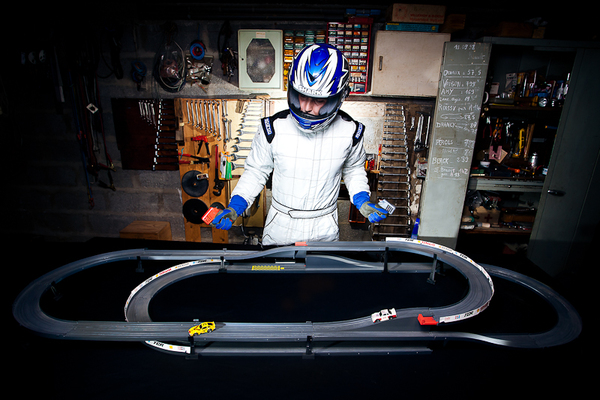
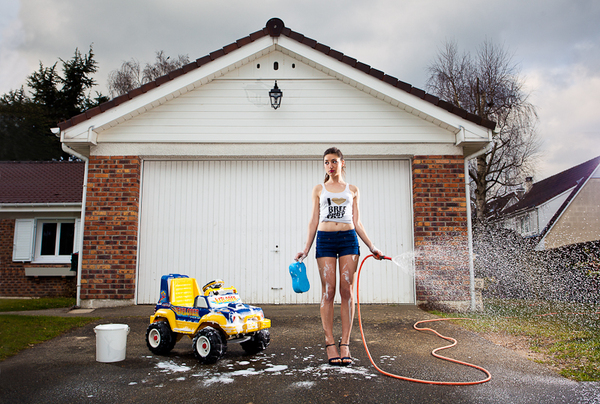
Humor with an edge
The series works because it is not only sweet. Mundane and sometimes morose adult situations absorb the toys without melting into pure whimsy. A game piece on a table can look like a meeting prop. A soft toy in a quiet room can look like companionship or loneliness depending on the face beside it. That ambiguity is why the work aged better than many viral “nostalgia” galleries of the early 2010s. The laugh arrives first; the aftertaste is about what adulthood kept and what it discarded.
Casting friends and family keeps the pictures intimate. Professional models might have pushed the project toward fashion-editorial polish. Here the bodies feel like people who know the photographer, which matches the attic origin story. Nostalgia is personal before it is public. You sense permission in the room—permission to look silly, permission to be still, permission to let a toy occupy the frame without apology.
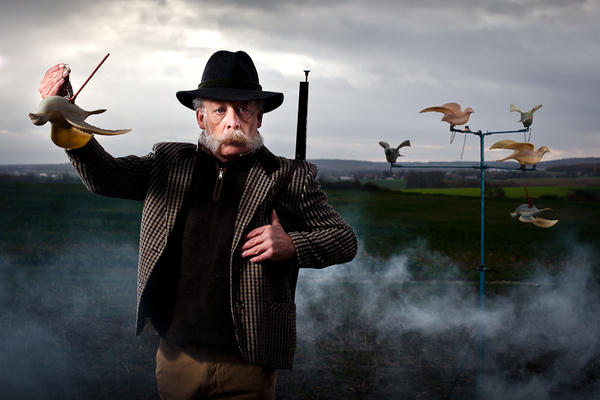
How the pictures are built
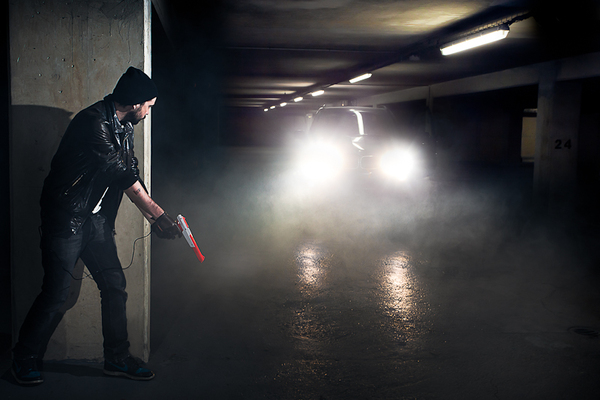
Conceptually, each frame is a short sentence: subject + toy + adult context. Technically, Mauve keeps the lighting readable and the color grounded so the surreal element is the situation, not a heavy filter. Props sit where hands would naturally put them. Gestures are slightly heightened but not slapstick. The camera distance usually sits in a conversational middle ground—close enough for the toy’s detail, wide enough for room information.
Sequences matter. Seen as a set, the photographs become a small taxonomy of adult life rewritten: play, performance, rest, care, solitude. One image of a dancer on a Twister mat is a punch line; a dozen related images become an argument about imagination as a portable skill. Mauve’s own note on the project emphasizes that toys give those who animate them a marvelous ability to reinvent the world. The photographs are evidence of that claim, not illustrations of a theory paper. If you are a photographer studying the series, steal the clarity of the rule more than any single prop choice.
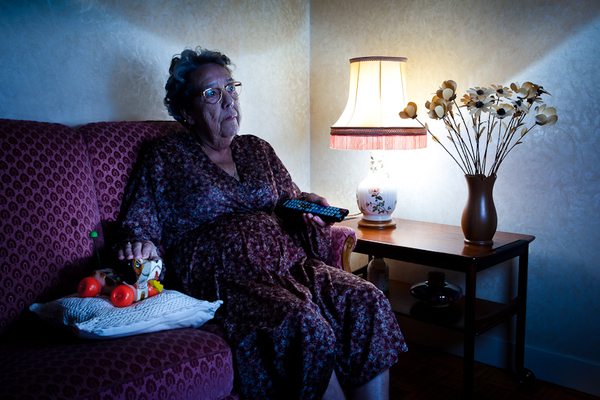
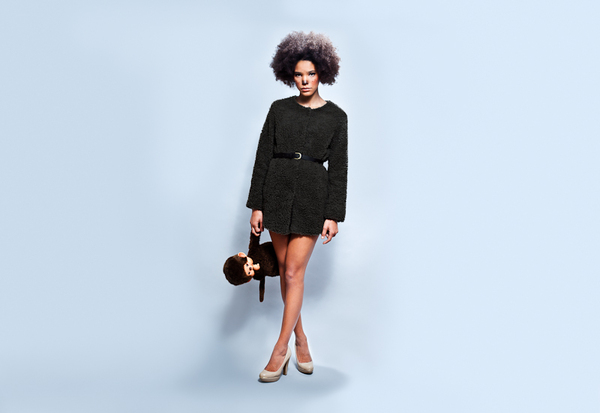
Nostalgia without syrup
Online culture loves childhood returns—throwback filters, toy unboxings, lists of things “only one decade’s kids know.” Back to Childhood shares the hook but avoids the syrup by keeping adult friction in the frame. The toys do not heal the room; they interrupt it. That interruption is the art. Viewers project their own attics onto Mauve’s: different boxes, same sudden flood of memory when a certain plastic smell or fabric texture returns.
There is also a quiet critique embedded in Barthes’s line about toys preparing children for adult functions. By placing those preparatory objects back into adult hands, Mauve makes the preparation visible. We see the script we were handed—and we see adults choosing, for a photograph’s length, to misread the script on purpose. Misreading, here, is not failure; it is the creative act.
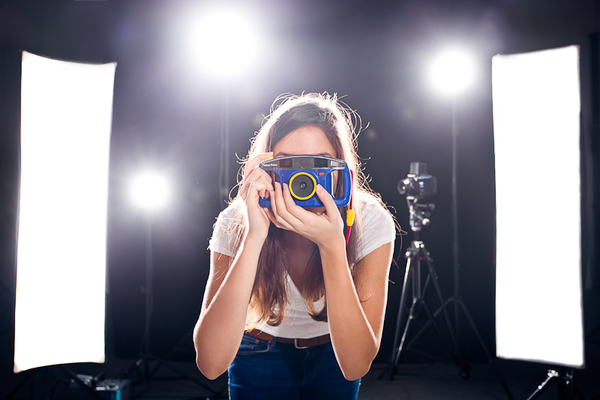
Looking again at the Twister mat
Return to the ballerina on the mat—the example that often introduces the series. Dance demands balance, repetition, and a body trained for adult stages. Twister demands silly stretch and colored dots. Combined, they produce a third activity that belongs to neither childhood party nor conservatory. That third space is where Mauve’s project lives. It is not a call to remain childish; it is proof that imagination can still rearrange furniture in a grown apartment.
Walk the rest of the frames with that same double vision. Ask what adult script is being gently broken, and what childhood tool is doing the breaking. The pictures reward that kind of looking more than a hunt for Easter eggs.
If you keep one image in mind after leaving the set, let it be whichever frame made you recognize your own discarded toys most sharply. The series does not ask you to empty another attic for a photoshoot. It asks whether the capacity those objects once unlocked—reinvention through play—still has a doorway in rooms that now hold only “serious” things.

Comments
Continue reading

Dramatic Photo Art by Sukron Ma’mun (Ipoenk Graphic)
Cirebon, Indonesia photographer Sukron Ma’mun uses theatrical natural light to frame village life, play, and place in lyrical photo art.
Bird’s-Eye Views: Florian Beaudenon’s Instant Life
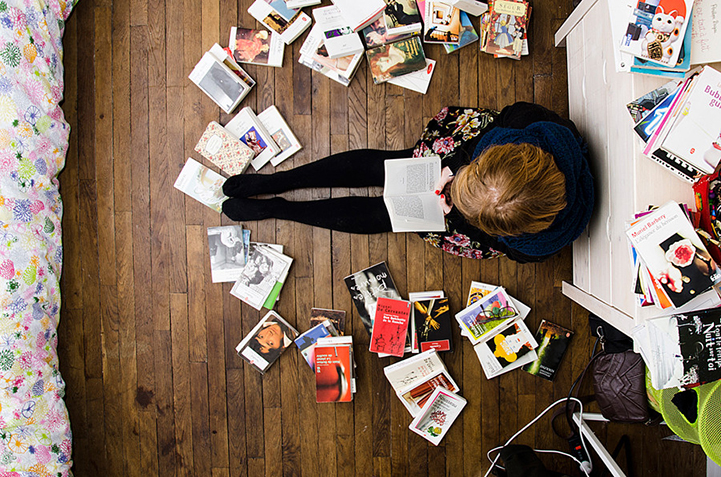
Paris photographer Florian Beaudenon’s Instant Life series captures people in their rooms from above—intimate, collaborative overhead portraits of everyday joy.
Abandoned Cars Reclaimed by Nature: Rust, Growth, and Quiet Ruin
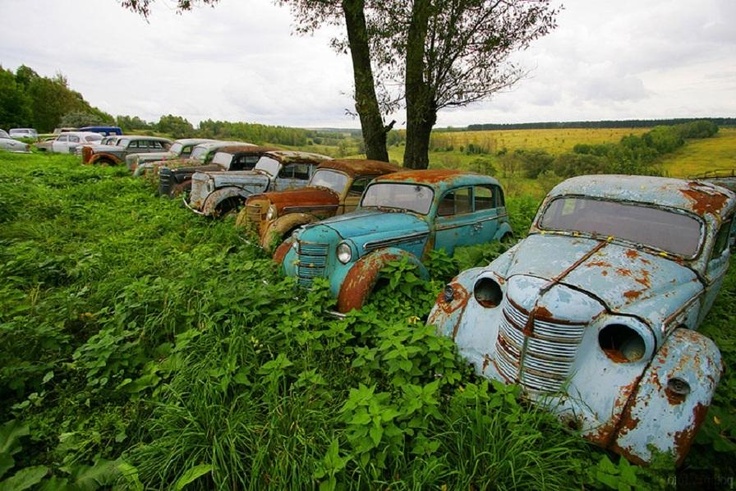
When neglected vehicles are left outdoors long enough, rust, moss, and trees rewrite them into strange still lifes—sad, photogenic, and slowly returning to the ground.