
Travel the World Through Angelo Ferraris’s Lens
Italian photographer Angelo Ferraris’s family atlas—from Venice and Rome to Paris, London, Dubai, and beyond—and how his frames teach looking.
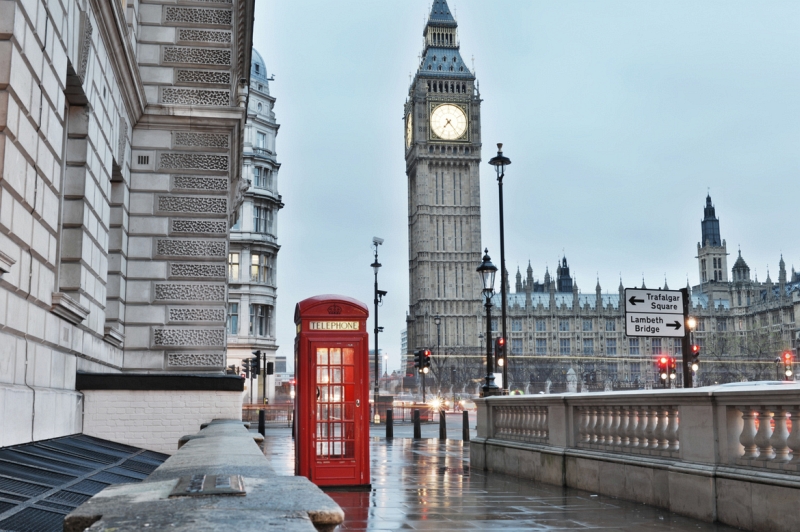
Some travel photographs sell destinations. Others sell a way of looking. Italian photographer Angelo Ferraris belongs to the second group: a family traveler who moves through cities and landmarks with a camera that treats light, stone, and water as the real subjects. His work—long shared through his Famiglia Ferraris presence on 500px—reads like a personal atlas rather than a brochure. Venice, Paris, Rome, London, Dubai, Jerusalem, Las Vegas, and quieter Italian hillsides appear not as trophies but as rooms he and his family have stood in.
Looking at someone else’s travel frames is a double pleasure. You borrow their itinerary for a few minutes, and you borrow their eyes. Ferraris’s portfolio is useful for both: a map of places, and a lesson in how a traveling photographer frames the world when the trip includes family pace as well as landmark hunger. This is not a destination wishlist clone. It is a walk through one photographer’s world tour—and through the habits that make those frames feel lived-in.
Italy first: home ground and practiced eyes
Ferraris’s Italian frames feel especially inhabited. A gondola in Venice and morning light on the lagoon are familiar subjects; what matters is timing—water as mirror, boats as dark calligraphy, and the decision to wait for a quieter minute when tourists thin and the city returns to itself. The Bridge of Sighs and Venice San Marco appear as architecture under weather, not as stickers. Portofino and Vernazza on the Ligurian and Cinque Terre coasts bring colored harbors and cliff paths; Florence returns as cathedral mass—Santa Maria del Fiore—and as a wider view of the city spilling over hills. Home-country photography often looks more confident because the photographer already knows how light behaves in those latitudes. Ferraris uses that confidence without making Italy look small.
Rome occupies a large share of any Italian photographer’s attention, and Ferraris’s captions circle Saint Peter’s Basilica from plaza to dome, Castel Sant’Angelo along the Tiber, the Pons Fabricius, and the Chiesa del Gesù. The repetition is instructive. Returning to the same sacred and civic monuments under different light is how a travel photographer builds a relationship with a city instead of a single postcard. Ulterior Italy appears too: Rocca di Calascio’s chapel in Abruzzo light, Lago Ghedina and Passo di Giau near Cortina d’Ampezzo where alpine water and mountain roads replace urban density. Those frames remind you that “Italy” on a travel map is not only Rome and Venice; it is also altitude, silence, and chapels that catch late sun.
Family travel changes the logistics—meals, rest, shorter days—but it can sharpen attention. When you cannot sprint between ten sites, you stay longer with three. Ferraris’s body of work suggests that bargain: fewer places, more looking. A child needing a break can be the reason you discover a better angle from a bench instead of the crowded viewpoint. The camera still works; the schedule softens.
Paris and the museum city
Paris in his set is both exterior and interior. Boulevard Saint-Germain, Notre-Dame from the quai de Montebello, the Louvre pyramid, Sainte-Chapelle, and even a kitchen view inside the Musée d’Orsay show a photographer comfortable treating culture as daily weather. Sainte-Chapelle’s stained glass and Orsay’s spaces ask for different technical patience than a street corner—exposure for mixed light, respect for crowds, a willingness to make interiors as important as façades—yet both belong to the same trip logic: Paris is a city where looking indoors is as important as looking along the Seine.
Mont Saint-Michel appears as a related French chapter—tidal drama and silhouette—reminding you that Ferraris’s France is not only capital romance. Across the Channel, Salisbury Cathedral extends the Gothic thread into England, while London returns as Eye, Shard, and street-level city mass. The London frame included here is a reminder that skyline and river light can carry a whole visit in one still. Ferraris does not need a dozen London pictures to prove he was there; one strong view of the city’s scale can be enough if the light cooperates.
Beyond Europe: desert glass, holy cities, neon
The portfolio stretches past European comfort zones. Emirates Palace in Abu Dhabi and Sheikh Zayed Road in Dubai bring Gulf scale—glass, night highways, and architecture that performs wealth and climate control. Old Algiers and the Old City of Jerusalem pull in another register: layered streets, religious and colonial histories visible in stone, and the ethical care travel photography always needs in living sacred and contested places. Looking is not owning; captions that name “old city” acknowledge continuity rather than discovery. Photographers who travel widely learn to carry humility along with wide-angle lenses.
Las Vegas and the Venetian there form a curious rhyme with real Venice: imitation canals under desert neon, tourism folded into spectacle. The echo is almost comic and almost philosophical—what happens when a place copies another place, and a photographer who has seen the original visits the copy? Washington’s US Capitol adds civic monumentalism to the same roaming practice. Amsterdam appears as canal city counterpoint; Hamburg’s Poggenmühlenbrücke in the Speicherstadt warehouses shows northern brick and water under a photographer’s evening eye. Meersburg on Lake Constance and sunset in Ulm keep Germany in the mix as quieter stops between headline capitals.
Even Mykonos windmills appear—proof that Ferraris’s atlas includes the Aegean’s white icons alongside Roman domes. The point of listing these places is not to invent a fake itinerary for you to copy in order. It is to show the range of a traveling family’s photographic life: sacred architecture, modern skyline, alpine lake, desert boulevard, and Mediterranean light collected under one authorship. The world tour is real; the lesson is editorial.
What to take from a photographer’s world tour
If you use other people’s travel photos as fuel for your own wish list, Ferraris’s set suggests a few durable habits. They travel better than any packing list.
- Return to the same landmark at different hours instead of collecting only first glances.
- Let interiors and exteriors share the trip—museums, chapels, and kitchens count as destinations.
- Keep a mix of famous skylines and quieter towns so the album has breath.
- Travel at family pace when that is your life: fewer sites, fuller frames.
- Name places precisely in captions; located memory ages better than vague beauty.
Technical polish matters—horizon, exposure for mixed night lights, patience for gondolas and crowds—but the deeper craft is editorial. Ferraris’s captions name places precisely: Blvd Saint Germain, Passo di Giau, Poggenmühlenbrücke, Sheikh Zayed Road. Naming is a form of respect. It turns a pretty file into a located memory. You can adopt that habit even if your camera is a phone and your audience is only your future self.
Seen together, the work is less “here are the world’s greatest hits” and more “here is how one Italian family with a camera moved through the world.” That framing is why the portfolio still works as travel inspiration. You do not need his exact route. You need his permission to look longer than the guidebook’s suggested twenty minutes—and to let London’s river light, Rome’s dome, or a chapel on a hill be enough for the day.

Comments
Continue reading
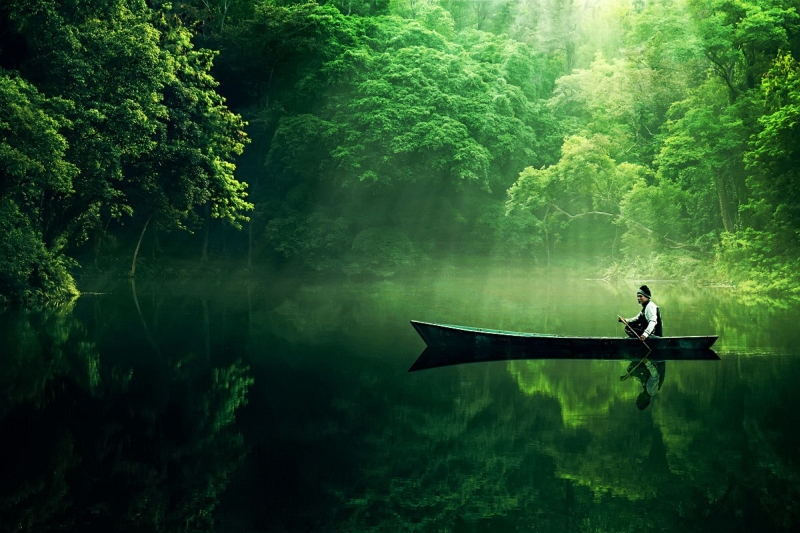
Dramatic Photo Art by Sukron Ma’mun (Ipoenk Graphic)
Cirebon, Indonesia photographer Sukron Ma’mun uses theatrical natural light to frame village life, play, and place in lyrical photo art.
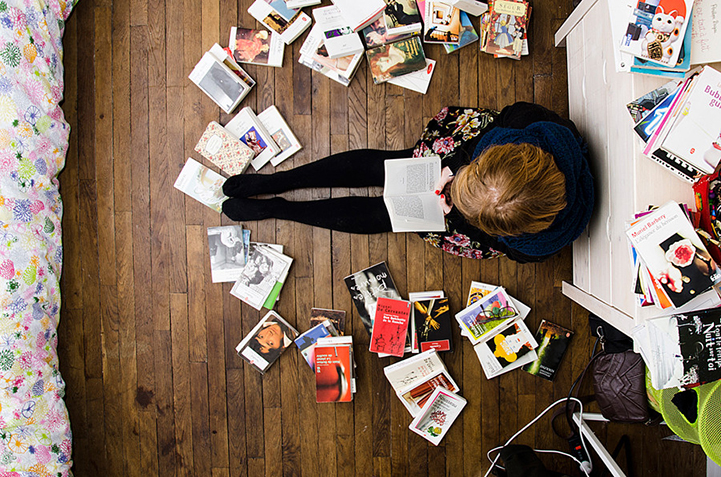
Bird’s-Eye Views: Florian Beaudenon’s Instant Life
Paris photographer Florian Beaudenon’s Instant Life series captures people in their rooms from above—intimate, collaborative overhead portraits of everyday joy.
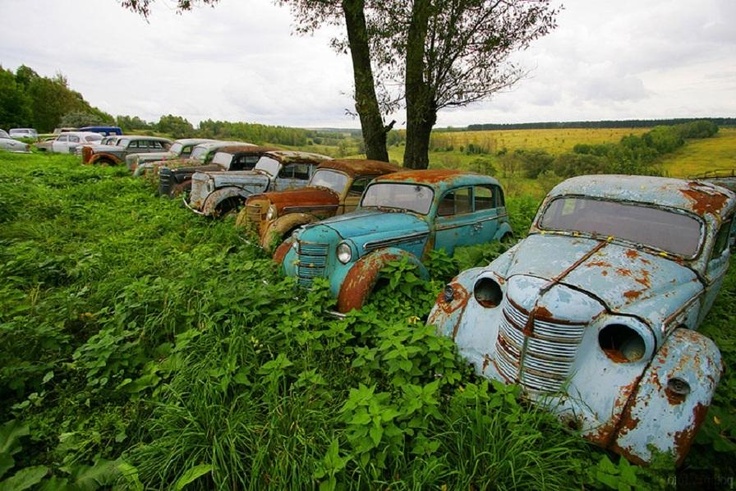
Abandoned Cars Reclaimed by Nature: Rust, Growth, and Quiet Ruin
When neglected vehicles are left outdoors long enough, rust, moss, and trees rewrite them into strange still lifes—sad, photogenic, and slowly returning to the ground.