
10 Lana Del Rey Songs for Cinematic Americana Nights
Ten early Lana Del Rey tracks from the Born to Die world—freeway myth, sad glamour, and pop that plays like a short film.
Lana Del Rey’s early catalog sounds like a drive down a California freeway at blue hour: billboards for old movies, radio static, a romance that already knows how it ends. This list stays close to the Born to Die era that first fixed her public mythology—cinematic Americana and sad-glamour pop rather than later folk pivots or chart-chasing remixes. The point is atmosphere with a plot: who is speaking, what fantasy they are selling, and which detail makes the fantasy crack.
Think less “party playlist,” more night drive with the windows cracked. Where Florence Welch builds cathedral drama and Madonna maps decades of reinvention, Lana’s early singles build a single persistent movie set—motels, flags, denim, and doomed devotion under perfect lighting.
1. Born to Die
The title track is a thesis statement dressed as a doomed love song. Strings swell like a trailer; the vocal stays half-detached, as if the narrator is watching her own biopic. “Born to Die” works because it refuses uplift. Youth is framed as a short film with beautiful lighting and a bad ending already in the script. If you want the Lana brand in one room—Hollywood fatalism, luxury sadness, a chorus that feels inevitable—this is the doorway.
The production’s grandeur is not empty garnish. It tells you the scale of the fantasy before the lyric finishes explaining the cost. That is cinematic pop in the literal sense: score first, confession second.
2. Video Games
“Video Games” is the quiet origin myth for a reason. Domestic details (arcade glow, beer, a house that becomes a kingdom) sit inside a melody that moves like slow cinema. The song made space for a different kind of pop star: not relentlessly upbeat, not purely ironic, but sincerely in love with American trash-romance and old-money fantasy at once. It is still the cleanest entry point for listeners who bounce off denser album cuts.
Replay it after the louder singles and you hear how much power she draws from understatement. The chorus does not explode; it settles, which somehow makes the devotion feel larger.
3. Blue Jeans
Where “Video Games” is candlelight, “Blue Jeans” is neon reflection on wet pavement. The beat is heavier, the devotion more obsessive, the imagery more street than sitting room. It is Americana by way of late-night Los Angeles: denim as costume, loyalty as religion, danger as proof that the love mattered. On a playlist, it deepens the world the first two songs sketch—same mythology, sharper contrast.
The song also clarifies Lana’s version of toughness. It is not athletic bravado. It is sticking around after the plot has already turned noir.
4. Off to the Races
This is Lana at her most novelistic. The track unspools like a short story about power, money, and a relationship that treats toxicity as aesthetic. Melodic sweetness keeps rubbing against unsettling details; that friction is the point. “Off to the Races” rewards listeners who like character study more than radio brevity. It also shows why her writing sits in a cinematic lane: scenes, nicknames, locations, a camera that never quite looks away.
If your playlist has been all singles-radio Lana, this is where the album brain takes over. Let the verses run. The chorus is only one room in a larger house.
5. National Anthem
“National Anthem” turns romance into a parade of American icons—presidents, parties, money as confetti. The production sparkles; the lyric watches the sparkle for what it costs. It is one of the era’s clearest statements that Lana’s patriotism is complicated theater: flags and limousines, affection and critique sharing the same chorus. Play it when you want the mythology loud rather than intimate.
The song’s glitter can fool casual listeners into hearing only celebration. A second pass usually reveals the invoice underneath the champagne.
6. Dark Paradise
Grief with a nightclub pulse. “Dark Paradise” mourns someone who may be gone in every practical sense and still present in every private one. The title tells you the weather; the song fills in the temperature. Within the Born to Die cycle, it is a necessary shadow—proof that the cinematic world includes aftermath, not only seduction. The chorus does not solve the loss. It just keeps returning to the same dark room.
That refusal to resolve is part of the Americana sadness Lana sells so well: the road continues, the radio stays on, the ghost rides shotgun.
7. Diet Mountain Dew
Brand-name Americana as flirtation and class cosplay. “Diet Mountain Dew” is fizzy, sly, and oddly tender about wanting to be chosen by someone who already owns the spotlight. The song’s charm is its specificity: not abstract longing, but convenience-store sugar and New York night air translated into pop. It lightens this list without abandoning the project’s core—desire staged as lifestyle.
It is also a craft lesson in proper nouns. Named products and places make the fantasy feel borrowable, as if you could step into the frame between choruses.
8. Summertime Sadness
Even before the remixes carried it further into clubs and charts, “Summertime Sadness” had the shape of a modern standard: seasonal melancholy you can sing in a car at sixty miles an hour. The lyric’s fatal romance sits on a melody built for open roads and closed throats. It is the most widely traveled song here, which makes it useful and slightly dangerous—easy to hear as vibe only. Listen once for the hook, once for the resignation underneath.
Used carefully in a sequence, it becomes a hinge between private grief tracks and public anthem energy. Used carelessly, it can flatten the rest of the set into “sad summer” wallpaper. Give it context.
9. Carmen
“Carmen” watches a young woman become spectacle—fame, nightlife, the thin line between being seen and being consumed. Lana’s narrator voice here is half sisterly, half documentary. The song belongs on any serious early-catalog list because it looks sideways at the same Hollywood machine the love songs romanticize. Cinematic pop needs more than lovers; it needs the street outside the club and the morning after the premiere.
Place it near “National Anthem” and the album’s America starts to look less like a postcard and more like a casting call with casualties.
10. Radio
Closing with “Radio” returns the mythology to the medium that built it. The track dreams about airwaves, recognition, and the soft lie that being broadcast will fix a life. It is meta without being cold: a pop song about wanting to be a pop song’s heroine. As an ending for this set, it feels right—Americana not as landscape alone, but as transmission, static, and the hope that someone out there is listening in a parked car.
After nine scenes of love and spectacle, “Radio” reminds you that the whole project is also about being heard. The fantasy needs an audience, even an imagined one.
A listening path through the myth
These ten tracks lean on cinema grammar: establishing shots (“Born to Die”), intimate interiors (“Video Games”), night exteriors (“Blue Jeans”), character studies (“Off to the Races,” “Carmen”), and public pageantry (“National Anthem”). You do not need a dissertation to enjoy them. You do need to let the scenes play.
A simple sequence for first-timers: “Video Games,” “Blue Jeans,” “Diet Mountain Dew,” “National Anthem,” “Dark Paradise,” “Summertime Sadness,” then “Born to Die” again with the lights lower. Notice how often love is framed as casting—who gets the role, who pays for the production, who is left when the cameras cut. That recurring question is the through-line more than any single sonic trick.
Keep the volume moderate and the distractions low. This catalog rewards the kind of attention you give a film you already suspect will end badly—and watch anyway, because the lighting is perfect and the line readings hurt in the right places.

Comments
Continue reading
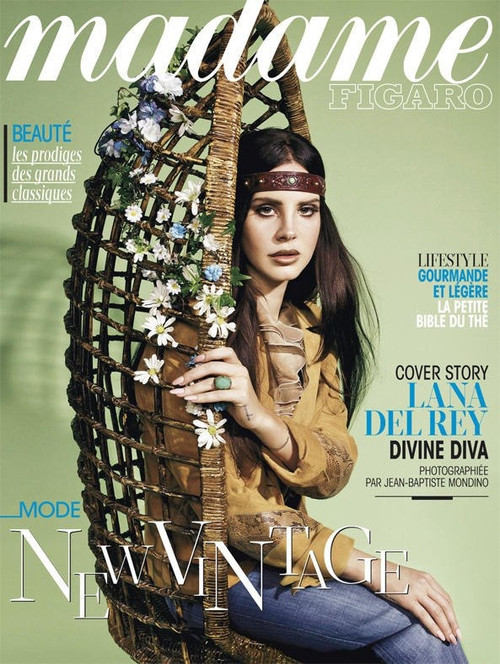
Lana Del Rey for Madame Figaro, January 2013
Jean-Baptiste Mondino’s Paris haute-hippie cover package for Madame Figaro’s January 2013 issue—suede, bronze light, and French weekly glamour.
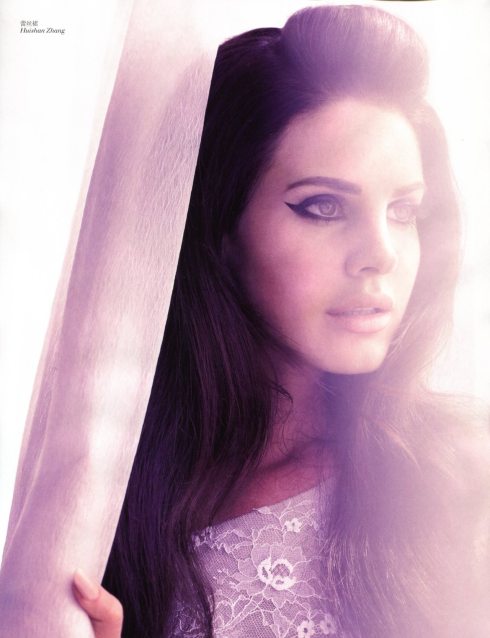
Lana Del Rey for Vogue China: Say Goodbye to the Wonderland
Wee Khim and Grace Lam’s ethereal January 2013 Vogue China story—soft waves, cat eyes, and dreamlike fashion far from French weekly bronze.
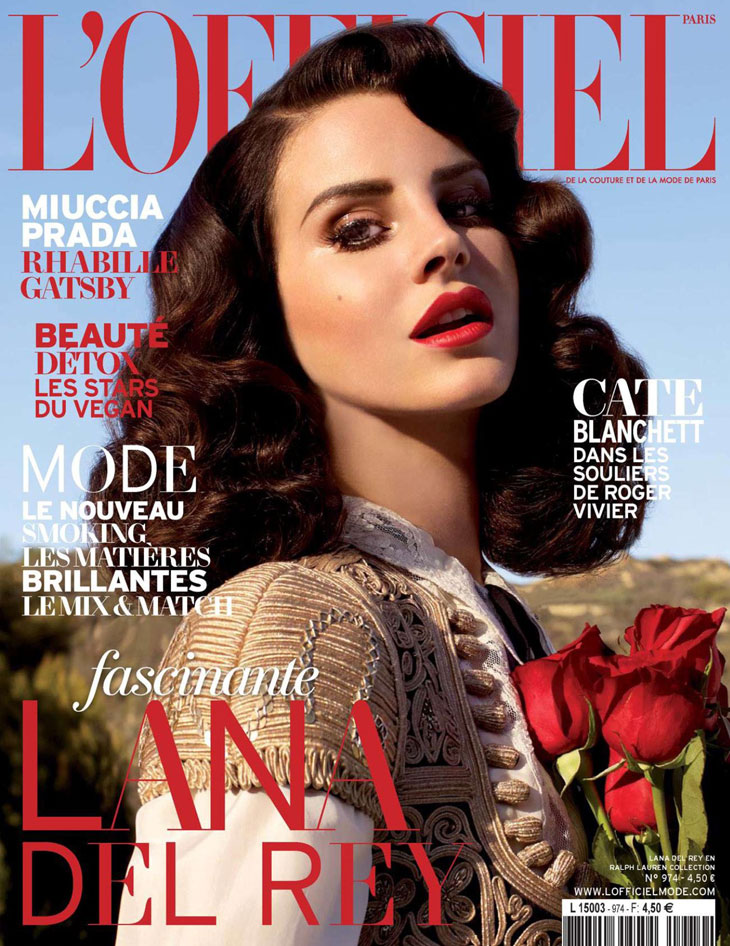
Lana Del Rey for L’Officiel Paris April 2013 by Nicole Nodland
Lana Del Rey’s April 2013 L’Officiel Paris cover story—Nicole Nodland’s Spanish-romantic Rosalita editorial, Vanessa Bellugeon styling, and Paris spring fashion voice.