
Time Travel by Flóra Borsi: Photo-Manipulation Series
Budapest artist Flóra Borsi’s Time Travel composites—inserting herself with a modern camera into iconic historical photos, sparked by a Charlie Chaplin cue.
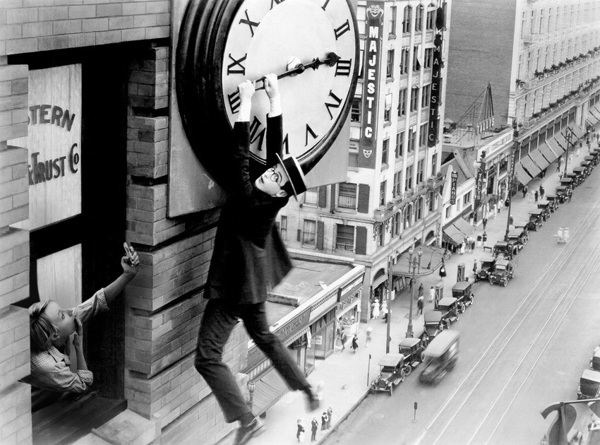
Hungarian photographer and photo-manipulator Flóra Borsi built Time Travel around a simple, sticky premise: if you could step into history with a modern camera in your hand, what would you do first? Her answer, staged in digital composites, is almost embarrassingly honest—you would take a picture, maybe for a social feed, maybe just to prove you were there. The series turns that impulse into a treasure hunt across iconic archival photographs.
How would time travel affect life as we know it? Capture the most important events in history, upload to Instagram, Twitter, Facebook? If time travel did indeed become a reality, how would it affect our world as we currently experience it? I imagined how I would do it! My inspiration was a Charlie Chaplin movie.
Borsi, working from Budapest and already known for playful Photoshop concepts, was still in her early twenties when the series circulated widely in 2013. The tone matches her broader interest in emotions, dreams, and humor: the work is clever without becoming a cold technical flex. Viewers share the images because the joke lands in one glance—and deepens on a second look.
The series concept
Time Travel inserts Borsi into historical scenes as a contemporary witness. She appears among fans, press packs, and bystanders—sometimes obvious once you know the joke, sometimes half-hidden until your eye catches the wrong-era device. A digital camera or phone becomes the anachronism that proves the traveler’s origin. The composites ask you to believe two timelines at once: the documented past and the tourist present colliding inside one print.
That collision is funny because it is familiar. Modern crowds treat landmarks and celebrities as content opportunities. Borsi simply relocates the habit. Standing near Elvis with a phone raised, or watching the Beatles arrive while framing a shot, she plays the fan we already know from festival pits and red carpets—only the surrounding century has changed. The series is less about science fiction mechanics than about recognition: we know this person; she is us with better access to history.
Chaplin as spark
Borsi has pointed to a Charlie Chaplin–era cue as inspiration: footage associated with late-1920s premiere culture in which a woman appears, to modern eyes, as if she were holding a cellphone. Whether you read that clip as accidental resemblance or playful prophecy, it gave the project a perfect origin myth. Cinema history already contained a visual glitch; Borsi decided to manufacture more glitches on purpose.
The Chaplin thread also keeps the series from feeling mean-spirited. Time travel here is not about rewriting politics, assassinating tyrants, or saving timelines. It is about curiosity and comedy—the small human urge to record wonder. That modest ambition is why the work ages well: it does not overclaim philosophical weight, yet it still prompts a real question about how devices change presence.
What the manipulations do technically (and emotionally)
Good composites in this vein need more than a cutout. Scale, grain, contrast, and posture have to match the host photograph. If Borsi’s figure is too sharp, too tall, or lit from the wrong side, the gag collapses into collage. When the match works, the brain accepts the scene for a beat—and then the phone or camera registers as impossible. That delayed double-take is the series’ engine.
Emotionally, the images stay light. Borsi’s expression usually reads as excitement rather than menace. She is not haunting history; she is visiting it. That choice matters. Darker photo-manipulation traditions turn archives into horror or conspiracy fantasy. Time Travel turns them into a game of “find the tourist,” closer to a visual riddle than a nightmare.
Craft details worth noticing include edge transitions in crowds, how her modern clothes are toned to sit inside black-and-white or period color, and whether her gaze aims at the historic celebrity the way a real fan’s would. The best frames feel like documentary mistakes you almost believe.
Scenes the series is known for
Coverage of the project in 2013 repeatedly highlighted a set of signature placements that define the series’ range:
- front-row documentation of an Elvis performance, phone camera raised
- arrival energy around the Beatles’ U.S. moment
- a party-adjacent brush with Andy Warhol’s world
- a quieter intrusion near Woody Allen on a film set
- Harold Lloyd’s clock-hanging spectacle observed with a modern lens
- a furtive Marilyn Monroe sighting staged with bathroom-door mischief
- civil-rights–era street history witnessed with contemporary gear
Across those scenes, the cast list is less important than the repeating relationship: famous past, anonymous modern recorder. Borsi rarely tries to become the star of the host image. She becomes the spectator we recognize. That humility is part of the humor—and part of the critique. History’s icons stay centered; the present interrupts from the edge.
How to look at a Time Travel frame
Whether you are studying the image on this page or hunting other frames from the series, use a short method:
- Accept the host photo first. What event or icon does the archival scene claim?
- Scan for anachronism. Phone, DSLR, clothing cut, or posture that feels “now.”
- Check the join. Does her lighting match? Does her scale fit the crowd?
- Name the joke. Is it fandom, journalism, or private souvenir-making?
- Ask the after-question. Would you do the same thing if handed a time machine?
That sequence keeps the pleasure of discovery. Spoilers are easy; delayed recognition is better. Teach your eye to earn the laugh.
Where it sits in Borsi’s practice
Before Time Travel, Borsi had already circulated concept work that treated Photoshop tools as if they had physical powers—an earlier public that trained viewers to expect witty digital premises. Time Travel extends that wit into history rather than interface metaphor. Later projects continued to explore identity, beauty, and surreal self-portraiture, but this series remains one of her most shareable because the premise needs almost no caption.
It also sits cleanly inside early-2010s internet culture: Behance portfolios, rapid blog syndication, and the then-fresh habit of imagining every event as uploadable. The social networks named in her project text were the air people breathed. The art does not lecture about that habit; it dramatizes it with a smile. In that sense the series is both a portfolio piece and a period document of how 2013 talked about cameras.
Why the series still works
Phone cameras are more ubiquitous now than in 2013, which only sharpens the joke. We are even more practiced at lifting a rectangle between ourselves and experience. Borsi’s traveler looks less like a sci-fi visitor and more like a mirror. The historical celebrities stay fixed; the viewer’s habits move closer to the inserted figure each year.
At the same time, the craft of matching film-era grain to a digital self-portrait still rewards close looking. Cheap filters can fake “old photo” tones; fewer makers can seat a contemporary body inside a crowd without breaking perspective. The best frames in Time Travel succeed because the seam is quiet.
If you leave with one looking habit, make it this: before you smile at the anachronism, spend ten seconds believing the archive. The comedy is richer when the past almost wins.

Comments
Continue reading

Dramatic Photo Art by Sukron Ma’mun (Ipoenk Graphic)
Cirebon, Indonesia photographer Sukron Ma’mun uses theatrical natural light to frame village life, play, and place in lyrical photo art.
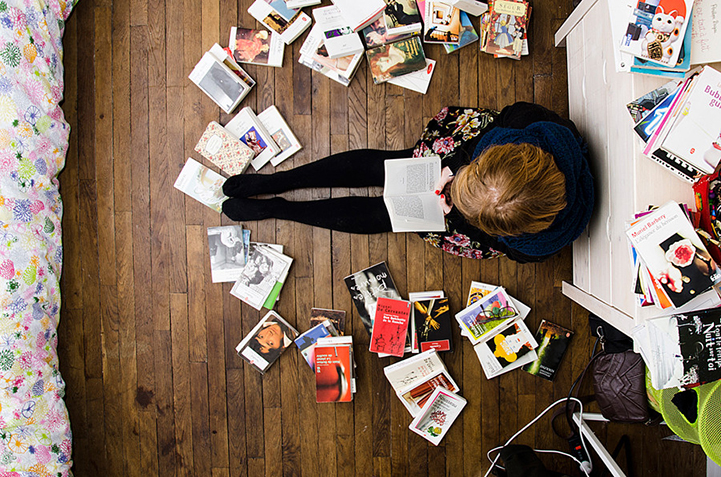
Bird’s-Eye Views: Florian Beaudenon’s Instant Life
Paris photographer Florian Beaudenon’s Instant Life series captures people in their rooms from above—intimate, collaborative overhead portraits of everyday joy.
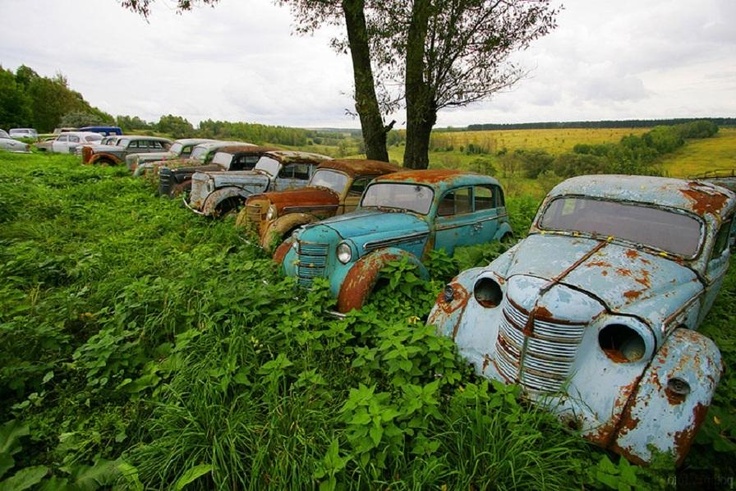
Abandoned Cars Reclaimed by Nature: Rust, Growth, and Quiet Ruin
When neglected vehicles are left outdoors long enough, rust, moss, and trees rewrite them into strange still lifes—sad, photogenic, and slowly returning to the ground.