
Sunrise & Sunshine
Early-rising photography at its best—sunrise color, long shadows, and quiet horizons before the day turns ordinary.
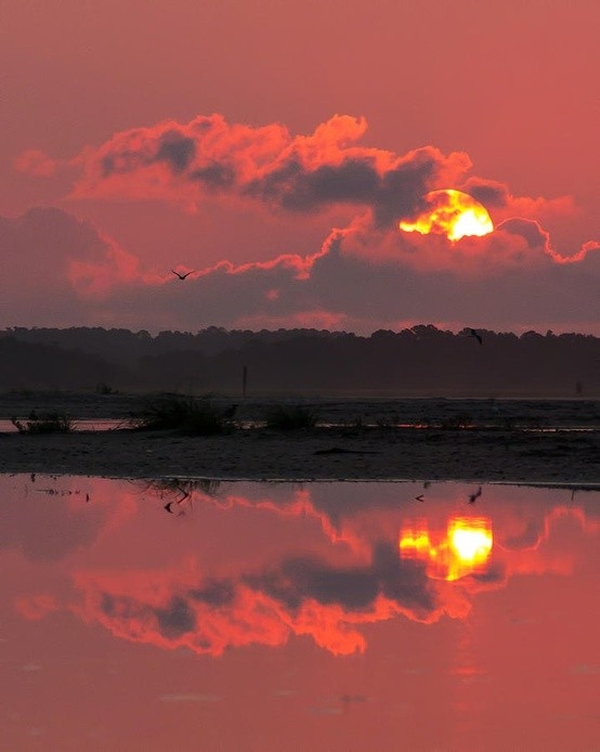
Sunrise is the hour when light still has manners. It arrives as color before it becomes glare: peach against cold blue, gold threading through mist, a thin white disk that refuses to hurry. Photographers who catch it are not merely early; they are bargaining with a sky that changes every few minutes and then vanishes into ordinary daylight. This gallery gathers sunrise and early sunshine frames—horizons, water, silhouettes, and open fields—as a reminder that the most dramatic light of the day often arrives before coffee does.
Special thanks, always, to the early risers who set alarms for color rather than for meetings. Their work turns a private moment on a quiet road into something you can look at later, when the sun has already climbed into flat noon.
Why sunrise photographs feel different from sunset
Sunset and sunrise share orange and pink, yet they do not feel the same. Evening light often arrives with human noise still in the frame—traffic, beach crowds, the aftertaste of the day. Morning light arrives into quieter air. Mist hangs longer. Roads are emptier. The same lake that looked busy at dusk can look like a mirror at dawn. That calm is part of what you are seeing in strong sunrise work, even when the sky itself is theatrical.
Temperature matters too. Cool air can hold haze that softens distant hills and turns the sun into a disc rather than a white hole. Warm evenings can push haze differently, or clear into sharp silhouettes. Photographers who prefer sunrise often talk less about romance and more about practicality: fewer people, cleaner compositions, and a sky that builds rather than collapses. You watch light arrive instead of watching it leave.
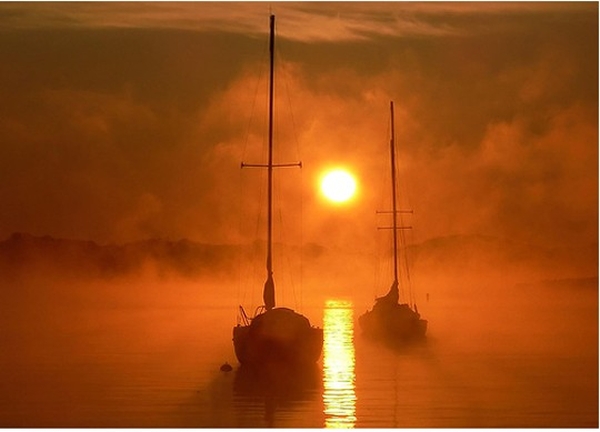
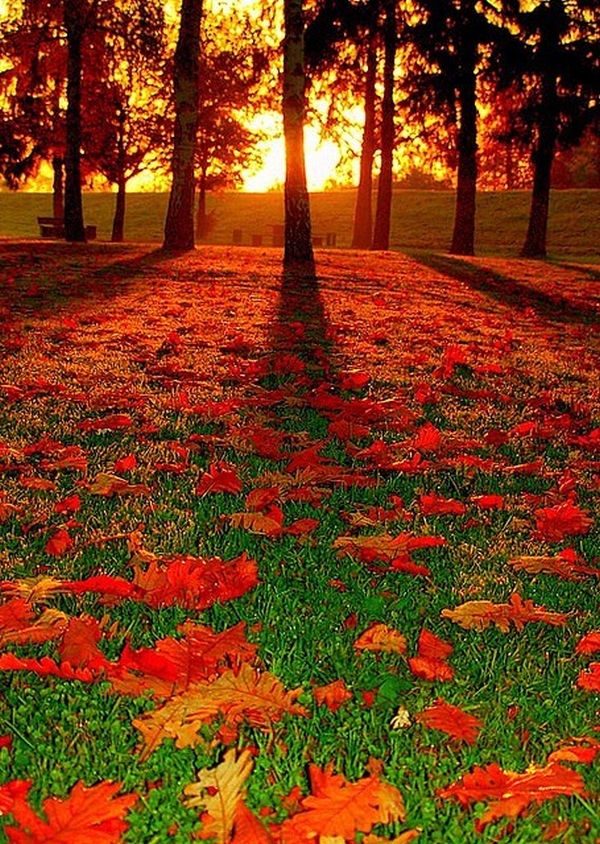
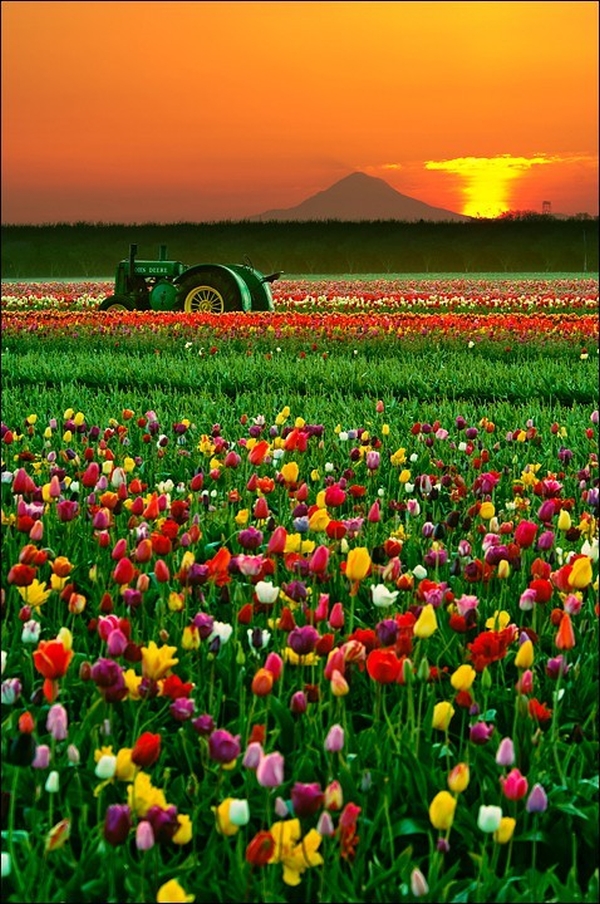
Color, silhouette, and the first useful shadows
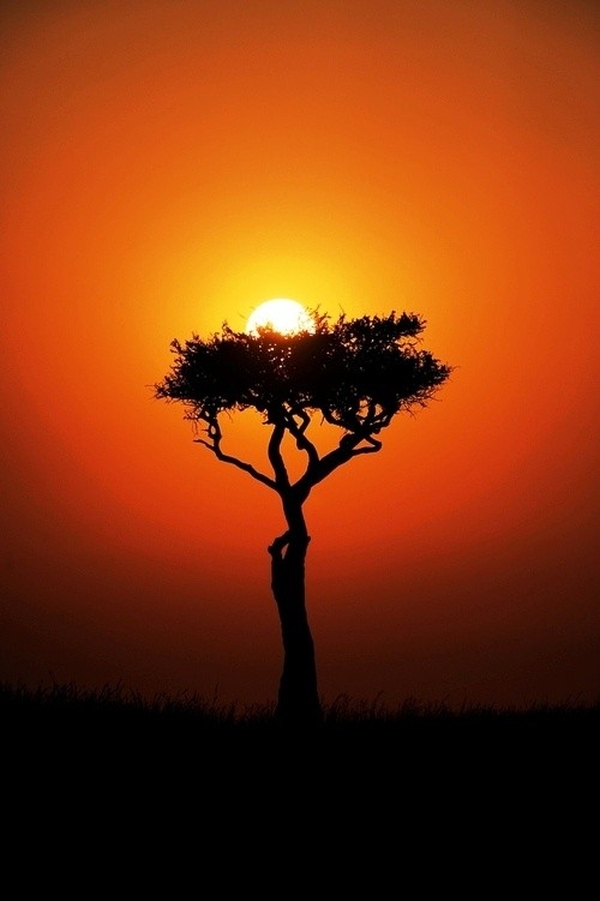
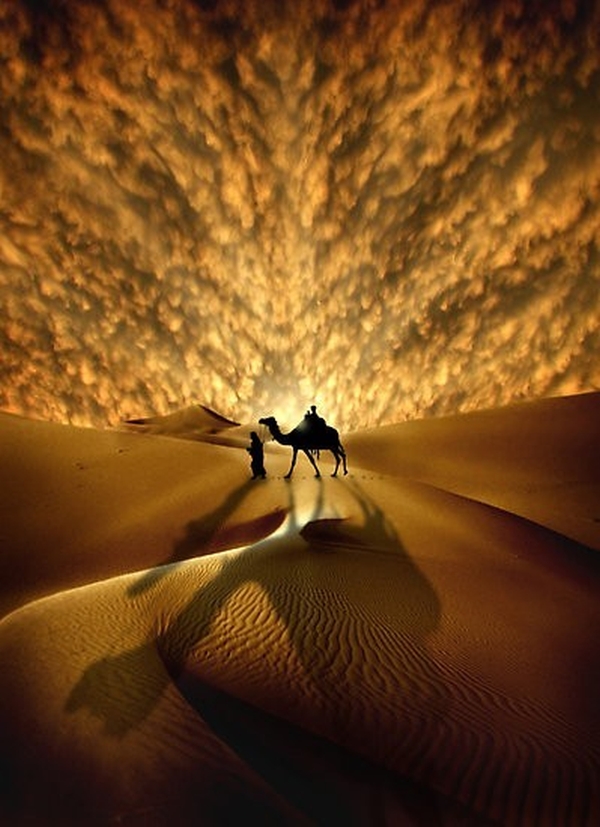
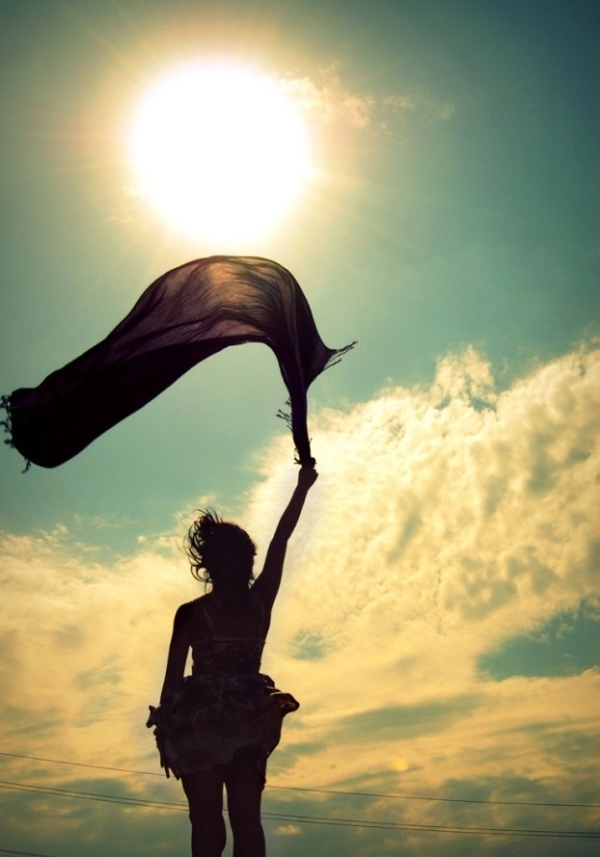
Good sunrise photographs are rarely only about the sun. The sun is the lamp; the subject is what the lamp reveals. Silhouettes—trees, piers, ridgelines, a single figure—give the color a shape to push against. Without a dark shape, orange sky can look like a gradient preset. With one, the frame becomes a place.
Watch how shadows behave in these images. Early light stretches them long and soft. Detail in the dark areas stays quiet; detail in the bright areas can flare. Photographers often expose for the sky and accept deep foregrounds, or they expose for land and let the sun bloom. Neither is wrong. What matters is intention. A blown-out sun can feel like heat. A contained disc can feel like a coin dropped into blue.
Clouds are collaborators when they cooperate. Thin high clouds catch pink and gold before the ground does. Thick low banks can hide the show entirely or create dramatic breaks where light pours through in beams. The frames that stay memorable usually catch one clear event: a break in cloud, a reflection locking color into water, or a horizon line clean enough to hold the whole composition.

Water, weather, and places that repay the alarm
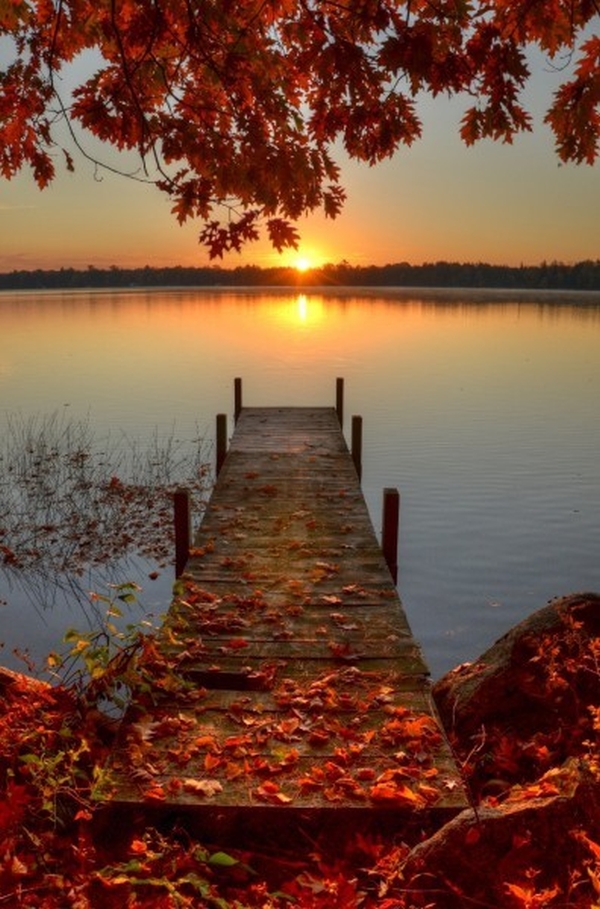
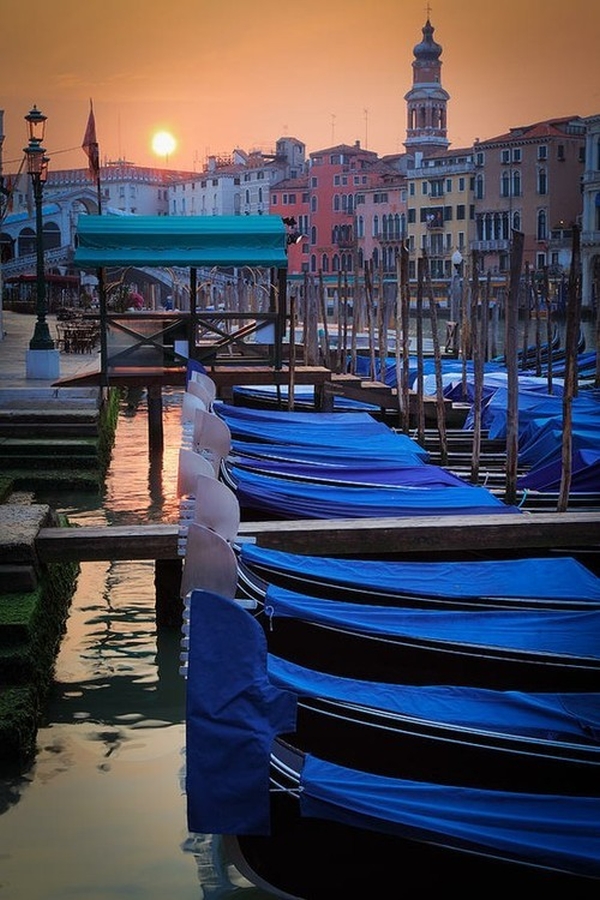
Water multiplies sunrise. Lakes, oceans, wet sand, and even puddles can double the sky and soften hard edges. That is why so many classic dawn photographs lean toward shores and harbors. The surface does not need to be glass-smooth; texture can be beautiful when ripples break color into stripes. Fog over water is another gift: it erases clutter and leaves you with tone, shape, and a sun that looks almost hand-painted.
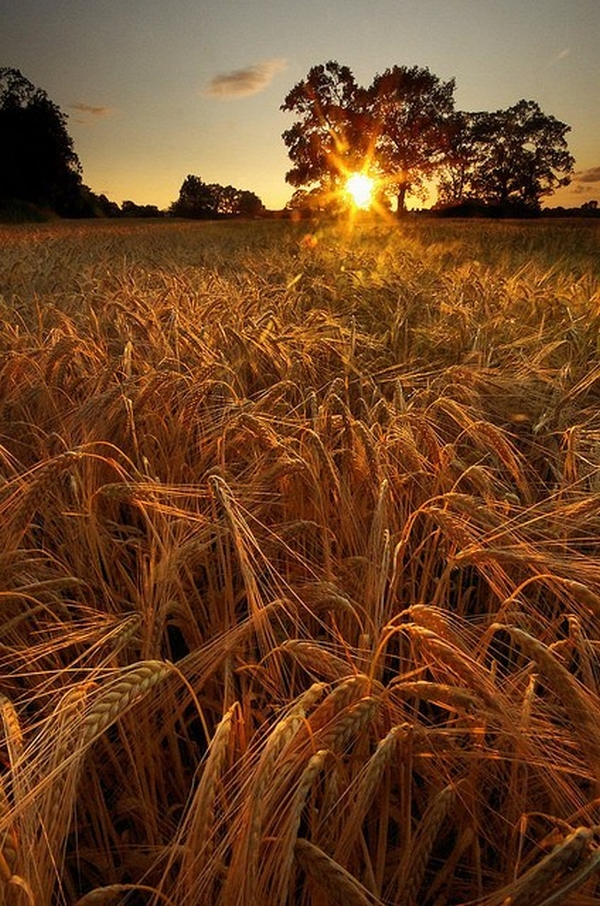
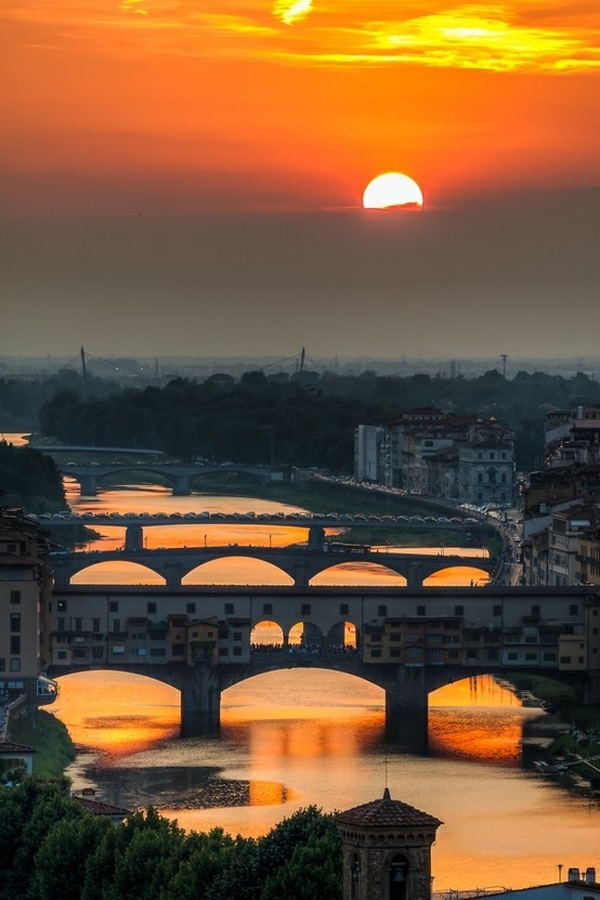
Mountains and open plains reward patience differently. Elevation can put you above a fog layer so the sun rises into a second world. Flat land offers unbroken horizons where color bands read cleanly from ground to zenith. City shooters chase silhouettes of towers and bridges; rural shooters chase fence lines, barns, and fields still holding night coolness. The best galleries mix those moods so the theme—sunrise—does not become a single postcard repeated.
Weather forecasts help, but they do not guarantee poetry. Clear skies can be lovely and also a little plain. Partial cloud is often richer. After rain, wet surfaces and clean air can make colors feel newly washed. Winter sunrises sit lower and longer in many latitudes; summer ones can be brief and fierce. Knowing your local timing is half the craft. The other half is standing there when the phone says you should still be asleep.
How to look at a sunrise gallery without rushing
Scroll culture treats morning light like candy. Slow down. For each frame, find the darkest shape first, then climb toward the brightest edge of the sun or the brightest cloud. Ask whether the light feels close—almost in your face—or distant, like weather happening on another ridge. That distance changes the emotion. Close light feels intimate and hot. Distant light feels like pilgrimage.
Notice what the photographer protected. Did they keep stars or deep blue still visible, or did they let the whole sky go warm? Is there a human clue—a path, a boat, a rooftop—or is the world empty on purpose? Empty can mean solitude; a small human mark can mean scale. Neither is superior. Comparing those choices across a set is half the pleasure of a multi-image sunrise collection.
If you shoot yourself, borrow habits rather than presets. Scout a location the afternoon before. Check sunrise time and arrive in the blue hour so you are not assembling a tripod in panic. Bring a cloth for dew. Expose a few frames for sky and a few for land. Stay ten minutes after the “best” color—sometimes the afterglow is quieter and better. Then go home and let the day begin properly, with the knowledge that you already saw its most interesting light.
Gear talk can wait. Plenty of memorable sunrise frames were made with modest cameras and careful feet: get to the place, face the light, protect a foreground, and shoot a short sequence as color climbs. A phone can document the event; a dedicated camera can refine it. Either way, the subject remains the same—sunshine arriving, not equipment accumulating.
These photographs do not need a lecture to work. They need your attention for a little longer than a double-tap. Let the sun shine on you with all its colours—on the screen first, and maybe, one morning soon, in person before the world fully wakes.

Comments
Continue reading
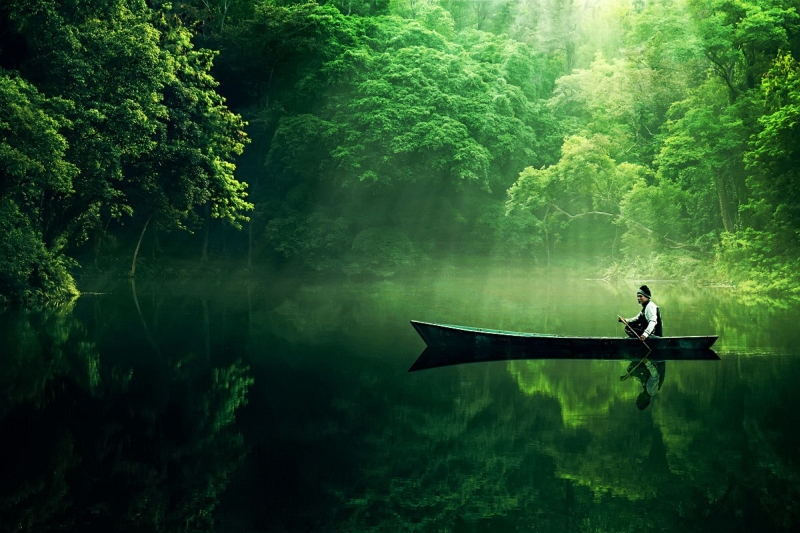
Dramatic Photo Art by Sukron Ma’mun (Ipoenk Graphic)
Cirebon, Indonesia photographer Sukron Ma’mun uses theatrical natural light to frame village life, play, and place in lyrical photo art.

Bird’s-Eye Views: Florian Beaudenon’s Instant Life
Paris photographer Florian Beaudenon’s Instant Life series captures people in their rooms from above—intimate, collaborative overhead portraits of everyday joy.
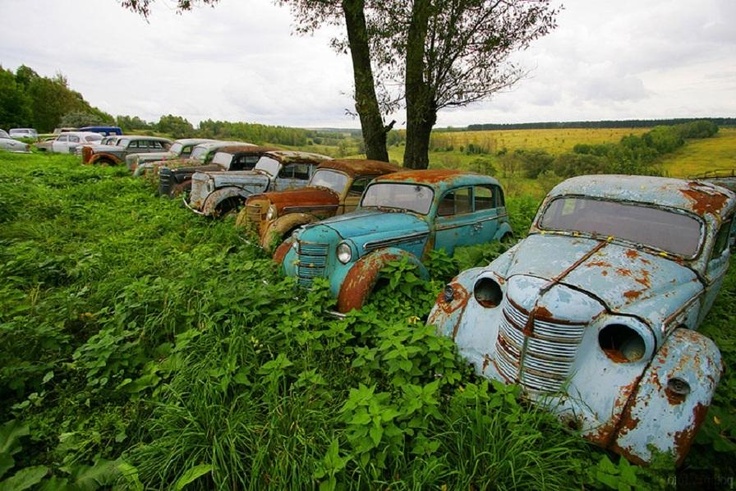
Abandoned Cars Reclaimed by Nature: Rust, Growth, and Quiet Ruin
When neglected vehicles are left outdoors long enough, rust, moss, and trees rewrite them into strange still lifes—sad, photogenic, and slowly returning to the ground.