
Kaija Straumanis’ Headshots: Painfully Playful Self-Portraits
Kaija Straumanis’ Headshots series—nicknamed Stuff Being Thrown at My Head—stages composite self-portraits where everyday objects appear to smash into her face.
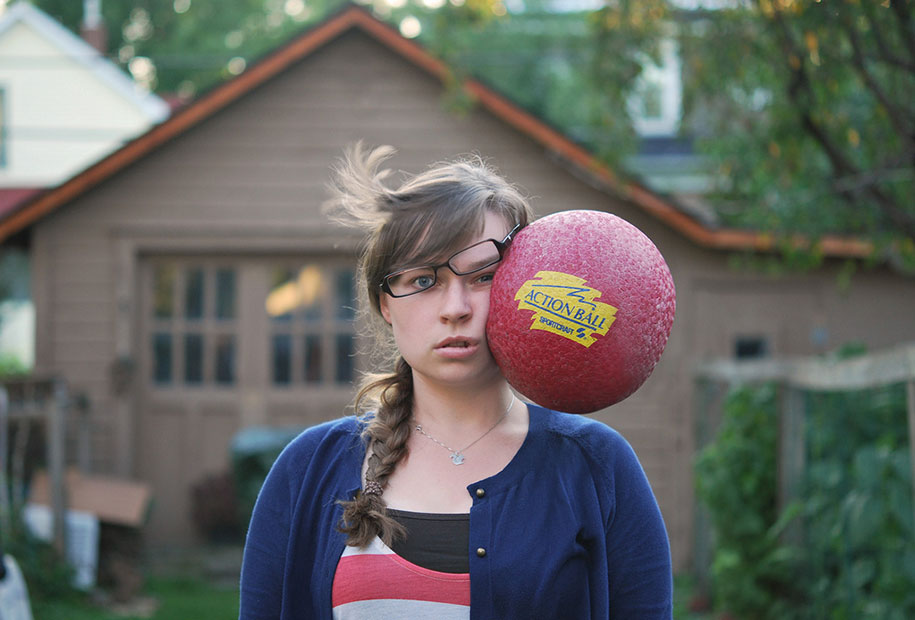
Kaija Straumanis photographs herself at the exact frame where an everyday object seems to smash into her face. A boot, a book, a kickball, a pumpkin, an ice scraper—whatever the prop, her glasses tip, her hair flares, and her expression stays weirdly composed. Online audiences nicknamed the run “Stuff Being Thrown at My Head,” a Reddit-friendly label that stuck harder than her own working title, Headshots. Either name points to the same joke: a portrait session that looks like an accident report filed in perfect focus.
The U.S.-based photographer, literary translator, editor, and graduate student began the series as part of a Flickr Project 365 habit—one idea a day, executed with a tripod and patience. What traveled far beyond the daily-challenge crowd was not polish alone but timing. Each picture freezes the millisecond of contact so cleanly that comment threads split into two camps: people wincing in sympathy, and people insisting the objects must be taped to her frames. Both reactions are useful. The first proves the fiction lands; the second proves how hungry viewers are for a behind-the-curtain explanation.
How the hits are made
Nothing is thrown. Straumanis has been clear about the method whenever the series circulated through photography blogs in early 2014—PetaPixel, PictureCorrect, Bored Panda, and later the Flickr Blog among them. She sets a Nikon D60 on a tripod, uses a self-timer, and presses household props against her own face while she shoots multiple frames. Hands stay in some of those frames on purpose, so she can erase them later in Photoshop and leave only the collision. The final composite looks violent; the session feels more like awkward sculpture held against a cheekbone for a few careful seconds.
That gap between experience and image is the series’ real subject. Viewers want spectacle; Straumanis delivers a carefully staged bruise of light and plastic. She has joked about “duping the Internet,” not as a gotcha campaign but as an admission that pain sells better than process. The honesty does not kill the comedy. If anything, knowing the hands were painted out makes the deadpan stare funnier. She looks like someone who has accepted chaos as a daily commute and still shows up for the next appointment with the lens.
The first image in the run, she has said, began with a found kickball and a hunch that a face-hit gag would make family and friends laugh. She spent time studying angles in a bathroom mirror before trusting the camera. That humble origin—prop found, joke tested privately, then repeated with escalating objects—explains why the pictures never feel like a corporate meme kit. They feel like a stubborn personal dare that accidentally scaled.
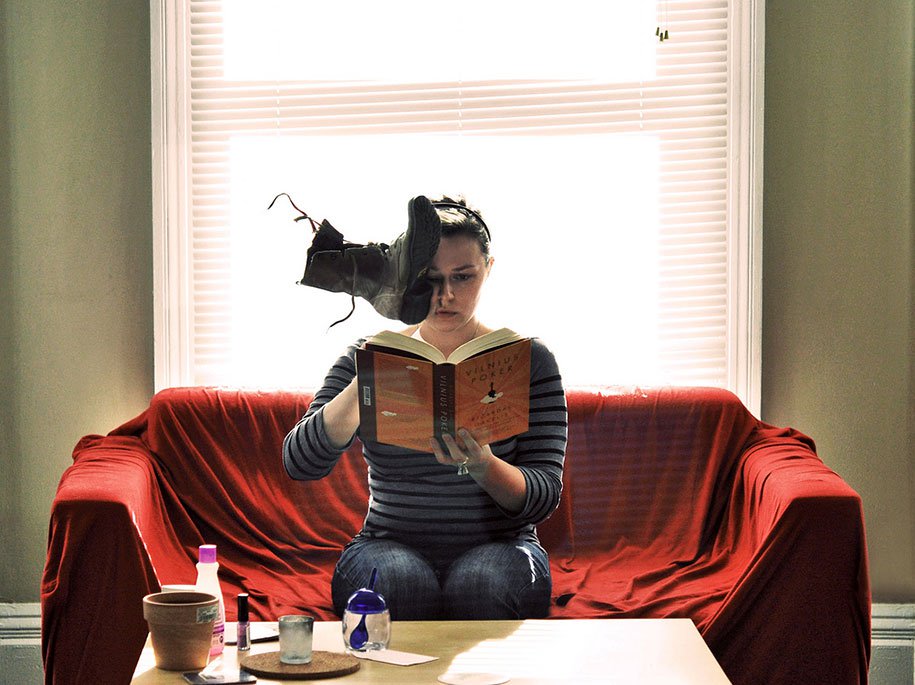
Props do narrative work too. An ice scraper can stand in for the sudden knowledge that autumn color means winter is coming. A heavy novel can read as information arriving too fast. A sports ball can feel like an idea that refuses to bounce politely. Straumanis has said she likes goofiness that still entertains people she knows first; the viral wave arrived later, when Flickr page views jumped from a quiet personal gallery into the hundreds of thousands—and then millions—almost overnight. Amateur status did not dilute the craft. It clarified the stakes: these were experiments made between other responsibilities, not a studio campaign engineered for brand metrics.
Why the deadpan works
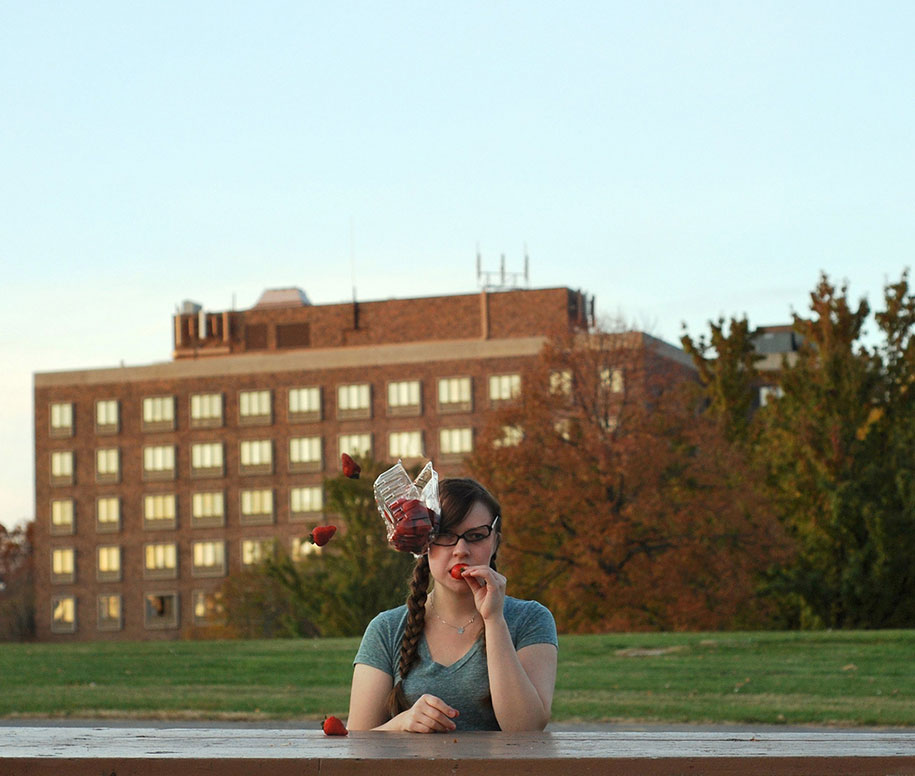
Plenty of selfie humor leans on exaggerated grimaces. Straumanis does the opposite. Her eyes often stay locked on the lens while the rest of the face crumples around an impact. That contrast—calm pupils, chaotic periphery—turns each frame into a tiny slapstick film still. You can almost hear the cartoon whap and then the silence after. Glasses become a recurring character: tilted, fogged, or half-dislodged, they mark the photographer as someone who keeps looking even while the world collides with her.
The series also sits beside a broader early-2010s appetite for conceptual self-portraiture that traveled well on Flickr and Tumblr: one strong premise, repeated with variations, readable at thumbnail size. Headshots passes that test. You understand the joke before you read a caption. Then the captions, when they appear, add a second layer—seasonal anxiety, travel residue, household absurdity—without explaining away the slap. Some viewers treat the set as pure gag reel. Others read it as a visual metaphor for epiphany: the moment an idea lands with force. Both readings can coexist because the pictures refuse solemnity even when the metaphor is available.
Latvian-born and living in the United States during the series’ rise, Straumanis also became a brief case study in how quickly a personal Flickr stream can become public property. Attention arrived as surprise rather than strategy. In interviews she described amusement, laughter, and the question “Did it hurt?” as the reactions she hoped for. Those goals are modest and precise. They keep the work from collapsing into cruelty or into pure technical flex. The composites are clever, but cleverness is in service of entertainment.
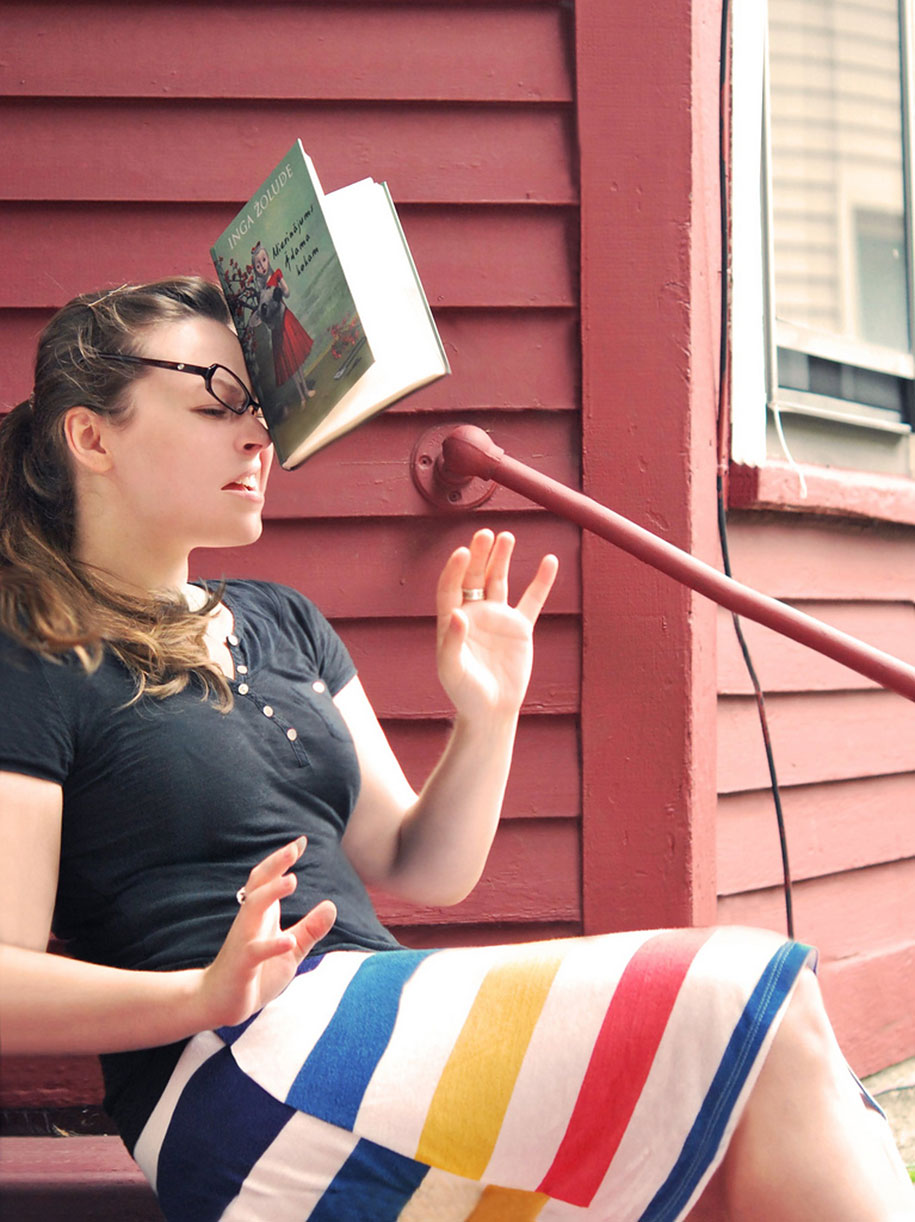
Credit matters here. Viral galleries sometimes strip names until a face becomes a meme template. Keeping Kaija Straumanis attached to the work restores authorship: translator, editor, student, and photographer who treated a Project 365 streak as a playground rather than a chore. Her blog and Flickr stream held the wider portfolio—travel frames, other self-portrait experiments—so the impact pictures never had to carry her entire identity. They were one loud chapter in a quieter practice, which is part of why they still feel light on revisiting.
Reading the gallery as a set
Look at the pictures together rather than as isolated gags. Repetition builds a character: the person who keeps getting hit and keeps showing up for the next take. Wardrobe stays ordinary. Backgrounds stay believable—kitchens, yards, rooms that look lived in. The extraordinary element is always the contact itself. That restraint is why the composites hold up years later. Trends in selfie filters come and go; a well-timed collision still reads as physical comedy because the body language is specific and the prop silhouette is clear.
For photographers borrowing the idea, the useful lesson is not “mash things against your face for likes.” It is about controlling variables. Consistent framing, reliable lighting, and a prop that reads clearly at small sizes matter more than danger. Soft edges or half-hearted contact would collapse the gag into a costume party. Straumanis’ composites succeed because the object’s shape and her facial response share one decisive instant, and because she shoots enough variants to remove the evidence of how the prop was held.
There is also a gentle critique of sincerity culture hiding inside the laughter. Social media often rewards confession or perfection. These portraits offer neither. They offer a staged misfortune that admits its staging once asked. The pain is pictorial; the play is real. When Straumanis says she feels oddly guilty that people think she is actually getting beaten up—and jokes that she is somehow disappointing viewers by not sacrificing her face—she is naming the bargain viral images make: the more convincing the fiction, the more the audience wants the bruise to be true.
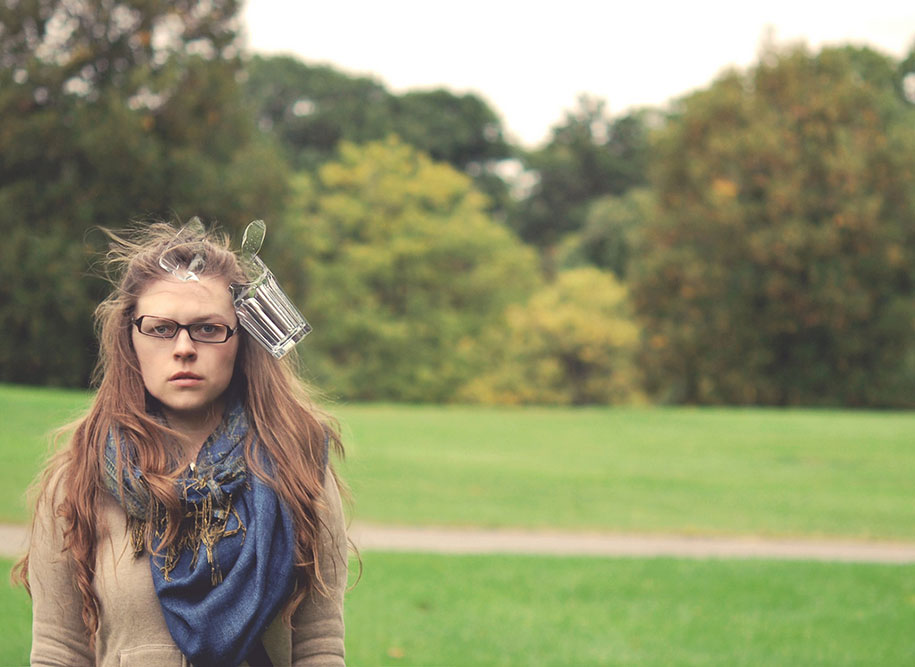
Scroll the set once for the punchlines. Scroll again for craft—how hair direction sells velocity, how a slightly tilted glasses line sells impact, how ordinary rooms become slapstick stages without costume changes. Then sit with the question the comments never quite settle: if amusement is the goal, does knowing the hands were erased ruin the fun, or does it deepen it? Straumanis seems content either way, as long as someone still looks twice and asks whether it hurt.

Comments
Continue reading

Dramatic Photo Art by Sukron Ma’mun (Ipoenk Graphic)
Cirebon, Indonesia photographer Sukron Ma’mun uses theatrical natural light to frame village life, play, and place in lyrical photo art.
Bird’s-Eye Views: Florian Beaudenon’s Instant Life
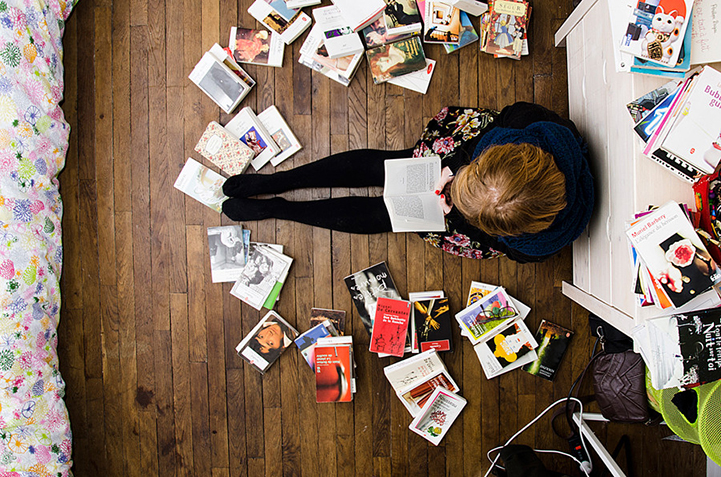
Paris photographer Florian Beaudenon’s Instant Life series captures people in their rooms from above—intimate, collaborative overhead portraits of everyday joy.
Abandoned Cars Reclaimed by Nature: Rust, Growth, and Quiet Ruin
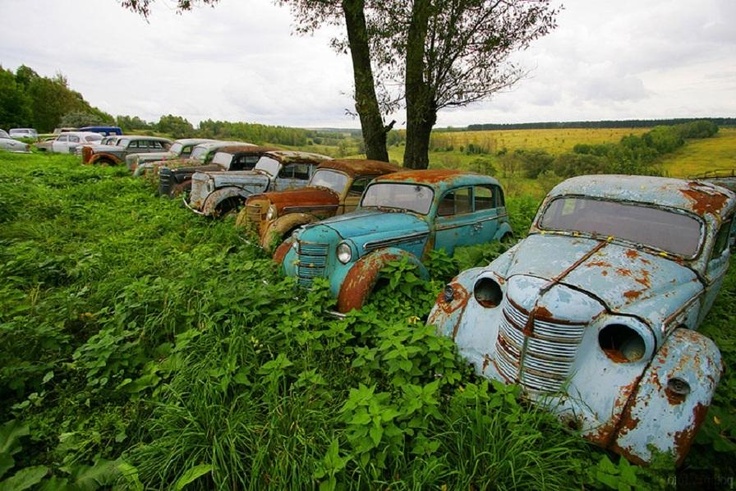
When neglected vehicles are left outdoors long enough, rust, moss, and trees rewrite them into strange still lifes—sad, photogenic, and slowly returning to the ground.