
Ramon Bruin’s Studio 3D Optical Illusion Drawings
Dutch artist Ramon Bruin builds tabletop anamorphic drawings on stacked paper—airbrush and graphite illusions locked to a single camera angle.
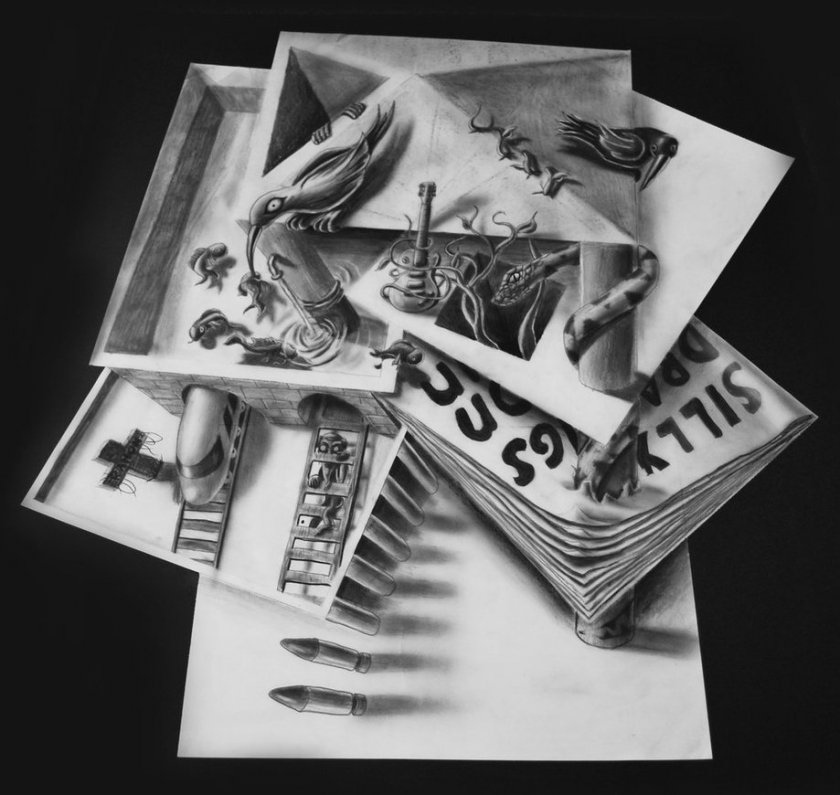
Ramon Bruin is a Dutch freelance artist who trained at the Airbrush Academie in the Netherlands and built much of his craft as a self-taught draftsman. Beside airbrush work he draws and paints in acrylic, oil, watercolor, charcoal, paint pens, pencil, and graphite. The range matters: his best-known pieces look like magic tricks, but they rest on ordinary studio skills—edges, values, and patient observation of how light wraps a form.
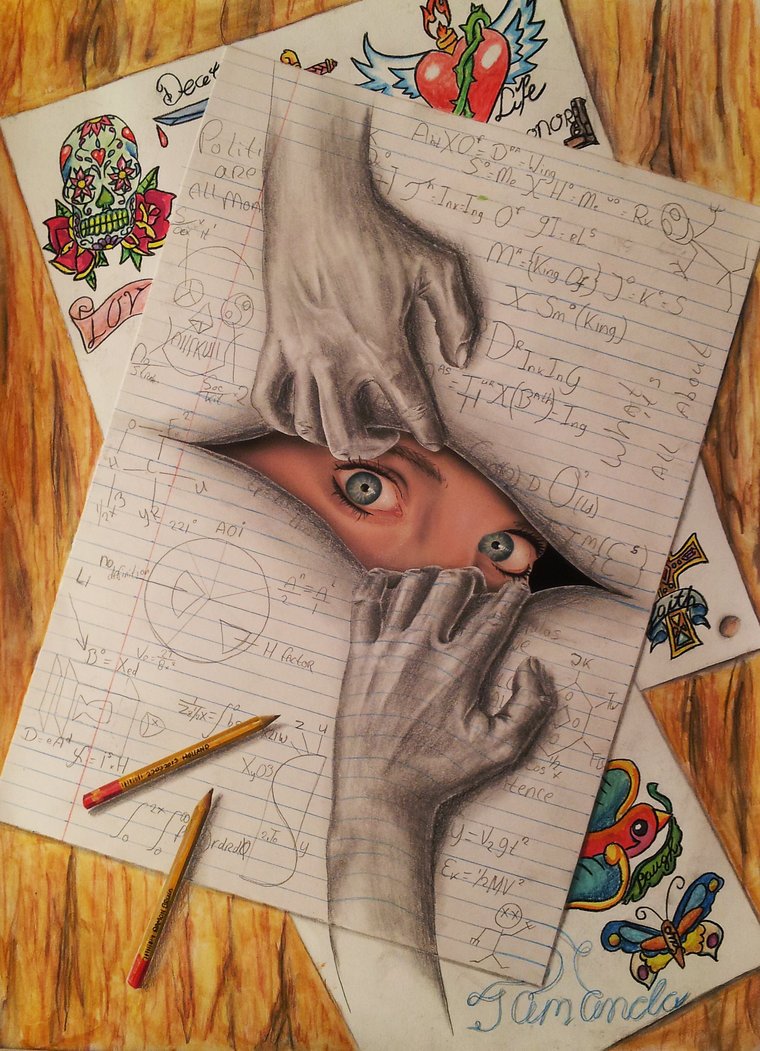
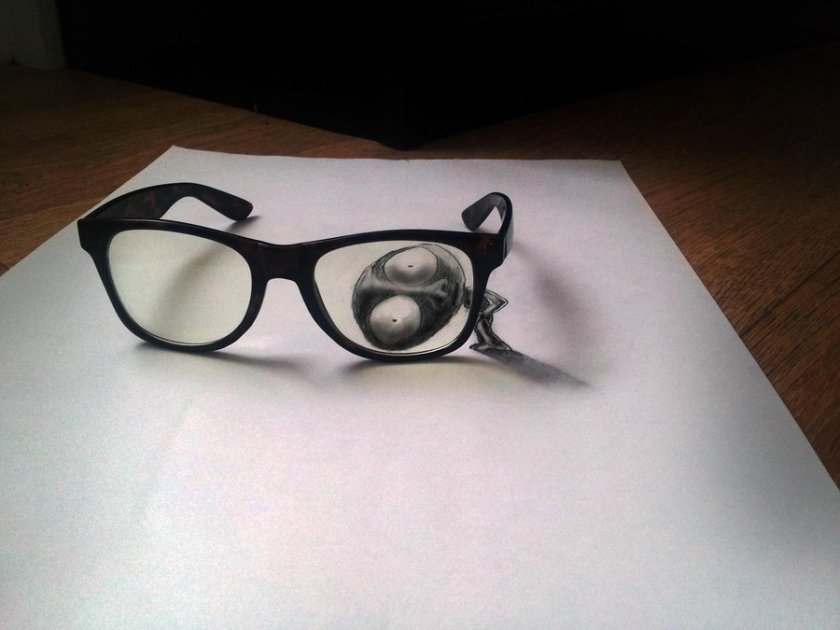
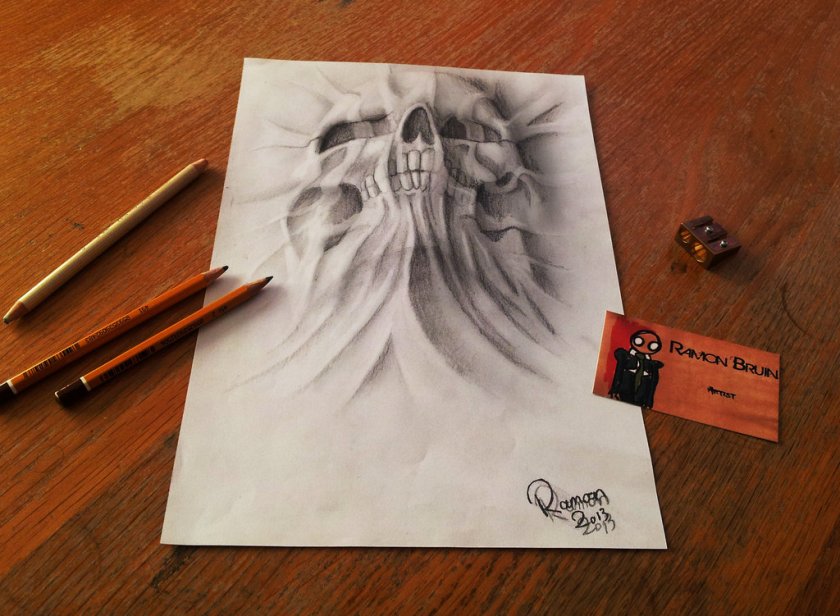
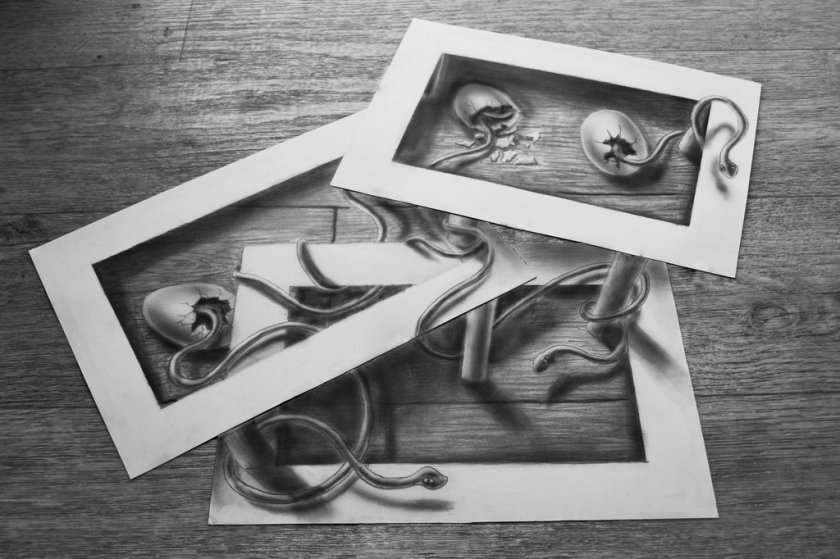
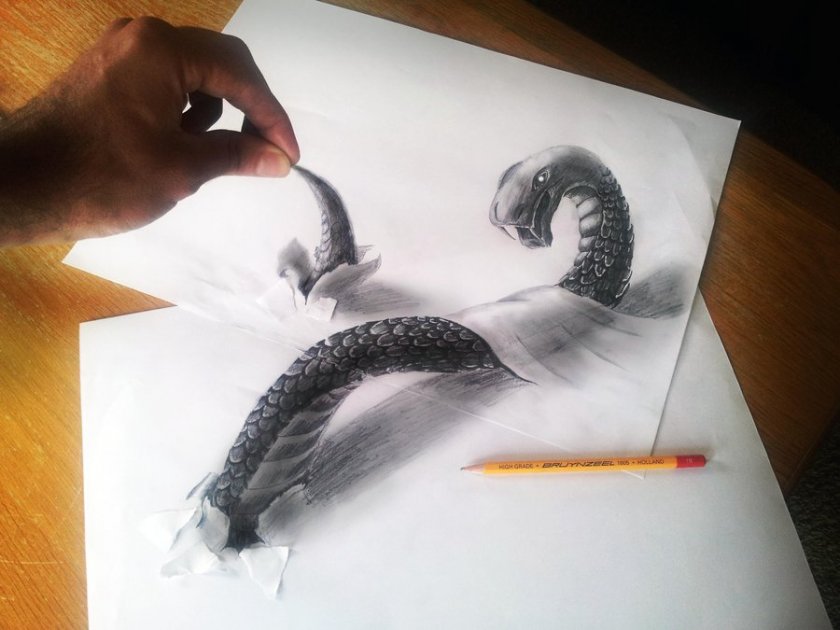
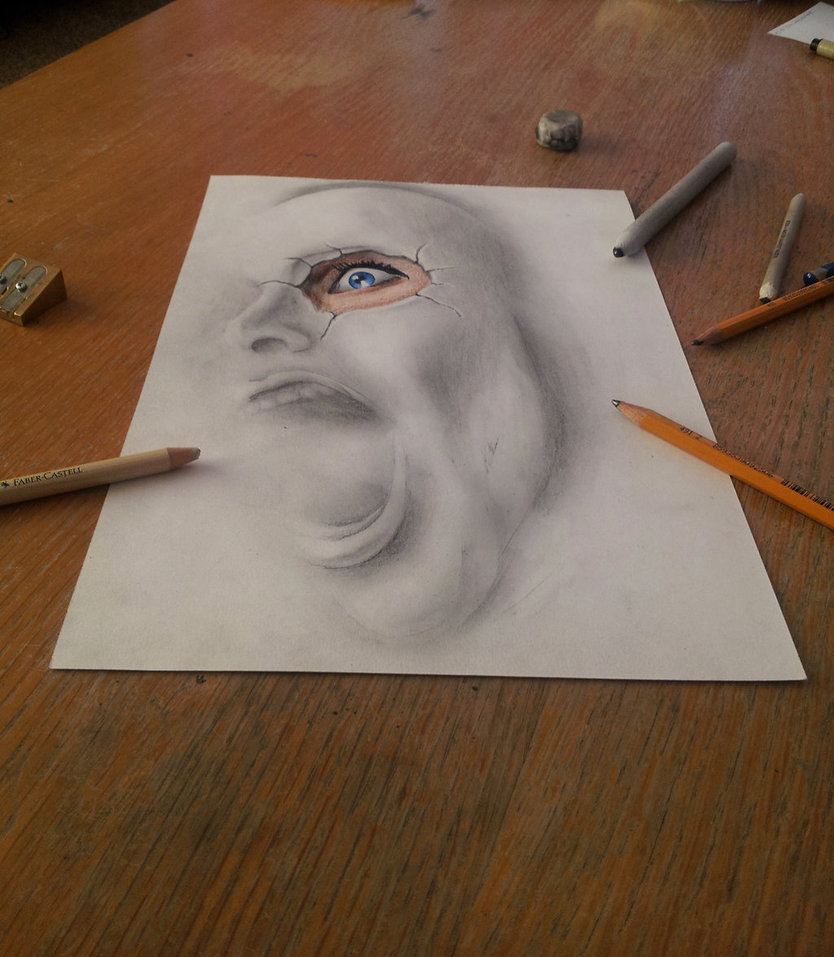
In the early 2010s Bruin became widely known for tabletop optical illusions photographed from a precise camera angle. Flat paper turns into tunnels, trains, birds, snakes, and floating forms that seem to lift off the page. Unlike pavement anamorphosis made for public plazas, these works live on desks and floors in the studio: sheets of paper stacked, tilted, and aligned so a single viewpoint locks the illusion. He has called the approach Optical Illusionism—a personal blend of drawing, staging, and photography rather than digital 3D modeling. The finished file you share online is as much a photograph of a performance as it is a drawing.
Studio illusions, not street murals
It helps to keep Bruin’s setting clear. German street painters such as Nikolaj Arndt work outdoors on asphalt, inviting passersby to stand on chalk oceans and pose with painted animals. Bruin’s gallery here is indoor and intimate: graphite and airbrush on paper, often across multiple sheets, shot against dark or plain backgrounds so the white page pops. The “3D” is photographic—true only from the lens position he chooses. Shift a few degrees and the train collapses back into a warped sketch. That collapse is not a failure; it is proof the distortion was intentional.
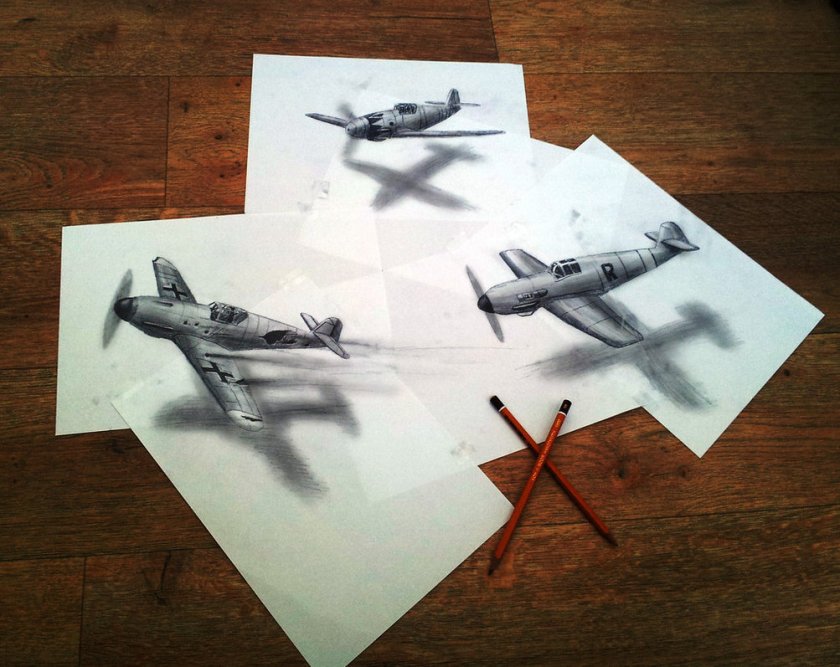
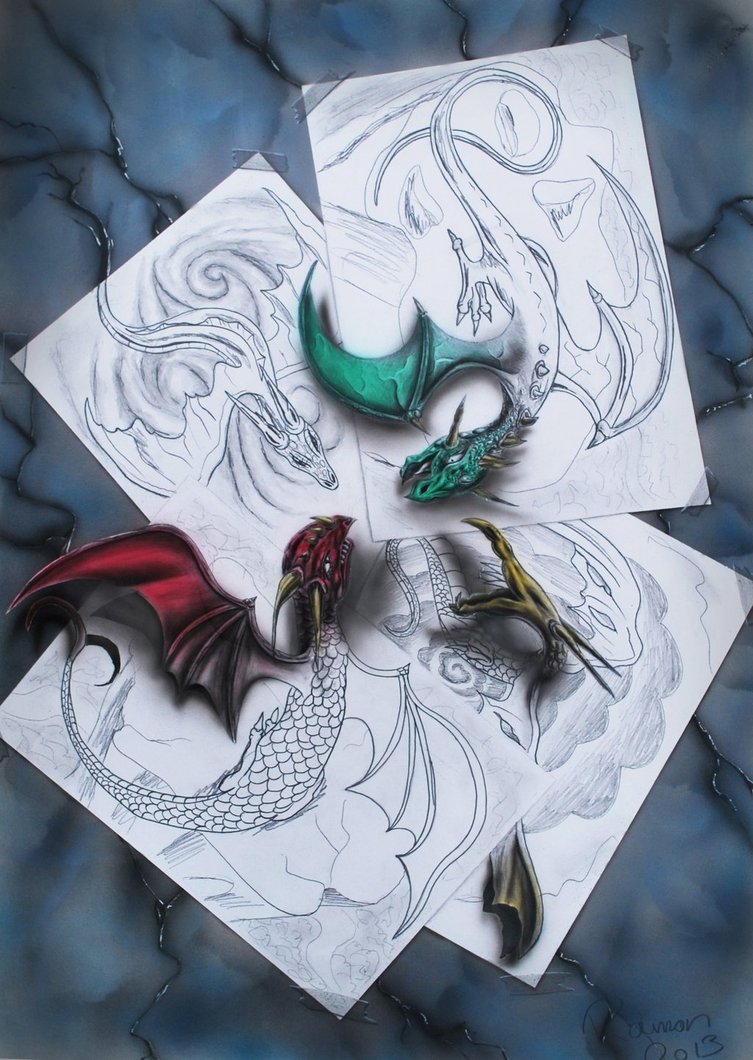
That constraint is the craft. Anamorphic drawing means stretching shapes so they look correct only from one spot. Bruin adds another layer by letting drawings climb across overlapping pages, stairs of paper, and torn edges. A tunnel can begin on one sheet and finish on another. A snake can weave between layers. Bullets can cast drawn shadows that pretend to hover above the bottom page. The props are humble—paper, pencils, sometimes a real hand or object entering the frame—but the coordination between drawing and camera is ruthless. Move the tripod an inch and hours of work refuse to resolve.
Indoor control also lets him chase finer gradients than festival chalk usually allows. Soft airbrush fog inside a tunnel, hairline graphite on a page edge, and deep blacks against a studio backdrop create a private cinema of depth. Street work must shout across a plaza; Bruin’s paper work can whisper details that only appear when you zoom the photo.
From airbrush realism to playful depth
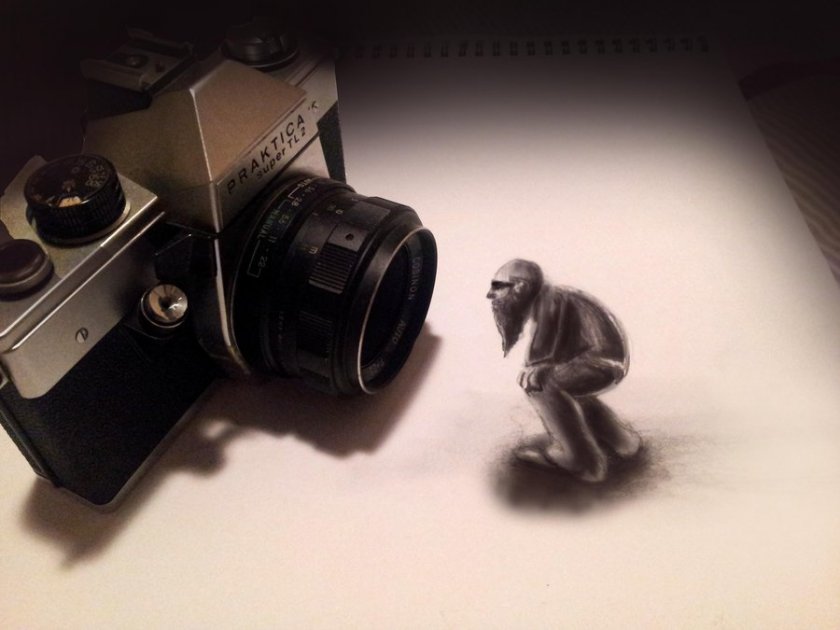
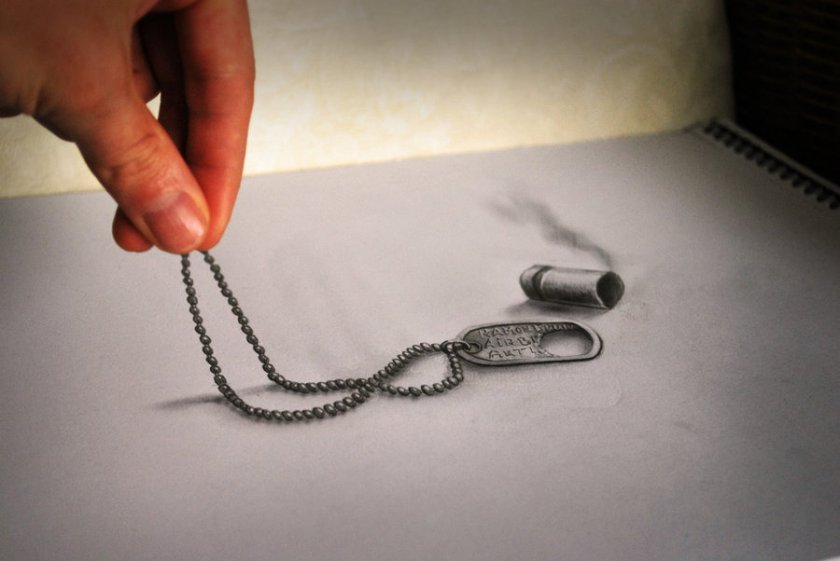
Airbrush training shows in Bruin’s smooth gradients and soft atmospheric fades. On paper, soft spray can build fog inside a tunnel or the rounded belly of a form without hard pencil hatching. Graphite and charcoal then restore crisp contact shadows where a drawn object meets a page edge. Photorealism and cartoon invention sit side by side: a locomotive can look heavy and oily while a neighboring bird reads as graphic silhouette. The mix keeps the work from becoming a pure technical demo. You are invited to enjoy the trick and the drawing personality at once.
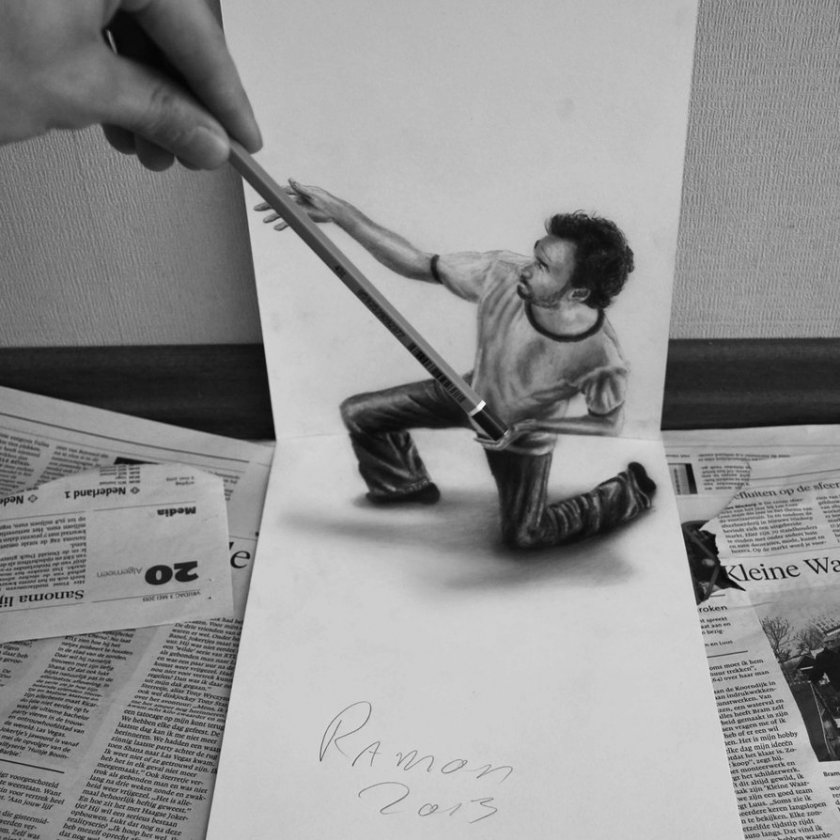
Many images in this set also flirt with handwriting and titles scrawled on the paper itself—reminders that you are looking at drawings, not CGI. That honesty is part of the charm. Bruin does not hide the studio. He lets you see the stack of sheets, the torn corner, the black backdrop. The illusion is stronger because the evidence of flatness remains in the frame. Your eye toggles between “object in space” and “marks on paper,” and that toggle is the entertainment. Digital 3D can fake depth endlessly; here depth is earned by aligning physical paper with a chosen lens.
His wider practice—expressionist paintings, airbrush commissions, doodled canvases with layered shadow games—shares the same obsession with contrast. Soft against hard, black against white, square against circle. The viral 3D sheets are simply the most shareable expression of that contrast habit: flat versus deep, real paper versus drawn space, one correct angle versus every wrong one.
Reading the gallery
As you move through the images, watch for recurring studio strategies:
- Multi-sheet stages. Depth comes from physical layers of paper as much as from drawn perspective.
- Cast-shadow games. Drawn shadows under “floating” forms sell lift-off better than outline alone.
- Viewpoint discipline. Each finished photo is a performance of angle; the drawing is incomplete without the camera.
- Medium switching. Soft airbrush atmospheres meet hard graphite edges where contact with paper must feel sharp.
- Hand and prop interactions. When a real hand or object enters, scale suddenly becomes a negotiation between drawing and world.
- Visible process. Torn edges, stacked pads, and scrawled titles keep the work grounded in the studio rather than a seamless CGI void.
Those habits separate Bruin’s studio practice from mural-scale street anamorphosis. Pavement work must survive weather, foot traffic, and wide viewing distances. Paper work can chase finer gradients, tighter crops, and private jokes—trains exiting tunnels drawn across torn pages, creatures climbing sheet edges, titles that wink at the viewer. Both traditions use distorted perspective; they answer different questions about where art lives and who gets to stand inside it. Bruin’s answer is: on the table, under the lamp, for the camera’s one honest eye.
Beyond the viral 3D shot
Bruin’s public reputation leans on the viral 3D drawings, yet his broader practice includes expressionist painting, airbrush commissions, and later experiments that still begin with handmade marks. The through-line is control of value: knowing how light wraps a form, how soft a shadow should fall, how much detail to withhold so the brain completes the illusion. Photorealism without that restraint becomes clutter; illusionism without that restraint becomes a muddle of competing depths. Looking at his strongest sheets, you can feel him deciding what not to draw so the eye will invent the rest.
For artists borrowing from this set, the useful homework is not “draw something cool in 3D.” It is smaller and harder: pick one sheet of paper, draw a simple form with a believable contact shadow, photograph it from several angles, and notice how quickly the illusion dies when the camera drifts. Then try two sheets with a shared tunnel or stair. Only after the viewpoint problem feels real does multilayer chaos become productive instead of decorative. Add a third sheet only when the first two already lock from the lens. That patience matches how Bruin’s multi-sheet scenes actually read—as stacked agreements between paper and camera, not as random piles of sketches.
Viewers can play a similar game without picking up a pencil. On each image, find the seam where one sheet ends and another begins. Ask whether the illusion jumps that seam or ignores it. Then imagine walking three steps to the left. If you can feel the drawing fall apart in your mind, you have understood the piece better than any caption that simply says “mind-blowing.”
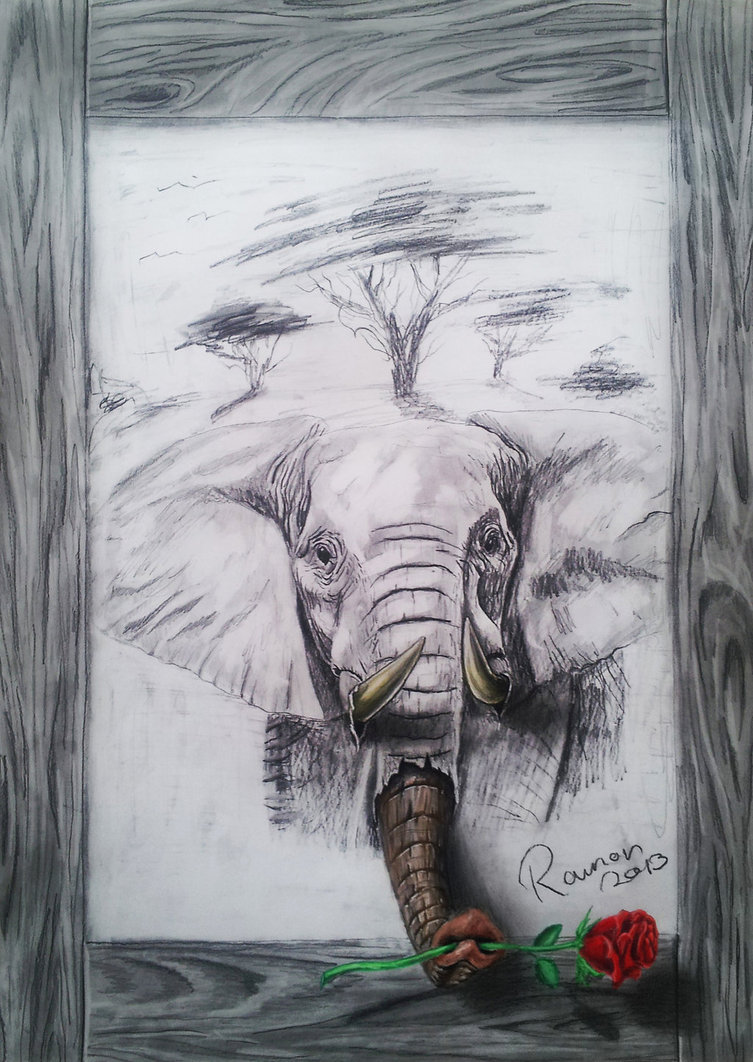
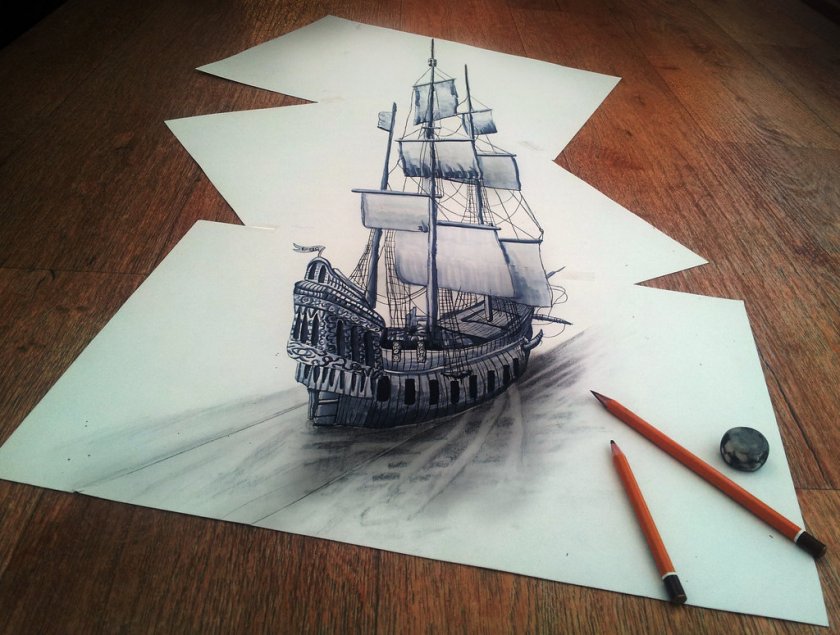
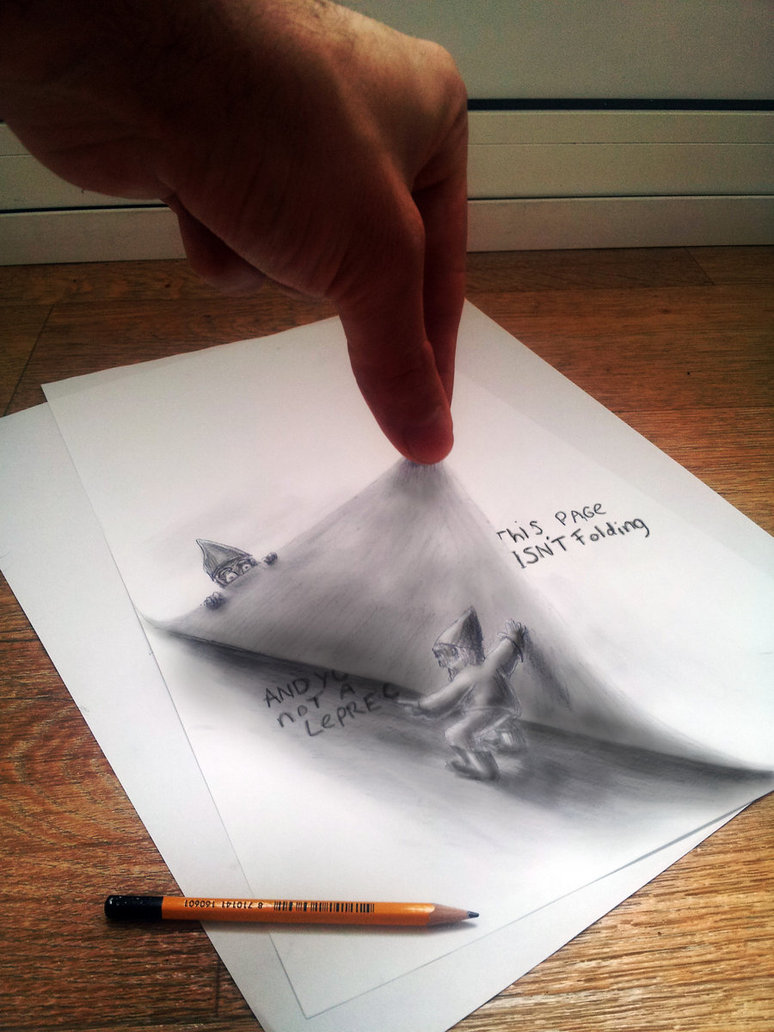
Return to the multi-sheet scene with the train, bird, and hovering forms: every “impossible” depth is still graphite meeting paper under a chosen lens. Ramon Bruin’s studio artwork earns its mind-bending reputation not by leaving the page, but by making the page negotiate with the camera until flatness briefly loses the argument.

Comments
Continue reading
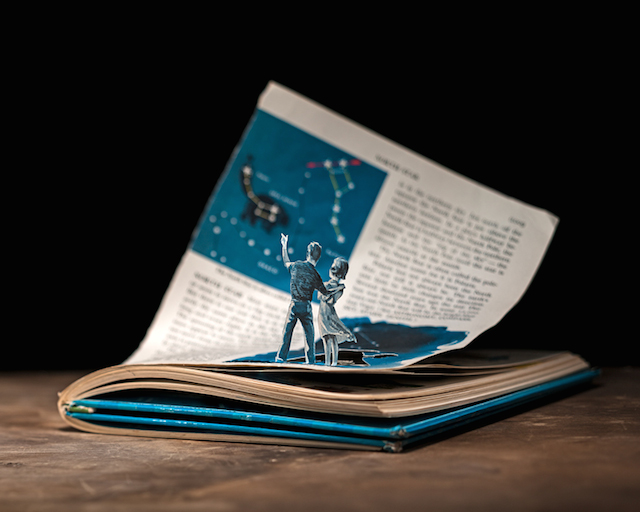
Thomas Allen’s Book-Cut Illustrations
Michigan illustrator Thomas Allen cuts pulp paperback figures into 3D tableaux, photographs them in shallow focus, and gathers the practice in his Aperture book Uncovered.
3D Origami Sculptures by Jaroslav Mishchenko
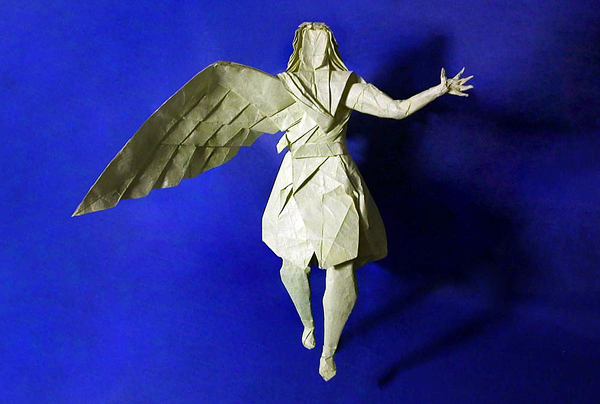
Kyiv artist Jaroslav Mishchenko folds painted three-dimensional origami sculptures—animals, objects, and abstract forms—where crease, color, and careful light share the work.
Alessandro Diddi’s Anamorphic 3D Drawings: Hands, Folds, and False Depth
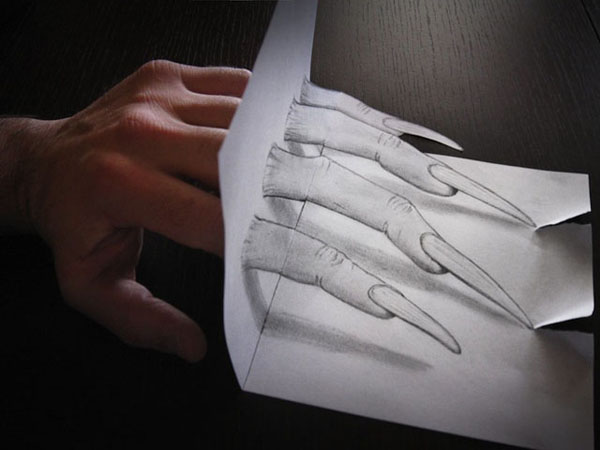
Italian artist Alessandro Diddi folds paper, locks a camera angle, and drafts shadows until claws, bridges, and bitten fingers seem to leave the page.