
Anna Campbell’s 2013 Gossamer Made-to-Measure Bridal Collection
A historical look at Anna Campbell’s 2013 Gossamer made-to-measure wedding gowns—French-romance fit, crystal shoulders, bone color, and the Australian atelier moment.
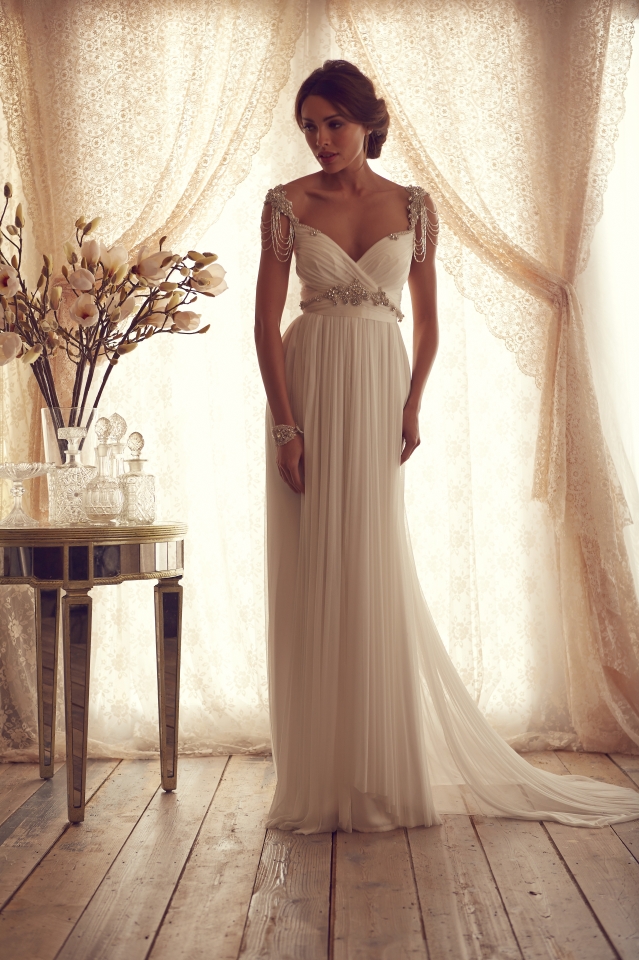
In June 2013, Australian bridal designer Anna Campbell presented Gossamer, a made-to-measure wedding collection that distilled the romantic, vintage-leaning language she had been building since launching her label in 2007. At that moment Campbell was still closely associated with boutique-era Australian bridal: soft femininity, lace and tulle, hand beading, and backs detailed enough to become the photograph everyone remembered. Gossamer did not abandon that signature. It refined it—more body-conscious fit in places, more glitter at the shoulder and neckline, and a quieter vintage palette note that bridal editors immediately flagged.
This page looks at that 2013 made-to-measure season as a historical collection moment: what Campbell’s early label stood for, what Gossamer added, how the gowns were meant to be worn and ordered, and why the look mattered to brides hunting for custom glamour rather than a purely off-the-rack silhouette.
Where Anna Campbell’s bridal language came from
Campbell began her label in 2007, first known for glamorous pieces sold into boutiques and for accessories that shared the same ornamental instinct as the gowns. By the early 2010s her name circulated among brides who wanted soft drama: floating lace, tulle bodices, embroidered and beaded surfaces, and an overall vintage vibe that could read Edwardian one moment and old-Hollywood the next. The dresses were not minimal. They were built for light—crystals and beads catching movement, open or deeply considered backs, and fabrics chosen to feel luxurious in person rather than merely photogenic on a screen.
That aesthetic placed her in a particular bridal conversation of the time. While some houses pushed clean architectural columns or heavy ballgown volume, Campbell’s work stayed intimate and decorative. The appeal was emotional as much as structural: a bride who wanted to look collected and romantic, not severe. Gossamer arrived as a made-to-measure expression of that taste—closer to couture process than to a purely stocked rack experience.
What “Gossamer” signaled in 2013
The collection title itself hinted at lightness: gossamer as sheer, delicate, almost airborne. Coverage from bridal sites that season described French-romance inspiration and silhouettes fitted more closely to the figure than some of Campbell’s earlier, freer shapes. Grace and glamour were the twin aims—gowns that skimmed and defined rather than only floating away from the body.
Two design notes were widely discussed at launch. The first was glittering shoulder and neckline work. Campbell was already known for memorable necklines and backs; Gossamer pushed the sparkle into those zones with crystal and bead embroidery that read as jewelry built into the dress. The second was a new color story: a vintage-feeling “bone” tone that took substantial sourcing time and gave the lineup a softer, antique elegance beside classic ivory and white. Button detailing running from the small of the back toward the knee was another debut gesture, adding a long vertical rhythm to the rear view.
Together, those choices kept the collection inside Campbell’s romantic lane while making it feel like a distinct season rather than a remix of earlier bestsellers. Brides who already loved her lace-and-tulle handwriting could recognize the house instantly. Brides who wanted something slightly more custom and figure-aware had a clearer made-to-measure path.
Made-to-measure, not just “bridal pretty”
In 2013, Gossamer was presented as a made-to-measure range and, in early reporting, as available in Australia rather than as a fully global stocked line. That matters for understanding the collection historically. Made-to-measure bridal sits between pure couture and ready-to-wear: the design language is set, but measurements, fitting rhythm, and often fabric or detail negotiations bring the gown closer to the individual body. Price bands discussed in contemporary coverage sat in the several-thousand-Australian-dollar range, reflecting handwork, luxury textiles, and the fitting process.
The same season, Campbell’s broader business also pointed toward more widely distributed “off the rack” or ivory-collection pathways for international boutiques. Gossamer’s role was different. It was the elevated, appointment-driven expression—the collection you entered when you wanted the house’s most ornamental, customized face. Later years would see elements of Campbell’s world travel farther through ready-to-wear channels; the 2013 made-to-measure story belongs specifically to that atelier-adjacent moment.
Silhouette, fabric, and the camera’s favorite angles
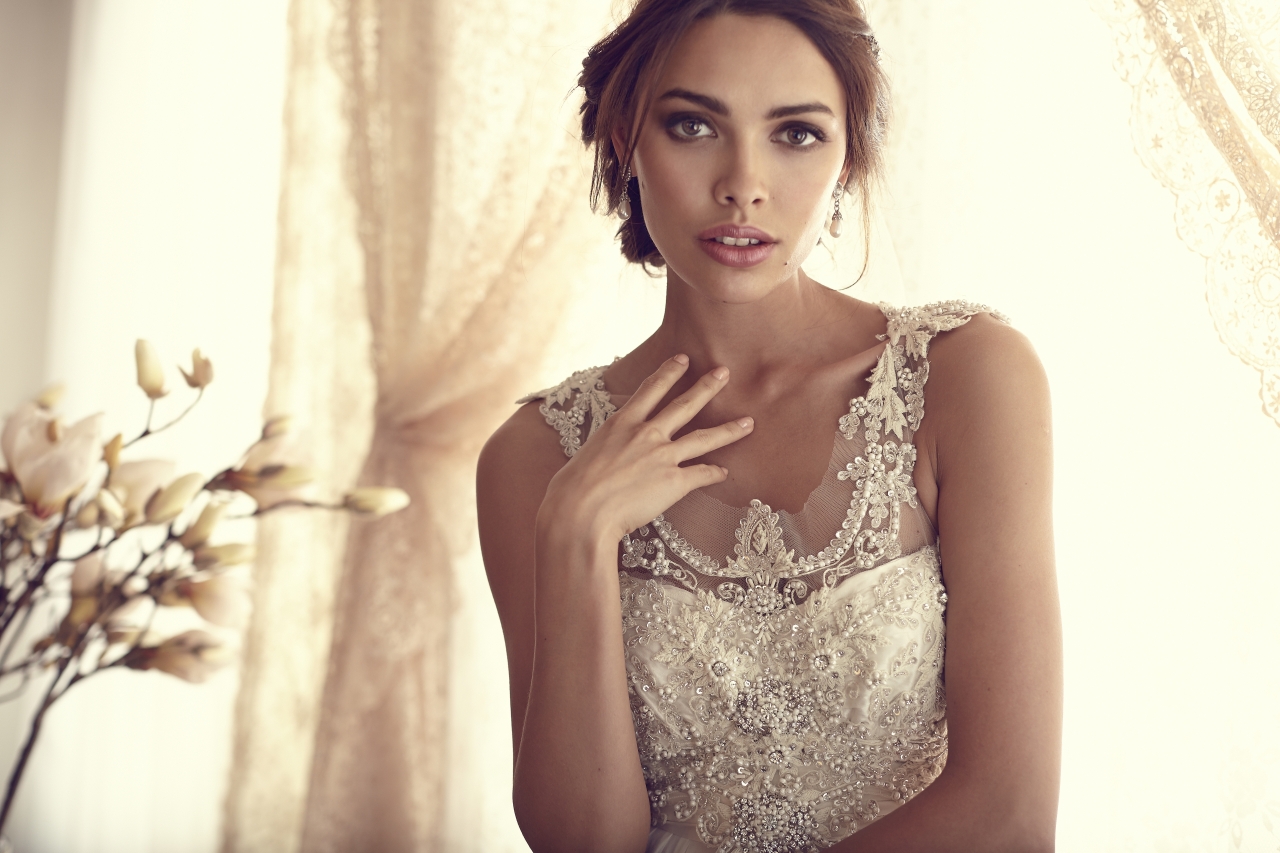
Look at Gossamer gowns as a set of recurring decisions. Fitted bodices and controlled skirts create a glamorous outline without requiring extreme volume. Lace appears as both structure and decoration—sometimes mapping the torso, sometimes dissolving into tulle. Beading is concentrated where movement and light meet: straps, shoulders, necklines, and those celebrated backs. The result photographs beautifully from behind as well as from the front, which mattered enormously in a wedding culture already fluent in Pinterest boards and professional albums.
The vintage register comes less from costume quotation than from tone and finish: bone and soft ivory, button spines, lace density, and a softness around the edges of modern glamour. A bride could steer the same dress toward a garden ceremony or an evening city reception by changing hair, jewelry, and setting. That flexibility helped the collection travel through bridal blogs in 2013; the images felt specific to Campbell yet usable across many wedding scripts.
How the collection was received
Bridal press and independent wedding blogs treated Gossamer as a highlight of the Australian made-to-measure calendar. Launch events in Melbourne-area settings framed the clothes with romantic styling—flowers, candlelight, accessories—reinforcing the French-romance brief. Commentators lingered on craft: hand beading, fine lace, silk hands, and the sense that each gown was meant to feel one-of-a-kind once fitted.
For international readers who could not order the made-to-measure line immediately, the collection still functioned as aspirational reference. It clarified what “Anna Campbell bride” meant in that era: decorative without irony, feminine without costume stiffness, detailed enough that a simple venue would not flatten the look. When later ready-to-wear or stocked collections expanded access, Gossamer remained a useful historical marker of the house at a high ornamental pitch.
Looking at Gossamer now
Seen from a distance, the 2013 made-to-measure collection sits at a familiar bridal crossroads. On one side is the desire for soft heritage romance. On the other is the modern preference for a gown that acknowledges the body and performs for photography. Gossamer tried to hold both: lace and bone color for memory, crystals and fit for presence.
If you are studying the collection as fashion history rather than shopping it as a current rack, notice the priorities. Campbell invested attention where wedding images linger—face frame, shoulders, back, and the way light breaks on beadwork. She treated made-to-measure as a promise of fit and finish, not merely a marketing adjective. And she kept the emotional temperature warm. These were not ironic dresses. They were sincere instruments of bridal glamour for a specific early-2010s taste.
Among the looks from that season, different brides would choose different heroes: the most open back, the most glittering shoulder, the bone gown with the long button line. The collection’s coherence is what remains. Whether a single dress “steals your heart” is personal. What Gossamer offered as a whole was a clear answer to a 2013 question: what does Australian romantic bridal look like when it is cut closer, finished by hand, and made to a bride’s measure?

Comments
Continue reading
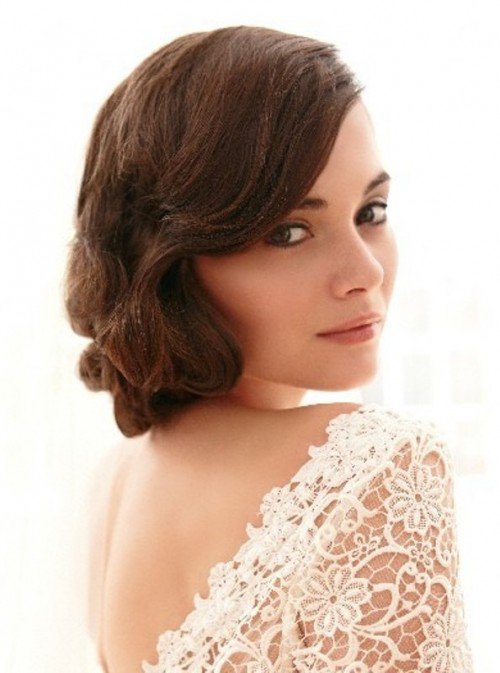
15 Vintage Wedding Hairstyles: Finger Waves, Bouffants, and Birdcage Veils
Fifteen vintage bridal hair looks—from 1920s finger-wave faux bobs to 1960s bouffants, victory rolls, and Hollywood waves with birdcage veils.
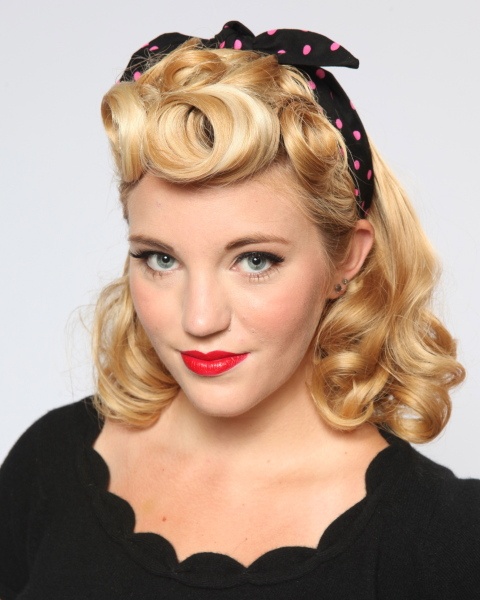
Vintage Hairstyles by Decade—Waves, Rolls, Flips, and Wearable Volume
A practical tour of 1920s waves through seventies feathers: silhouettes, tools, and how to wear period hair without a full costume.
Vintage and Chic Bridal Bouquets That Feel Heirloom-Ready
Soft palettes, lace wraps, fabric blooms, and brooch details—how to build a bridal bouquet with lasting vintage chic instead of a one-day stem stack.