
Elizabeth Evelyn’s Food Photography: Contrast, Hospitality, and the Lived-In Plate
Tennessee-based writer, cook, stylist, and photographer Elizabeth Evelyn made food images that feel hospitable—mess, contrast, and sweet-savory tension included.
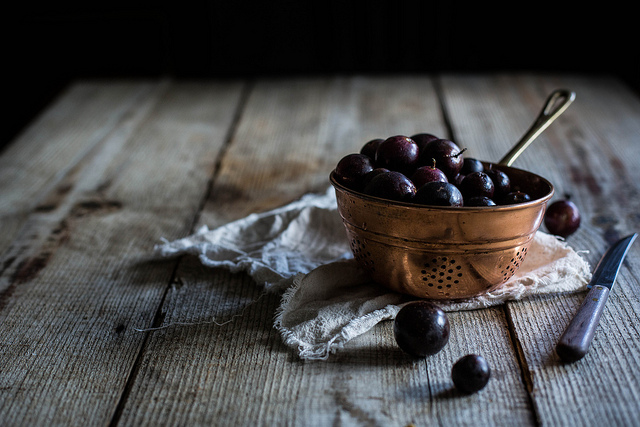
Elizabeth Evelyn built a kind of food photography that feels less like advertising and more like walking into someone’s kitchen just after something good has come out of the oven. Based in Tennessee, she worked as a writer, recipe developer, stylist, and photographer—roles that rarely sit in one person with equal weight. In her case they did. The plates look cooked, not staged for a catalog. The light feels borrowed from a real afternoon. The mess is part of the picture on purpose.
She described herself as a Southern woman with a deep love for cooking, curating, and hospitality. That sentence is useful because it explains the pictures better than any gear list. Hospitality is not a filter you apply in post; it is a way of arranging a table so a guest would want to sit down. Evelyn’s frames often carry that invitation: a board with crumbs still on it, a bowl that has already been dipped into, a napkin that looks used rather than folded for display.
Contrast as a working method
What made her work stick, especially in the early years of the food-blog boom, was contrast. She liked visual mess next to careful composition. She liked sweet pushed against savory, and savory finished with a sweet note. That taste for opposition shows up in the photography as well as the recipes: soft cream against a dark pan, bright herbs against browned edges, polished ceramics beside a scratched wooden surface.
Contrast is easy to fake with props. Evelyn’s version usually felt earned. A skillet still holds heat in the way the oil sits. Fruit looks seasonal rather than forever-perfect. Shadows are allowed. In an era when many food feeds chased hard brightness and empty white sets, her pictures kept atmosphere—windows, dusk, the quiet after prep when the cook finally steps back.
You can study that approach without copying her exact palette. Ask what opposites the dish already contains. A rich stew wants something sharp nearby—lemon, pickle, raw onion. A delicate pastry wants a heavier plate or a rough linen so it does not float away visually. Sweet-savory cooking and sweet-savory styling are cousins: both refuse a single note.
Styling that still looks like cooking
Recipe developers who also photograph their own food face a familiar trap. The urge to tidy everything before the shutter clicks can erase the story of how the meal was made. Evelyn’s strongest images keep process visible. Steam, drip, flour dust, a spoon left in the bowl—these details tell you someone was working, not only decorating.
That does not mean every shot should look chaotic. Hospitality also means clarity: the hero ingredient readable, the portion generous enough to feel shared, the color story coherent. Her styling often balanced those needs. One area of the frame might be busy with garnish or utensils; another stays quieter so the eye can rest. The “mess” is curated, but curated toward life rather than toward a product shot.
Writers who cook for a living tend to photograph differently from studio teams hired for one campaign. They know how sauces break, how greens wilt under lights, how long you have before a crust softens. That knowledge changes timing. Evelyn’s work rewards looking for those small timing decisions: when the cheese still stretches, when the glaze is still glossy, when the salad still has lift.
Southern light, everyday materials
Tennessee is not only a biography line; it is a lighting and material context. Soft daylight through a kitchen window, enamelware, cast iron, stoneware, local produce, and the unhurried pace of slow cooking all feed the same aesthetic. Even when her work traveled—retreats, editorial features, projects beyond the home kitchen—the Southern sense of place stayed audible: warmth without sugarcoating, beauty without sterility.
Local Milk, the blog she built around this practice, became a reference point for readers who wanted food stories with voice, not only instructions. Photography sat beside essays and recipes as one craft among several. That integrated approach matters for anyone learning from the archive. The pictures are stronger because the cooking and the writing were not afterthoughts. They were the same project seen from different angles.
If you are shooting your own recipes now, the lesson is not “add more rustic props.” It is closer to: cook something you would actually serve, light it with what the room gives you, and stop cleaning the second the plate starts to look like a person lived there. Props can help, but they cannot replace that honesty.
What to notice when you look again
Return to a frame like the one above and try reading it as a stylist would. Where does the brightest highlight fall? What is the darkest anchor? Is the food centered, or does it share space with empty board, cloth, or tool? How close is the camera—intimate enough to smell the dish, or distant enough to show a whole table?
Then read it as a cook. What temperature does the food imply? What season? Would you know how to plate it from the photo alone? Good food photography answers some of those questions without a caption. Evelyn’s best work often answered them with generosity: enough information to cook from, enough atmosphere to linger.
Finally, read it as a host. Does the image feel exclusive or inclusive? Does it celebrate perfection or welcome? Her reputation grew because the hospitality read as genuine. You did not need to own the same pottery to feel invited into the mood of the meal.
Practical takeaways from her approach
- Shoot food while it still behaves like food—heat, gloss, and structure change fast.
- Build contrast on purpose: tone, texture, sweet against savory, soft against hard.
- Leave a trace of process; total erasure makes plates look unreal.
- Let natural window light do hard work before you reach for fill tricks.
- Style for a guest who might sit down, not only for a scroll that lasts two seconds.
Those habits travel well whether you are photographing a weeknight soup or a holiday spread. They also explain why Elizabeth Evelyn’s images still feel distinct years after they first circulated among food lovers online. The craft was never only about pretty plates. It was about making cooking look like care—messy when it needed to be, sweet when it wanted to be, savory when the moment called for salt—and photographing that care before it cooled.

Comments
Continue reading

Dramatic Photo Art by Sukron Ma’mun (Ipoenk Graphic)
Cirebon, Indonesia photographer Sukron Ma’mun uses theatrical natural light to frame village life, play, and place in lyrical photo art.
Bird’s-Eye Views: Florian Beaudenon’s Instant Life
Paris photographer Florian Beaudenon’s Instant Life series captures people in their rooms from above—intimate, collaborative overhead portraits of everyday joy.
Abandoned Cars Reclaimed by Nature: Rust, Growth, and Quiet Ruin
When neglected vehicles are left outdoors long enough, rust, moss, and trees rewrite them into strange still lifes—sad, photogenic, and slowly returning to the ground.