
John Wilhelm’s Funny Photographs of His Daughters
Winterthur photographer John Wilhelm turns play with Lou, Mila, and Yuna into cinematic Photoshop comedies—genre titles, attic-studio shoots, and household imagination finished with care.
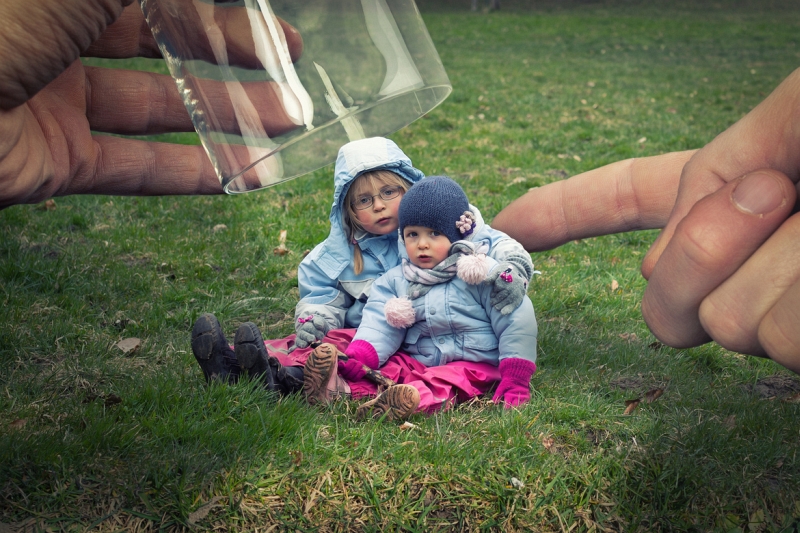
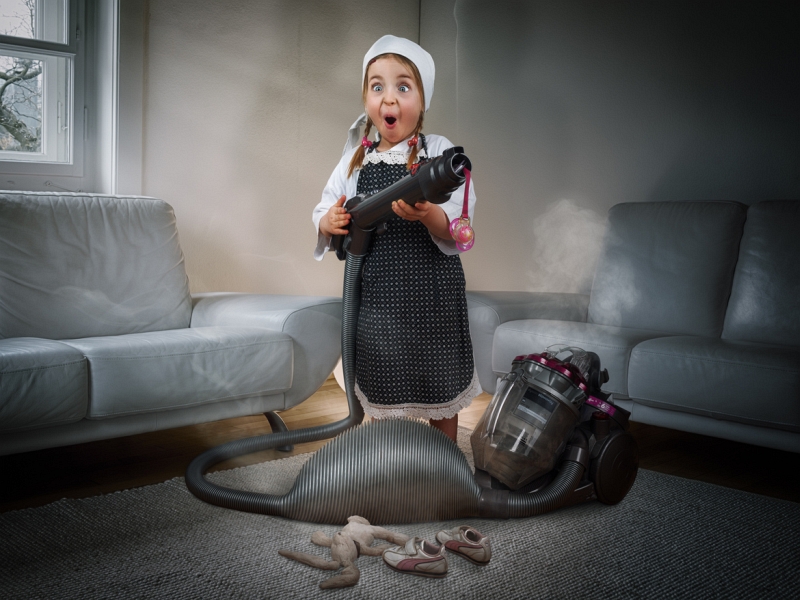
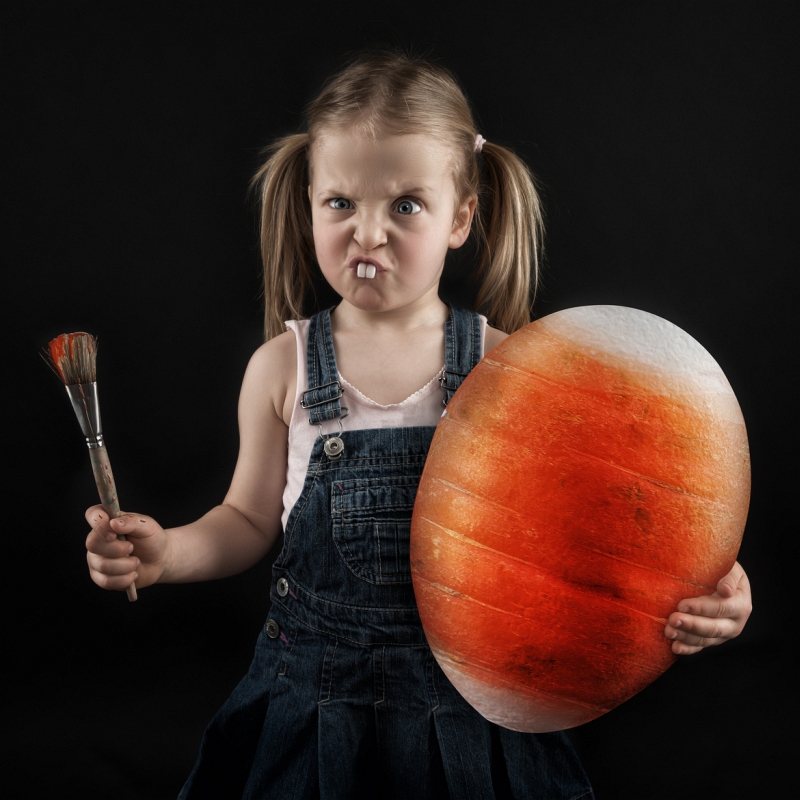
John Wilhelm, a photographer based in Winterthur, Switzerland, built an international following by turning ordinary hours with his daughters into elaborately funny, digitally finished pictures. The images look like stills from children’s adventure films that never quite went into production: aviation mishaps, junior ballet companies, cowboy melodrama, runaway freight, presidential portraiture, and fairy-tale mischief. What holds the series together is not a single gag. It is Wilhelm’s decision to treat family play as serious photographic material—and then push that material through Photoshop until the joke lands with cinematic polish.
Wilhelm has described himself as a “photoholic,” ranking photography and digital compositing just after family, friends, and his regular job. The label fits. These are not casual phone snaps shared once and forgotten. Many frames begin with poses shot in a small home studio, then expand into invented environments, scale tricks, and story titles that read like short-film loglines. Lou, Mila, and later Yuna appear as collaborators as much as subjects, which is why the gallery feels warmer than most viral “funny kid” photography. The children are stars of invented movies, not props for adult embarrassment.
That distinction matters when you look at the set years after the first wave of shares. Plenty of internet family humor ages into cruelty. Wilhelm’s work ages into craft. You can still enjoy the punchlines, but you can also study lighting, crop, captioning, and the seam between photographed performance and constructed world. The Winterthur attic becomes, in effect, a miniature studio system with a household cast.
Captions that cast the scene before you finish looking
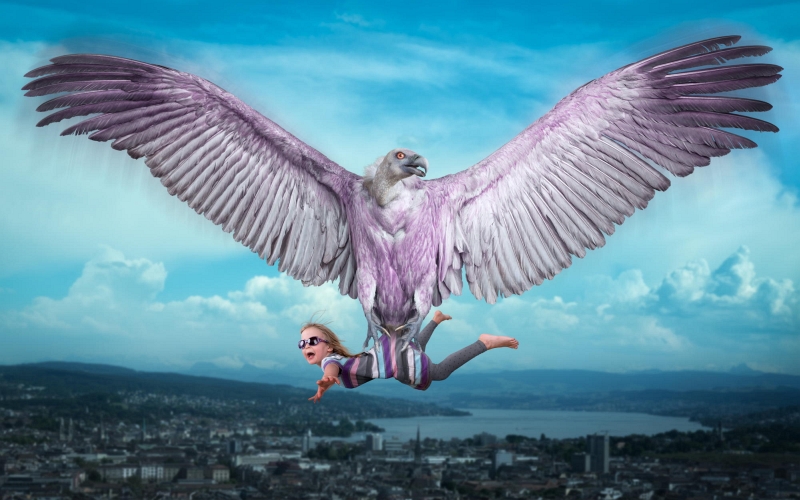
Wilhelm’s titles do half the comedy. “Her last flight with Vultureair,” “Bolshoi ballet – junior class warm up,” “Lou & Mila aka Thelma & Louise,” “Just exhausted parents,” “The rebellious easter bunny,” “Bigfoot Lou,” “El Présidente,” “Getaway from Regensburg,” “The weekly Hurricane,” “Just a little business girl.” Each caption primes a narrative genre adults already know. Before the eye finishes scanning fabric and face, the brain has already borrowed westerns, disaster movies, ballet posters, political portraiture, or road-movie myth.
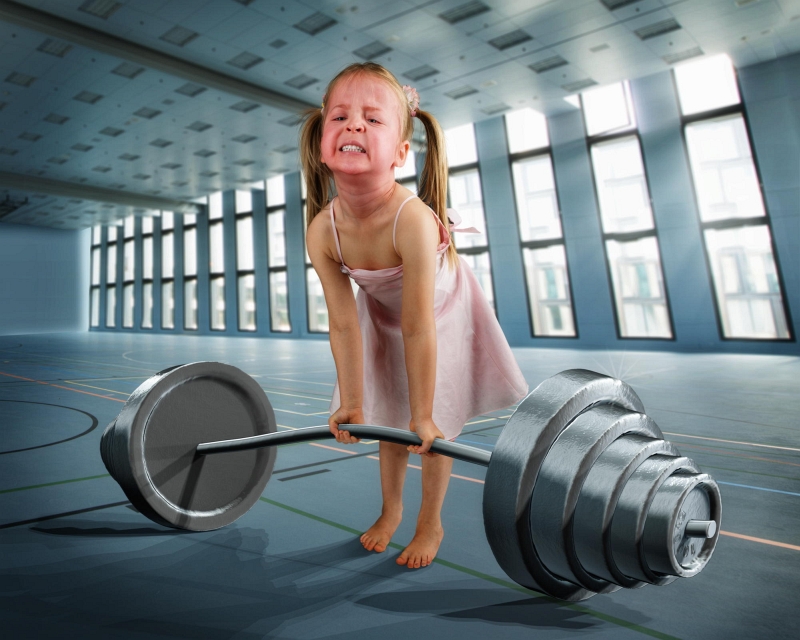
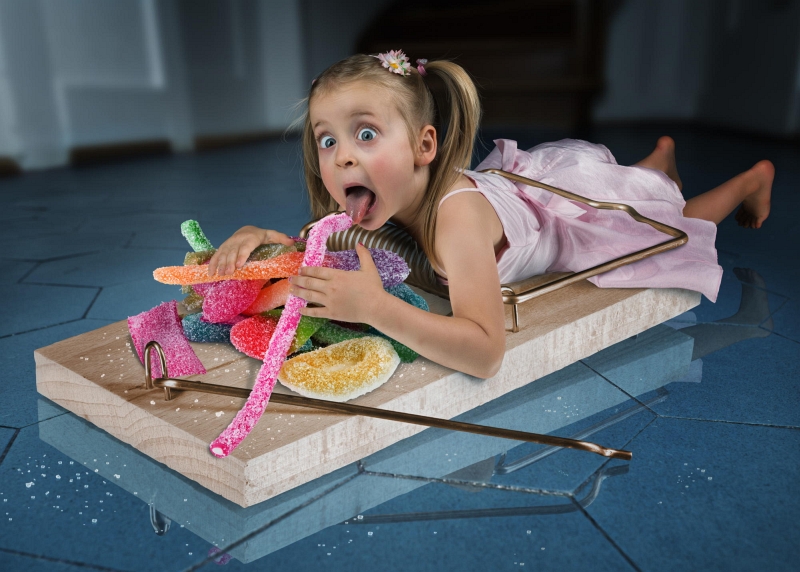
The humor works because the children are rarely asked to mug. They occupy roles with a seriousness that makes the surrounding absurdity funnier. A ballet barre becomes comedy when the junior “company” looks properly occupied. A sister pairing becomes Thelma-and-Louise energy when styling and crop sell the myth without needing a car chase. Wilhelm’s comedy is compositional: lighting, costume fragments, and background invention do as much work as facial expression. That is closer to film stills culture than to slapstick portraiture.


Genre borrowing also keeps the series expandable. Once the household understands that any afternoon can become “bullfight lessons” or “lost freight,” the creative brief stays open. Parents who photograph children often run out of ideas because they wait for cute accidents. Wilhelm invents assignments. The daughters then fill those assignments with whatever mix of concentration, mischief, and patience the day allows.
How a photoholic actually builds the pictures
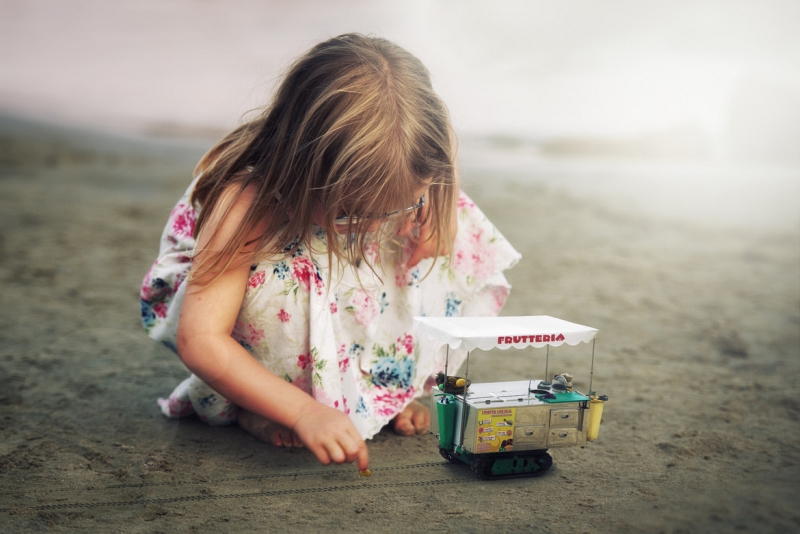
Wilhelm’s widely shared account of process is straightforward and useful. He shoots extensively when free time appears, often in an attic studio. Ideas tend to arrive while he imports files and reviews what the children did in front of the camera. Then Photoshop—and, in more ambitious pieces, 3D tools—stitches environments, props, and scale illusions around those performances. Some images need only cleanup, color, and emphasis. Others are full composites that can take several hours. Complex projects stretch longer. He has said he is not a professional photographer by trade, but he approaches the work with professional reliability.
That hybrid method explains the gallery’s texture. Skin, fabric, and gesture still feel photographed; skies, animals, oversized objects, and impossible rooms feel constructed. The visible seam is intentional. Viewers are invited to enjoy craft and punchline together. Wilhelm has talked about loving the moment when separate images become something entirely new—an attitude that places him closer to digital illustrators and matte painters than to strict documentary portraitists.


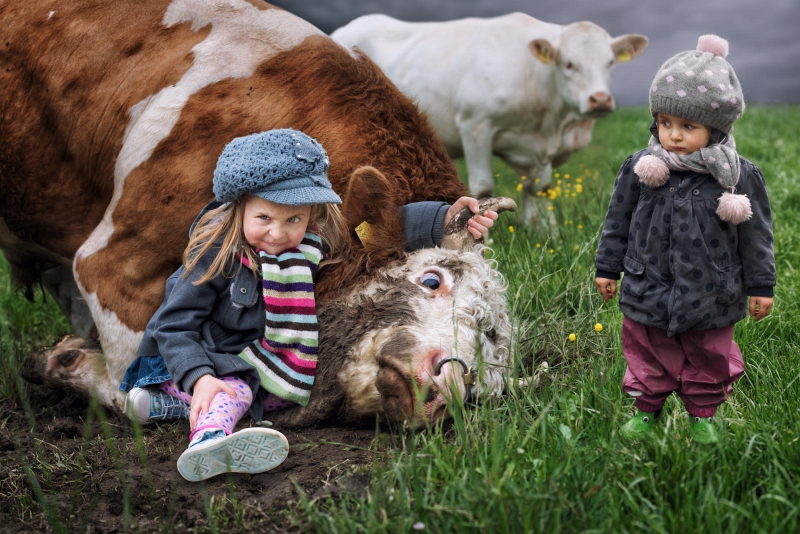
Family cooperation is the other half of technique. Wilhelm has described beginning with his oldest daughter, Lou, when she was a toddler, then discovering that her sisters could join the same playful discipline. The photographs succeed when children can feel that the game matters to him—and when sessions stay short enough to remain play rather than labor. Sweets may help on hard days; emotional trust does more of the work. Without that trust, no amount of compositing can rescue a forced grin.
There is also a private destination for the same energy. Wilhelm has spoken about relatives receiving an annual family calendar built from the year’s inventions. That detail reframes the viral gallery: the work was always meant to live on hallway walls and refrigerator doors as much as on social platforms. Finish quality makes sense in that light. A calendar demands images that survive twelve months of glancing.
Themes that keep returning without going stale
Across the set, several comic engines repeat in fresh costumes. Scale comedy—children as giants, parents as exhausted extras, animals as scene partners—appears often. Genre parody returns through western sadness, presidential dignity, ballet discipline, and aviation drama. Domestic chaos becomes spectacle in frames like “The weekly Hurricane” or “Just a disturbing phone call,” where ordinary parenting stress gets the lighting of a thriller. The repetition is musical: same cast, new wardrobe of myths.
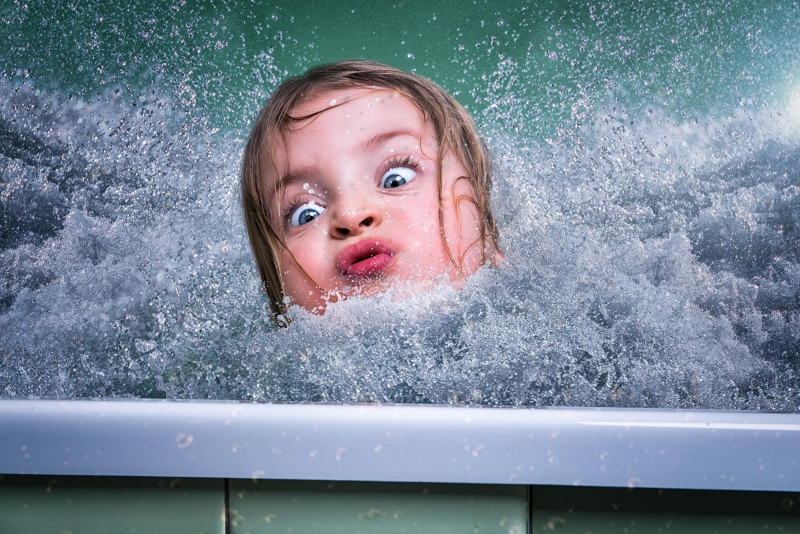

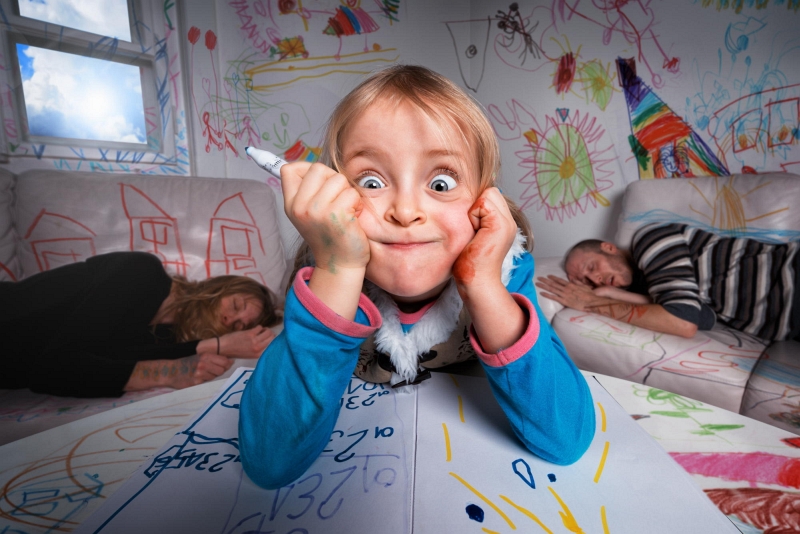
A gentler strain prevents the gallery from becoming a one-note meme feed: spring macro worlds, quiet cowgirl melancholy, sisters hiding in huts, a business girl already late for a meeting she invented. Those quieter pictures matter editorially. They prove Wilhelm can change tempo. Comedy series that only escalate eventually flatten; comedy series that can whisper stay watchable.
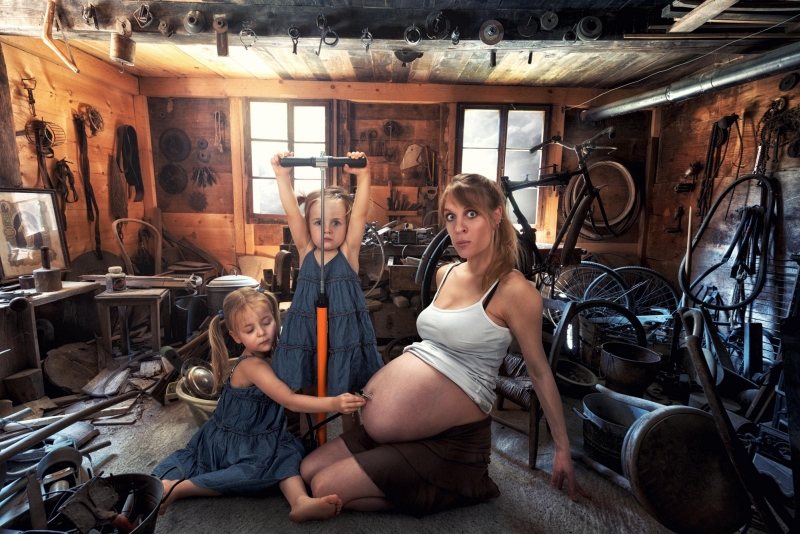

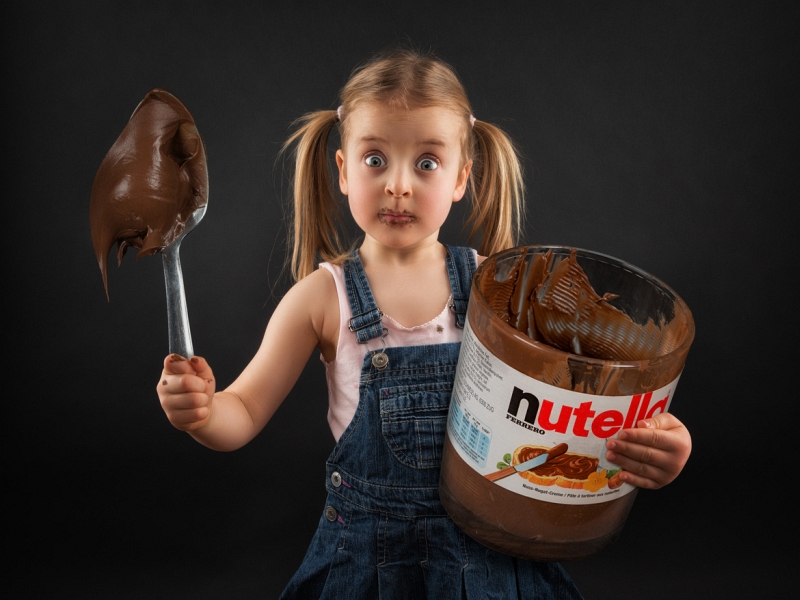
If you are studying the work as photography rather than as social-media nostalgia, notice three durable habits: clear titles, borrowed genres, and composite finish that still protects the children’s performances. Those habits are portable. You do not need Wilhelm’s exact software stack to borrow the method. You need a title worth playing, a child willing to play, and enough patience to finish the world after the session ends.
A second pass through the gallery
Scroll once for jokes. Scroll again for craft. On the second pass, watch how often silly premises still receive print-worthy lighting and crop. Watch how Photoshop serves story instead of novelty for novelty’s sake. Watch how sisters share frames without competing for the punchline. The Vultureair flight, Bigfoot Lou, the exhausted parents, the rebellious Easter bunny—each survives as a complete miniature movie because the household treated imagination as material worth finishing carefully.

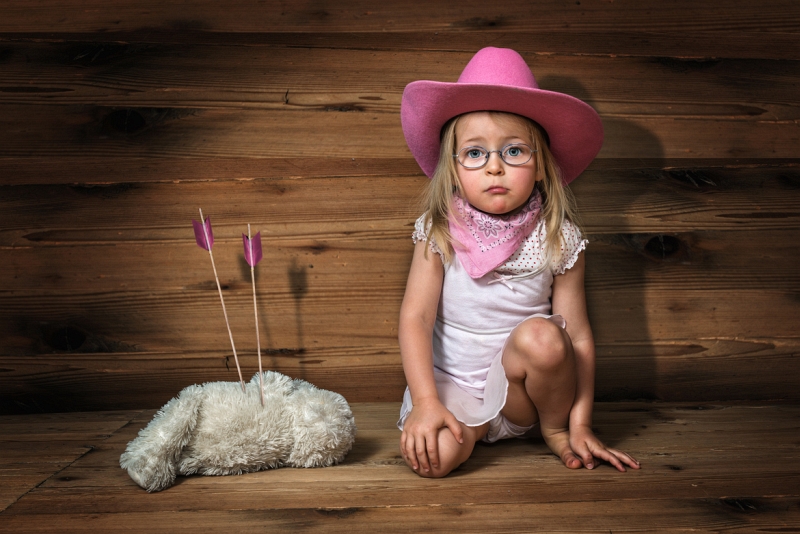




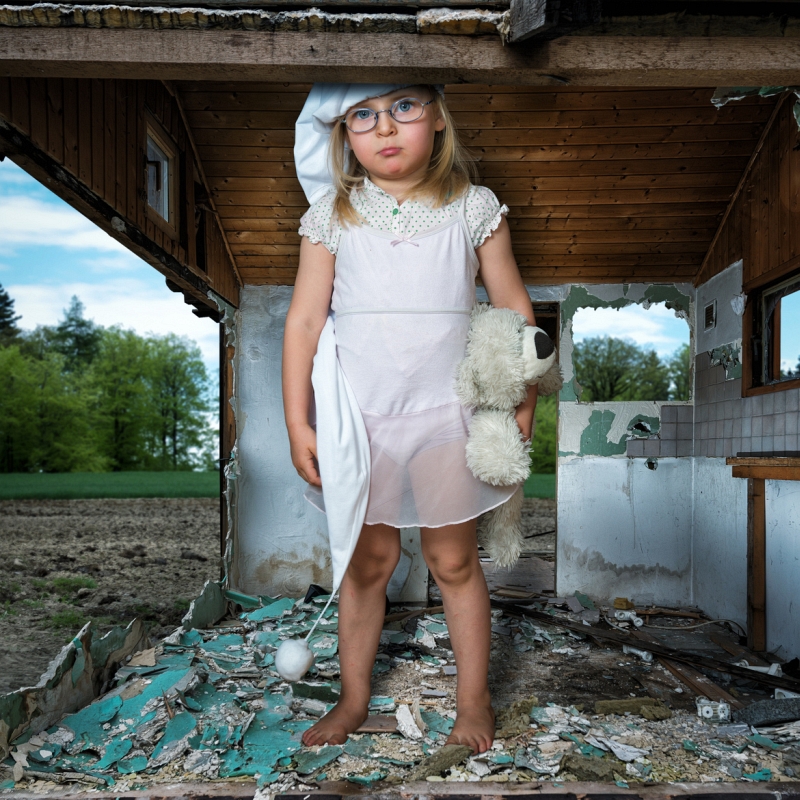
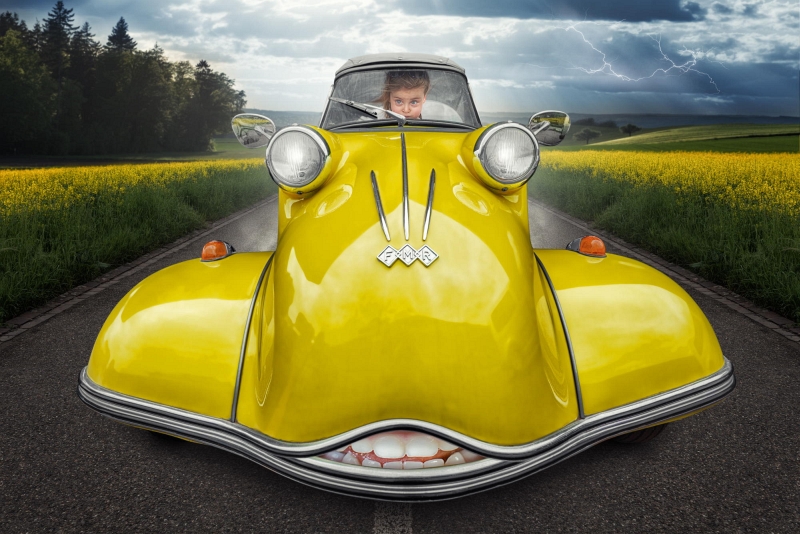
Leave with one concrete favorite—maybe the Vultureair flight, maybe Sad Cowgirl, maybe the Regensburg getaway—and you will remember why John Wilhelm’s funny photographs of his daughters endure: they make household imagination look worth the hours after bedtime when the compositing actually happens.

Comments
Continue reading

Dramatic Photo Art by Sukron Ma’mun (Ipoenk Graphic)
Cirebon, Indonesia photographer Sukron Ma’mun uses theatrical natural light to frame village life, play, and place in lyrical photo art.

Bird’s-Eye Views: Florian Beaudenon’s Instant Life
Paris photographer Florian Beaudenon’s Instant Life series captures people in their rooms from above—intimate, collaborative overhead portraits of everyday joy.
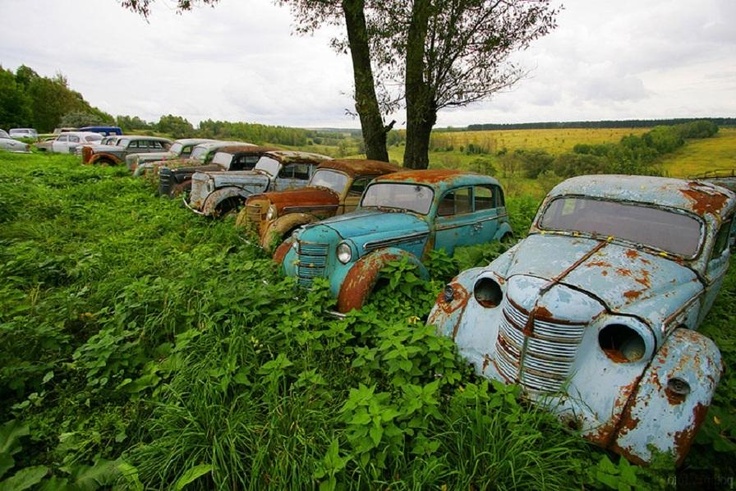
Abandoned Cars Reclaimed by Nature: Rust, Growth, and Quiet Ruin
When neglected vehicles are left outdoors long enough, rust, moss, and trees rewrite them into strange still lifes—sad, photogenic, and slowly returning to the ground.