
Fingerprint Portraits: Dito Von Tease and Ditology
Italian artist Dito Von Tease turns photos of his own finger into digital portraits of celebrities, cartoons, and icons—a Ditology project about disguise, fame, and online identity.
Italian digital artist Dito Von Tease builds portraits on the tip of a finger. Not painted miniatures on someone else’s hand—photographs of his own index finger, digitally dressed until the pad of skin becomes a celebrity, a cartoon, a political silhouette, or a cultural mascot. The series, known as Ditology, looks like a joke for the first half-second. Then recognition locks in, and the joke turns into a study of how faces work when they are reduced to costume, silhouette, and brand.
Dito Von Tease is a pseudonym. The artist, based in Bologna, keeps a private legal name and works as both an advertising art director and an independent digital maker. The nickname is a layered pun: dito means “finger” in Italian, while the surname nods to burlesque icon Dita Von Teese—an expert, as he has put it, in disguise. The project name Ditology is finger-ology in plain sight.
How a Facebook avatar became a gallery
Ditology began around 2009 as a practical act of online camouflage. Creating a Facebook account, he wanted a space free from the usual network of relatives, colleagues, and half-friends. Instead of a polite headshot, he built an avatar. In Italian you can say you are “hiding behind a finger”—a proverb for a hiding place that does not really hide you. He leaned into that metaphor literally: the finger as mask, the mask as identity, the identity as performance.
What started as personal cover became a public method. He photographs the finger, then uses software—famously Photoshop—to add features, hair, props, and backgrounds until the fingertip reads as a known person or character. The skin’s natural ridges and nail remain part of the anatomy of the portrait. That persistence is crucial. You never fully forget you are looking at a digit. The celebrity is a costume worn by a body part.
By 2011 the work had traveled well beyond the blog. Newspapers, magazines, radio, and television picked up the finger-portraits; galleries and brand collaborations followed. Later projects—Ditalians, iDollz, Melting Pop, Classicool, Cartoni Animali—extended his interest in mashup, national myth, and digital simulacra. Ditology remains the clearest entry point: one idea, endlessly remixable, instantly legible.
Who shows up on the fingertip
The cast is deliberately promiscuous. Historical and political figures share space with entertainers, tech icons, religious leaders, and fictional characters. Coverage from the early 2010s highlighted everything from Steve Jobs and Che Guevara to Shrek, Hello Kitty, Mr. T, Ronald McDonald, Chairman Mao, Hitler, and the Dalai Lama. The range is the point. Ditology is not a respectful portrait commission for statesmen. It is a catalog of faces the culture already treats as portable icons—images designed to be recognized at thumbnail size.
That is why the technique works so well. Celebrity faces are already simplified by media into a few decisive traits: a hairstyle, a mustache, a pair of glasses, a color field, a logo-like silhouette. Dito Von Tease isolates those traits and mounts them on the most ordinary human tool in the room—the finger that taps, scrolls, likes, and types. The portraits flatter recognition more than likeness in the classical sense. You do not need a full anatomy lesson. You need the signal that makes a crowd shout a name.
Digital identity, worn lightly
The artist’s own commentary pushes past gag territory. In what he has called a kind of “ditosophy,” fingers are the tools of contemporary contact: touchscreens, trackpads, keyboards. Online, we routinely hide behind a finger—behind an interface that lets us speak more freely, or more recklessly, than we might in a room. Offline, people still wear masks of presentation, especially celebrities whose livelihoods depend on a managed image. Ditology stages that double life as comedy. The famous face is a disguise. The finger is both the disguise and the reminder that someone physical is still underneath.
There is a neat irony in the biometrics joke. Fingerprints identify people; Dito Von Tease’s public identity is protected partly by showing only fingers. The work flashes uniqueness (ridge skin) while refusing the face that would usually complete the dossier. Viewers get intimacy without biography—or biography only of the cultural figures borrowed for the costume.
It also helps that the humor is not uniformly gentle. Pairing sacred, monstrous, corporate, and cartoon faces in the same visual grammar flattens hierarchy. A finger can wear a dictator the same way it wears a children’s mascot. That leveling can feel irreverent, even abrasive, depending on the subject. The series does not apologize for the collision. It treats the media stream as a single wardrobe.
Craft you can reverse-engineer without spoiling the fun
Technically, the portraits sit at the intersection of still-life photography and character design. The base photograph has to supply believable skin, nail, and lighting. The digital additions have to respect that lighting or the costume will float. Scale is unforgiving: a misplaced pupil or an oversized prop breaks the illusion instantly. The best frames feel like tiny theater sets built on a living pedestal.
What the work does not do is pretend to be traditional finger-painting or forensic art. It is closer to avatar culture and advertising wit—the same instincts that make a campaign logo readable at a glance. Coming from an art-director background, Dito Von Tease knows how little visual information a brand needs. Ditology applies that economy to people who have already become brands.
Why the portraits still land
Years after the first viral wave, the series remains sticky because the premise scales with platform culture. Profiles, filters, and AI faces have only intensified the sense that identity online is assembled, swapped, and performed. A fingertip dressed as a famous person feels less like a one-off gag and more like a compact allegory: we meet each other through interfaces; we recognize each other through signals; we hide in plain sight.
If you browse a Ditology set, try ignoring the celebrity name for a moment. Look first at the finger as object—the crease of the knuckle, the sheen on the nail, the way the pad swells toward the camera. Then let the costume click. That two-step viewing mirrors the project’s thesis. There is always a body under the mask. There is always a mask over the body. Dito Von Tease just makes the finger do both jobs at once, which is why these fingerprint portraits of famous people feel funny, pointed, and oddly intimate in the same blink.
Want a sharper test? Pick three portraits from different worlds—one politician, one cartoon, one entertainer—and ask what traits were enough to trigger recognition. The shorter the list, the more Ditology has done its work. Fame, in this gallery, is a costume that fits on a fingertip.

Comments
Continue reading
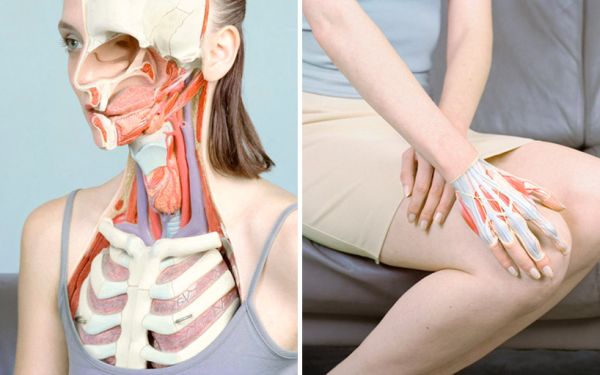
Koen Hauser's Modische Atlas der Anatomie: Fashion Portraits as Elegant Dissection
Dutch artist Koen Hauser's 2000 series Modische Atlas der Anatomie merges fashion photography with anatomical curiosity through early digital manipulation—still unsettling, still elegant.
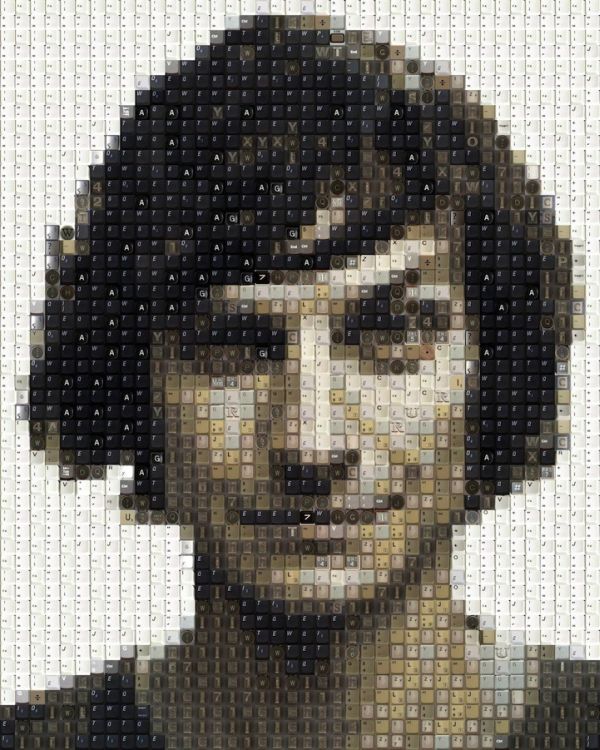
Guy Whitby’s Celebrity Portraits Made of Computer Keys
Australian artist Guy Whitby (WorkByKnight) builds meticulous celebrity mosaics from keyboard keys, calculator pads, and phone buttons—analogue-to-digital faces in tile form.

Alicia Savage’s Surreal Self-Portraits of Travel
Boston photographer Alicia Savage turns road trips into Destinations self-portraits—literal miles and metaphorical journeys layered through curiosity and post-production.