
Fine Art Photography by Mikko Lagerstedt: Nordic Light & Silence
Helsinki-based fine art photographer Mikko Lagerstedt on atmospheric Nordic landscapes, self-taught craft, night work, and images meant to slow the viewer down.
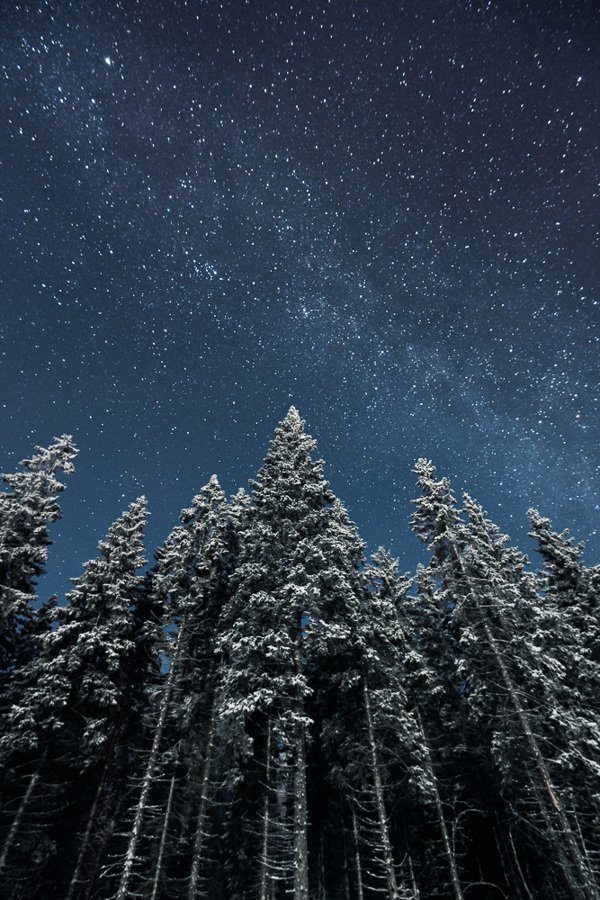
Based in the Helsinki area of Finland, Mikko Lagerstedt is a self-taught fine art photographer whose practice also draws on an interest in drawing, painting, and the broader language of fine art. He treats the camera as a way to hold onto a feeling before it dissolves—freezing a moment so that viewers can look again, slower than ordinary life usually allows. In his own words: “In our lives, things can go so fast that we forgot to enjoy these short moments – if I can make people stop and see the beauty of life, I have succeeded.”
Northern light as subject, not backdrop
Lagerstedt’s best-known work centers on atmospheric Nordic landscapes: winter light, fog, open water, coastal edges, and the long dark of northern nights. Finland is not merely a home base in these images; it is the material. Weather is allowed to dominate. Trees, shorelines, and solitary figures often sit inside large fields of tone so that silence becomes visible. The photographs tend toward restraint—limited palettes, careful horizons, and compositions that refuse to fill every corner with detail.
That minimalism is not emptiness for its own sake. It is a way of directing attention to how light behaves when the air is cold, when mist softens distance, or when a brief clearing opens over water. Many of the conditions he seeks are fleeting: fog at the right depth, water near freezing, a glow that lasts only minutes. The work is made on location, in real weather, rather than invented later as a purely studio fantasy. Post-processing may refine atmosphere, but the photograph begins outside.
Self-taught craft and a fine-art sensibility
Coming to photography without a formal art-school pipeline, Lagerstedt has spoken of learning by looking—through drawing and painting as well as through the viewfinder. That cross-training shows in how he handles shape and mood. Edges matter. Negative space matters. A road, a tree line, or a human silhouette can function almost like a drawn mark against a graded sky. Viewers familiar with Nordic painting traditions of quiet landscape will recognize a cousin spirit, even when the medium is digital capture and contemporary printmaking.
Fine art photography, in this context, means more than a pretty travel snapshot. It implies intention about print, series, and the emotional afterimage of a frame. Lagerstedt’s galleries group work into moods and themes—solitude, resilience, night edges, dreamlike composites—so that single images also belong to longer visual arguments. Collectors and interior projects encounter the photographs as objects meant to hold a wall, not only as files meant to scroll past.
Night, aurora, and the patience of waiting
A significant strand of the portfolio turns toward darkness: stars, aurora, remote coastlines, and the blue hours when cities and forests exchange their daytime identities. Night work demands technical control—exposure, noise, white balance that does not turn the sky into neon candy—but it also demands patience. Standing still in cold wind for a sky that may or may not cooperate is part of the job description. The resulting images often feel suspended between documentary place and inner weather.
When solitary figures appear, they are rarely the loud center of a story. They measure scale. They invite the viewer to imagine standing there. That human presence, used sparingly, keeps the landscapes from becoming pure abstraction while preserving the quiet Lagerstedt is after.
How to look at a Lagerstedt frame
Start with the largest shapes: where is the brightest mass, and where does the frame go dark? Notice whether the horizon sits high or low, and what that does to the feeling of sky versus ground. Then look for the small anchors—a distant tree, a shoreline curve, a figure—that keep the eye from sliding off the edges. Ask what time of day or night the light suggests, and whether the mood is welcoming, austere, or dreamlike.
Color, when present, is often subdued: cold blues, soft golds, muted greens. High saturation is not the point. Atmosphere is. If a print hangs in a room, notice how it changes the pace of that room. Lagerstedt’s stated hope—that people might stop and see beauty—depends partly on that slower looking. A monitor thumbnail can introduce the work; a carefully made print completes the invitation.
Prints, collections, and public recognition
Over years of photographing northern landscapes, Lagerstedt’s images have reached audiences well beyond Finland through online sharing, editorial features, licensing, and exhibitions. Selected works have been noted in connection with collections such as the U.S. Embassy in Helsinki, and his name has appeared alongside features from major media and imaging brands. Those markers matter less as trophies than as evidence that quiet landscape still travels: people far from Nordic winters recognize something in the stillness.
For anyone discovering the work now, the practical path is straightforward. Browse coherent gallery sets rather than isolated viral frames, read how he describes process and place, and—if a piece stays with you—consider how it would live as a print in real light. Fine art photography earns its keep when it continues to reward a second and third look after the novelty of first contact fades.
Why the work resonates
Speed is the default setting of contemporary life. Notifications, travel, and feeds compress attention into fragments. Lagerstedt’s photographs argue, gently, for the opposite tempo. They do not shout. They wait. A fog bank, a frozen edge of water, a night sky that refuses to perform on command—these subjects teach the same lesson as his quoted ambition: beauty is easy to miss when you never pause.
That is also why the Helsinki base matters. The northern seasons enforce waiting. Darkness lasts. Weather cancels plans. Light, when it arrives, can feel earned. Translating that regional experience into images that speak internationally is the quiet achievement of this body of work. You do not need to have stood on a Finnish shoreline to understand the pull of a frame that makes room for silence.
Explore more of Mikko Lagerstedt’s portfolio through his site and print offerings if a particular mood—night edge, winter coast, solitary path—keeps returning to mind. The success he describes is simple to state and difficult to deliver: a photograph that interrupts hurry long enough for someone to see the world as briefly, strangely beautiful again.

Comments
Continue reading
Dramatic Photo Art by Sukron Ma’mun (Ipoenk Graphic)
Cirebon, Indonesia photographer Sukron Ma’mun uses theatrical natural light to frame village life, play, and place in lyrical photo art.

Bird’s-Eye Views: Florian Beaudenon’s Instant Life
Paris photographer Florian Beaudenon’s Instant Life series captures people in their rooms from above—intimate, collaborative overhead portraits of everyday joy.
Abandoned Cars Reclaimed by Nature: Rust, Growth, and Quiet Ruin
When neglected vehicles are left outdoors long enough, rust, moss, and trees rewrite them into strange still lifes—sad, photogenic, and slowly returning to the ground.