
William Kass’s Fantastic Miniature World: The Minimize Project
Architect-photographer William Kass stages tiny figures in food and household landscapes—cinnamon forests, coconut bridges, melting ice-cream icebergs.
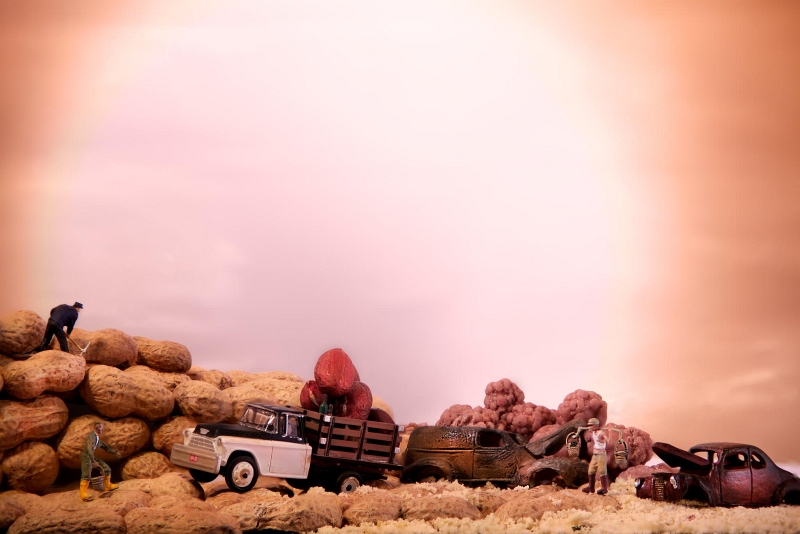
Brazilian photographer and architect William Kass builds tiny civilizations on kitchen-scale props. In his Minimize project—begun in February 2013—plastic figurines walk cinnamon-stick forests, pray beside watermelon seeds, cross coconut bridges, and stage dramas on grape clusters. Everyday food and household objects become landscapes; scale flips; ordinary produce turns mythic. The photographs are studio inventions about composition, light, and shadow, aimed at both art and advertising eyes, yet they read first as pure play.
Kass buys small dolls and builds each scene so the camera’s viewpoint matches the citizens’ world. An orange becomes a pool. Spaghetti becomes rough terrain. Ice-cream cones become icebergs for a melting Titanic. Chili peppers can read as bonfires; a zucchini can become circus artillery. The gag is instant. The craft is slower: some sets take up to three days, and perishable props force him to previsualize lighting because ice cream will not wait for a second take.
Architecture training in a food studio
Kass studied Architecture and Urbanism, and the discipline shows in how spaces read as places rather than piles. Even a shaving brush can become a savannah if the horizon line, figure scale, and shadow logic agree. He has called a shaving-brush landscape a favorite for its simplicity—proof that the project does not always need maximal food spectacle to work. He has also said Minimize draws attention to small details of daily life by using foods and objects as scenery. That is an architect’s habit—seeing latent structure—applied to the grocery bag and the bathroom shelf alike.
Working from a home office turned studio in São Paulo, he established a visual style early and then produced scenes within it. Consistency matters. Once viewers learn the rule—tiny people, oversized edible or domestic world—they hunt for the next translation. A corn cob becomes a climb. Grapes become a carnival stage recalling Brazil. Matchboxes, noodles, pickles, candy bars, phones, spoons, and cocktail umbrellas all get drafted into civic duty. The portfolio feels like a city expanding neighborhood by neighborhood, with Kass as both planner and set dresser.
Minimize-Food and Minimize-Objects
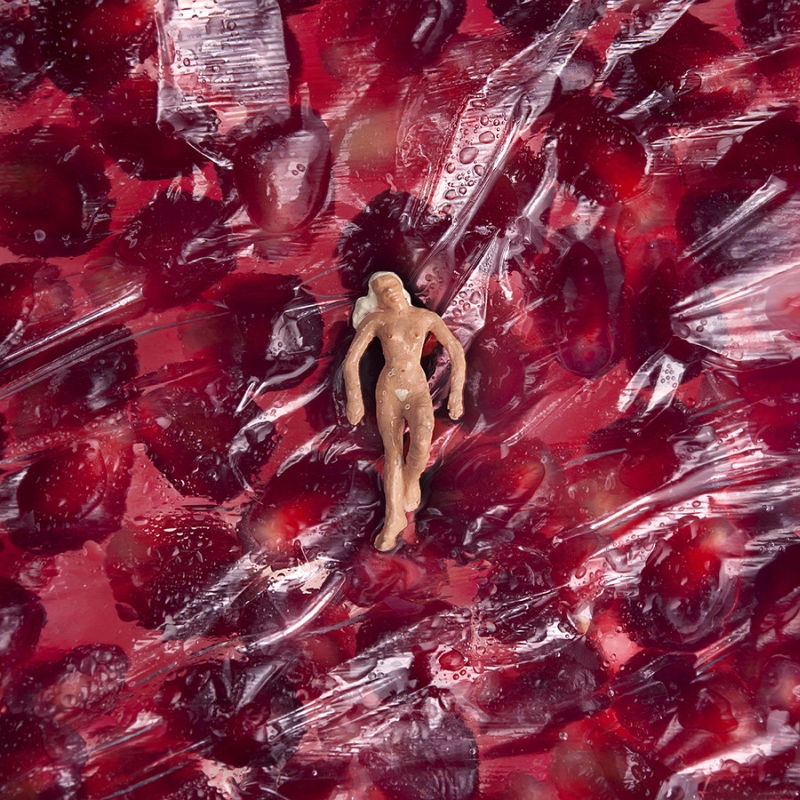
Within the larger Minimize umbrella, food scenes often steal the spotlight because color and texture are already cinematic. Fruit flesh looks like geology. Pasta looks like rope or dunes. Chocolate breaks into cliffs. Coconut fiber becomes lawn that tiny mowers seem to tend. Object scenes—brushes, tools, devices—lean toward dry humor and graphic clarity. Together they form one imaginative weather system: the little citizens adapt to whatever terrain Kass invents that day.
Narrative ranges from quiet labor to movie remake. Divers drop into a coconut. Hunters work a brush landscape. Ballerinas meet unexpected architecture, sometimes under a shower head that suddenly feels monumental. Spacesuit figures wade through spaghetti toward a tomato shell that might as well be an alien time capsule. A watermelon interior can stand in for a first step on Mars. Kass has noted that some images remake film moments; others simply invent daily life at the wrong scale. Either way, the photograph has to sell belief in under a second, because social sharing leaves no time for footnotes.
Light, time, and melting props
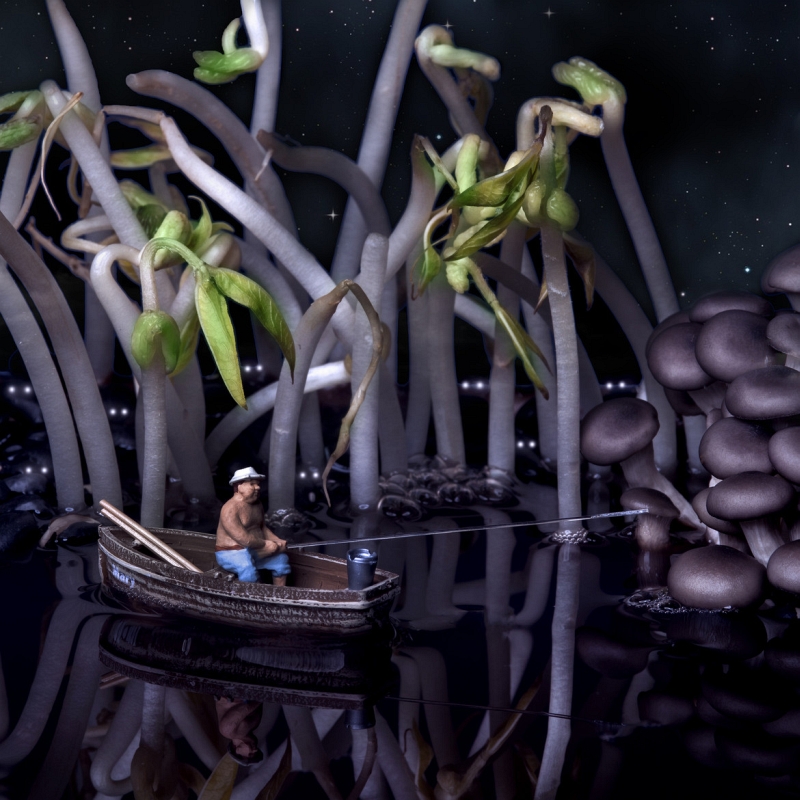
Studio control is the hidden subject. Kass studies light and shadow as carefully as figure placement. Soft light can make food look lush and inviting; harder light can carve heroic shadows that enlarge the drama. Because many props spoil, planning is not optional. For the Titanic image with real ice cream, he has explained that lighting had to be solved before the cones began to collapse. That constraint sharpens decisions. You cannot dither when the landscape is dessert.
Patience shows in the finished frames. Figures are planted with purpose—gestures readable at thumbnail size. Negative space is managed so the prop’s identity remains guessable after the first laugh. The best Minimize pictures let you enjoy two discoveries in order: first the story, then the recognition of what the “mountain” actually is. If recognition arrives too early, the wonder shrinks. If it never arrives, the image becomes only cute without cleverness. Kass’s architectural eye keeps that sequence intact: place first, punchline second.
Why miniature worlds feel big
Scale inversion is an old photographic pleasure, from forced-perspective tourist snapshots to elaborate commercial dioramas. Kass’s version is intimate and kitchen-born. He does not need vast model railways. He needs a watermelon and a point of view. That accessibility is part of the charm and part of the lesson: imagination is a camera position plus a prop, not a warehouse budget.
There is also a gentle philosophical nudge. If cinnamon sticks can be logs, then ordinary life is full of unread landscapes. Kass’s little people perform awe, work, leisure, and ritual inside those landscapes, which makes viewers reconsider the next fruit bowl. Advertising loves that quality because it makes products feel magical without shouting. Art audiences love it because the scenes hold as self-contained fables. Minimize sits comfortably between those markets without apologizing to either—Kass has said the project was aimed at art and advertising from the start.
How to read this set
Scan each image for the largest “terrain” material first—fruit skin, ice cream, brush bristles, pasta. Then find the smallest human gesture that defines the plot: climbing, praying, diving, performing, fishing for oversized sashimi. Check whether the shadow direction is consistent across figures and prop; consistency is what converts collage into place. Finally, ask what the scene would be titled if it were a short film. Kass’s portfolio thrives on that title-ready clarity.
Compare an early Minimize wave with later additions the way you would walk a growing neighborhood. Some streets are food-dense and colorful. Others are object-spare and graphic. The citizens remain the constant—generic enough to be anyone, specific enough in pose to imply a story. That balance keeps the series from becoming a one-note toy joke, and it is why returning to the set years later still feels like discovering new blocks of the same city.
Studio habits worth stealing
Photographers who want to attempt a related study can borrow Kass’s constraints without copying his gags. Choose one grocery item. Choose three figures maximum. Build only what the frame will show. Pre-light with a stand-in prop if the real food wilts. Shoot tethered if possible so scale errors appear before the lettuce softens. Edit for one joke and one beautiful light, not for both fighting. If a scene needs a film reference, keep one clear cue—an iceberg shape, a spacesuit, a stage—and let the food do the rest.
William Kass’s miniature world remains persuasive because it treats play as serious studio practice. Cinnamon can be timber. Coconut can be a bridge. A watermelon seed can become a reason to kneel. In Minimize, the fantastic is assembled on a tabletop—and made believable by architecture, timing, and light.

Comments
Continue reading

Dramatic Photo Art by Sukron Ma’mun (Ipoenk Graphic)
Cirebon, Indonesia photographer Sukron Ma’mun uses theatrical natural light to frame village life, play, and place in lyrical photo art.

Bird’s-Eye Views: Florian Beaudenon’s Instant Life
Paris photographer Florian Beaudenon’s Instant Life series captures people in their rooms from above—intimate, collaborative overhead portraits of everyday joy.
Abandoned Cars Reclaimed by Nature: Rust, Growth, and Quiet Ruin
When neglected vehicles are left outdoors long enough, rust, moss, and trees rewrite them into strange still lifes—sad, photogenic, and slowly returning to the ground.