
More Easter Table Ideas: Moods, DIY Details, Material Mixes
Alternate Easter tablescapes—garden, rustic, and polished moods, handmade place details, glass-wood-ceramic mixes, and when to edit bold color.
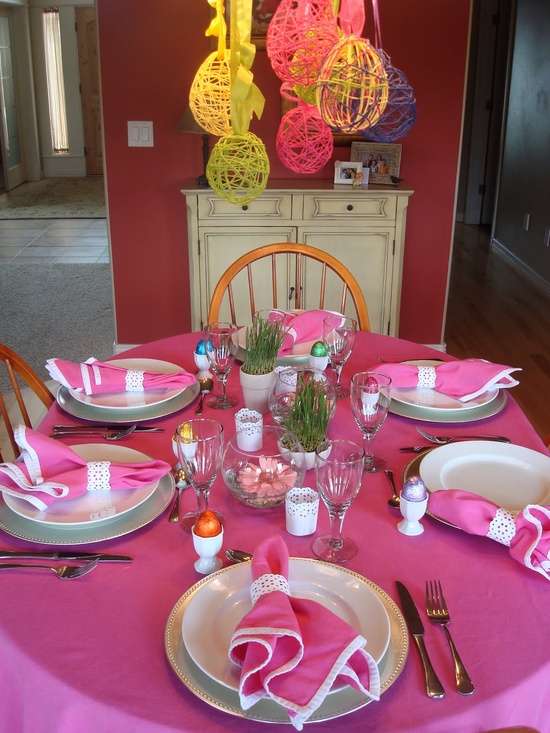
A second round of Easter table ideas is useful when the first classic setup—runner, low flowers, one egg per plate—already feels familiar. This collection leans into mood shifts: garden-party abundance, rustic wood and moss, crisp formal pastels, and DIY details that change the table’s personality without requiring a new set of china. Treat these as alternate routes to the same season, not as a duplicate of a standard brunch layout. Where a foundational tablescape guide builds layer by layer, this one asks which atmosphere you want guests to walk into.
Choose the mood that matches your guest list and room size. A long farmhouse table can carry more texture; a small apartment table needs fewer objects and clearer negative space. Different material mixes—glass, wood, ceramic, ribbon, living plants—rewrite the same holiday. Decide the mood before you shop the cupboard, or you will bring every leftover bunny to the surface and call it eclectic when it is only undecided.
Write the mood in one sentence on a sticky note: “soft garden brunch,” “rustic family lunch,” or “polished pastel dinner.” Keep the note on the fridge while you assemble. Anything that does not serve that sentence stays in the box.
Mood map: garden, rustic, and polished
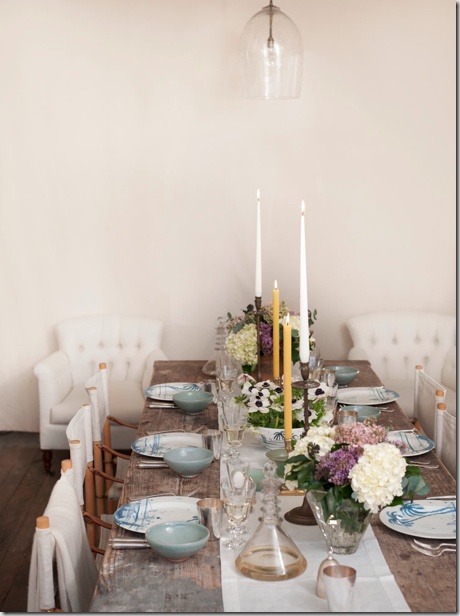
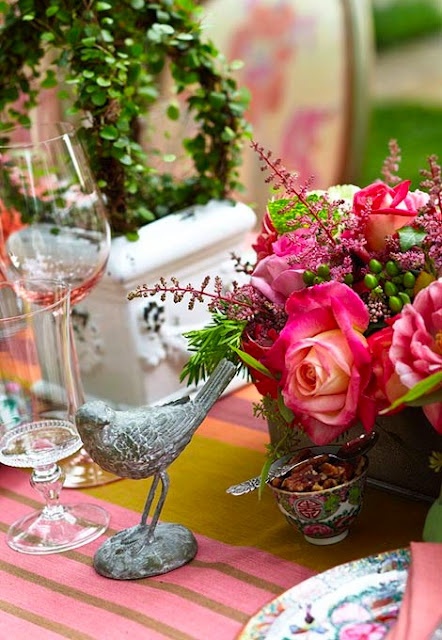
Garden-party tables spill a little on purpose: mixed buds in mismatched jars, herbs at places, eggs nestled in real moss, a few petals allowed to fall. They suit daylight meals, open windows, and guests who will not mind a casual cloth. Rustic tables favor wood chargers, burlap or linen runners, twine, pottery, and fewer plastics—warm and grounded, good for multi-generation meals where kids may bump the edge. Polished tables keep symmetry: matching napkin folds, even spacing, restrained metallics, and a short color list that looks intentional in evening light.
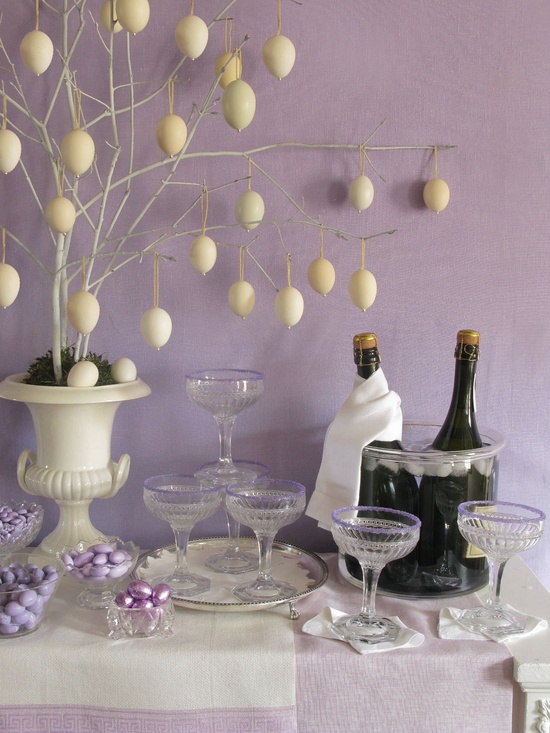
Pick one mood and edit toward it. Mixing heavy rustic wood with crystal stemware and neon plastic eggs usually looks undecided rather than creative. If you want contrast, keep it intentional: raw wood chargers under very clean white plates, or soft linen under bright modern flatware. Hybrid moods need a rule—shared color, shared finish, or shared height—so the eye can find a pattern.
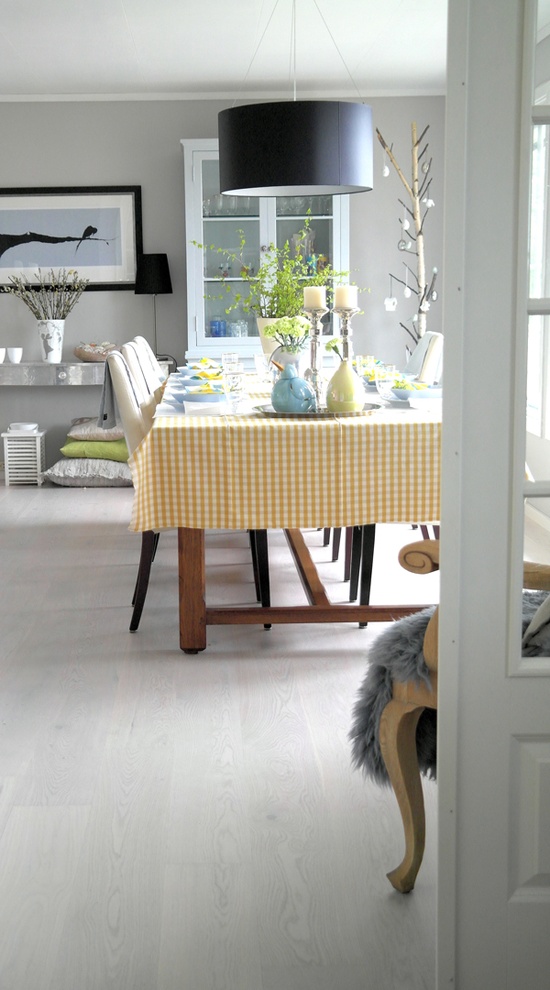
Match mood to menu. Sticky honey-glazed dishes and finger foods pair with rustic or garden settings; plated courses with sauces suit polished spacing and fewer loose moss bits. Food and décor should agree about how formal the afternoon is.
DIY place details that guests notice
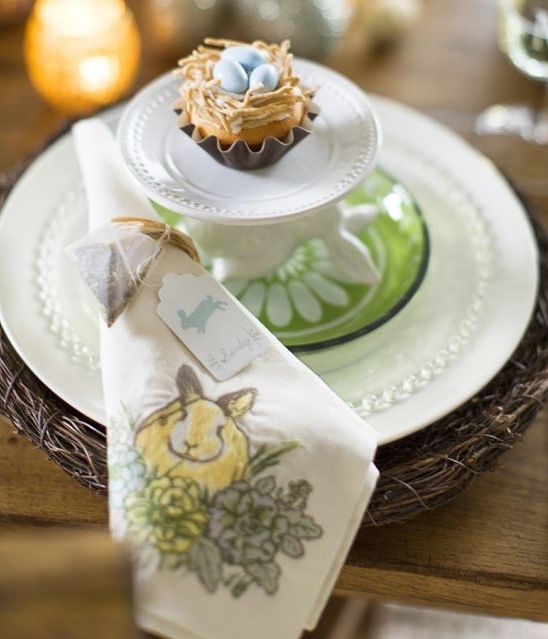
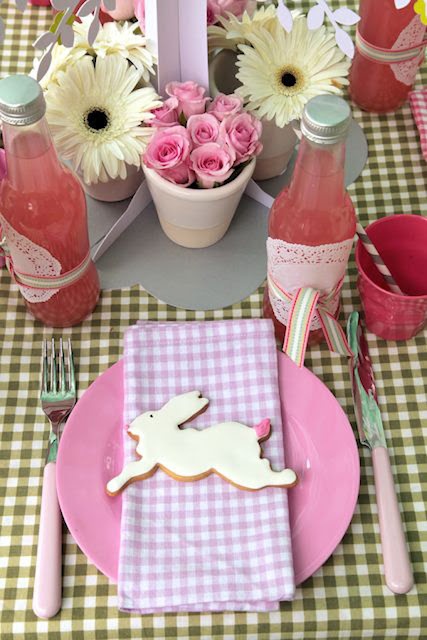
Small handmade cues change the feel of a store-bought table more than another ceramic rabbit. Write names on kraft tags tied with thin ribbon. Nest a place card in a tiny twig circle. Paint one letter initial on a wooden egg. Tuck a sprig of rosemary or thyme into each napkin for scent as well as color. Stamp a simple egg outline on plain card stock. These projects take an evening, not a week, and they photograph as personal without crowding the plate.
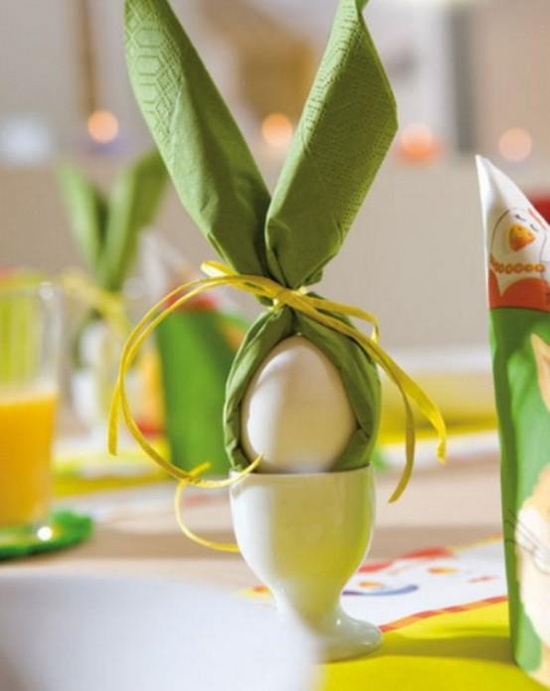
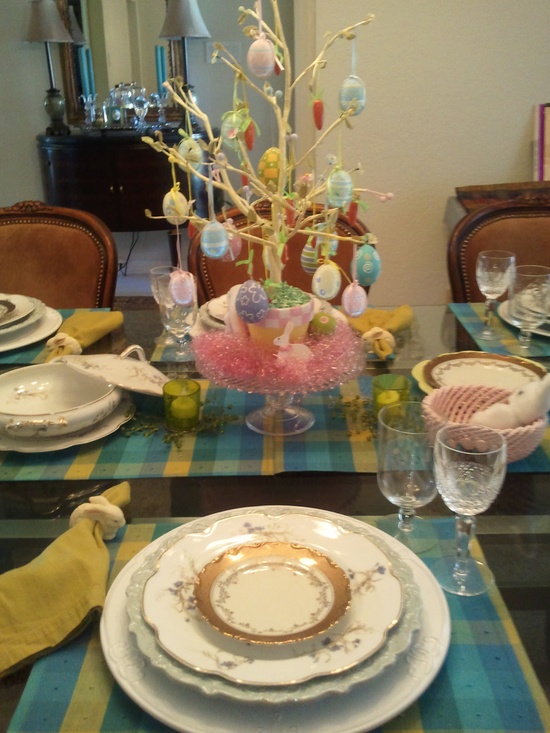
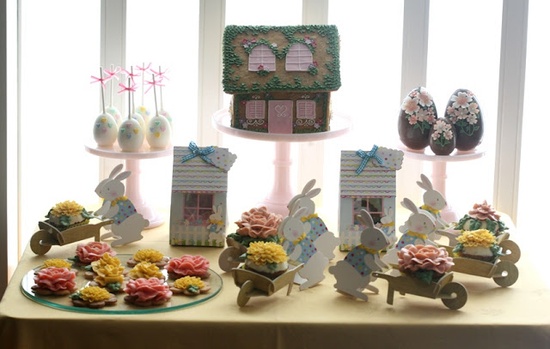
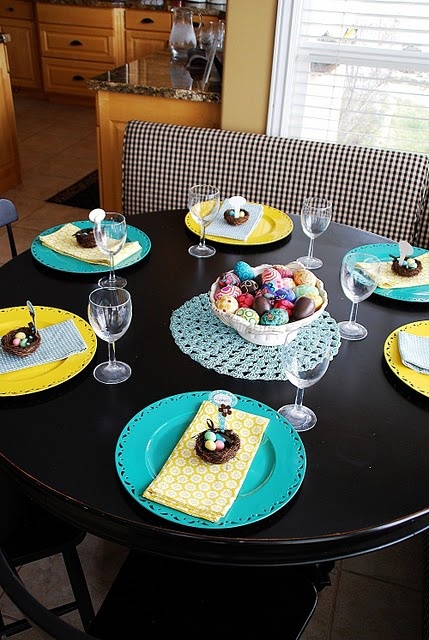
Involve kids in painting a set of “display only” eggs while adults handle breakable glass. Keep the kid-made set together in a bowl at the table’s center or on a sideboard rather than scattering fragile experiments at every seat. Guests enjoy the story; you enjoy intact stemware. Prep DIY pieces two nights ahead so glue and paint dry fully—nothing ruins a mood like wet paint on a linen napkin.
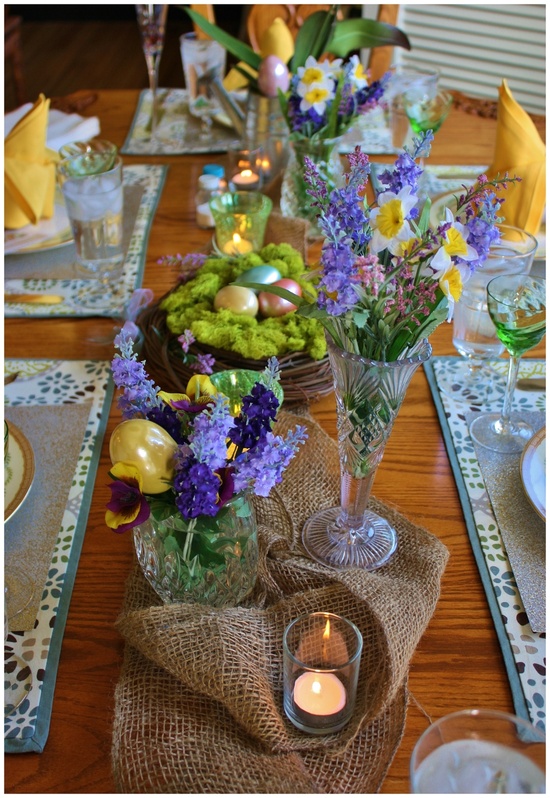
Limit yourself to one handmade category per year if time is tight: either place cards or painted eggs or herb bundles. Doing all three half-well looks busier and less charming than doing one category carefully.
Material mixes: glass, wood, ceramic, ribbon
Glass egg cups, clear vases, and mirrored trays bounce daylight and make pastel eggs look brighter—excellent for garden and polished moods. Wood chargers and boards warm cool color schemes, hide minor wrinkles in the cloth, and anchor rustic settings. Ceramic nests and bunny figures work in ones and twos; a crowd of figurines competes with food and conversation. Ribbon should be narrow enough to knot cleanly; wide wired ribbon fights napkin folds and looks craft-store heavy on a formal table.
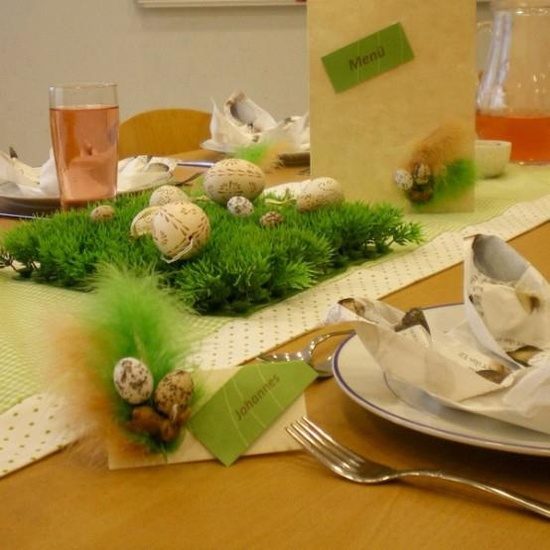
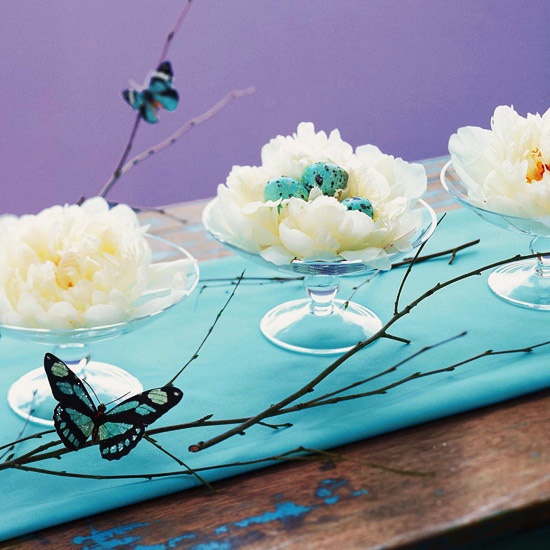
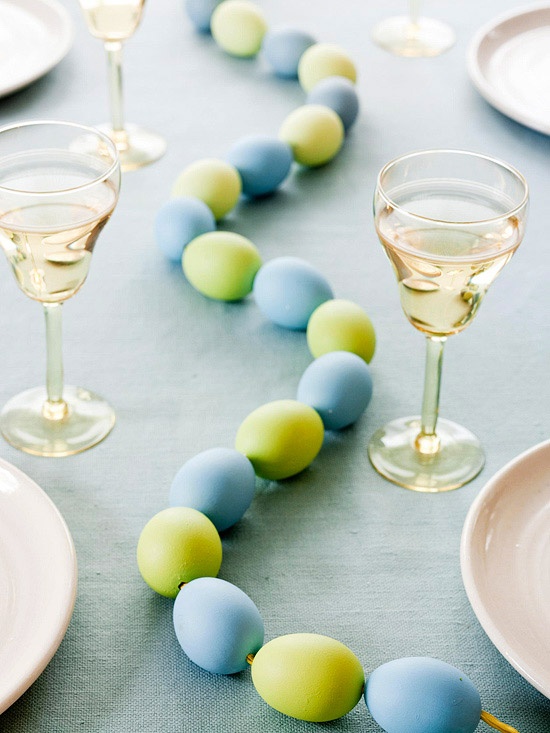
Try an odd-number rule for decorative objects on the center line: three bud vases, five eggs in a tray, one bowl of moss. Even numbers can look formal and matched; odd numbers often feel collected. Either way, leave gaps so serving spoons can land. If every gap is filled, you have styled a display case, not a dining table.
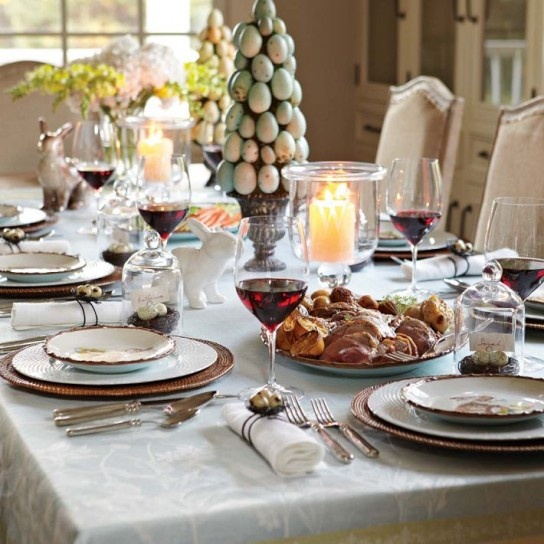
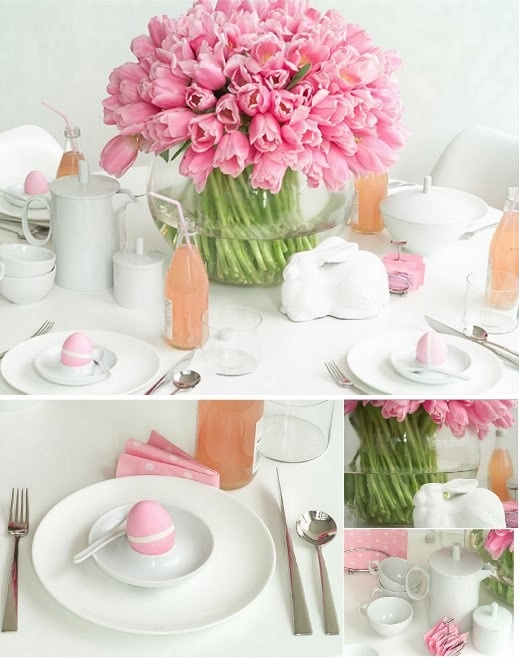
Repeat one material at least three times so it reads as a decision: three wood elements, or three glass vessels, or three ribbon ties. A single lonely wood charger among all glass looks like you ran out of matching pieces.
Kids’ seats, buffet edges, and outdoor overflow
If children sit at the main table, give them a wipeable placemat zone and sturdy décor. Move glass candlesticks and delicate nests to the adult end or to a buffet. For buffet service, decorate the buffet edge more heavily and keep the dining table lighter so plates have somewhere to go between trips. Outdoor brunch needs different physics: weight runners against wind, clip cloth corners, prefer battery lights over open flame, and avoid lightweight paper confetti that becomes litter in a breeze.
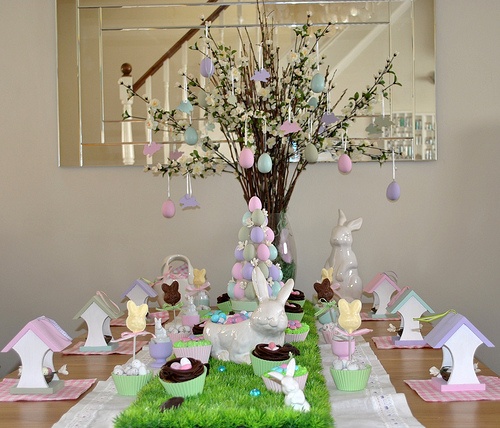
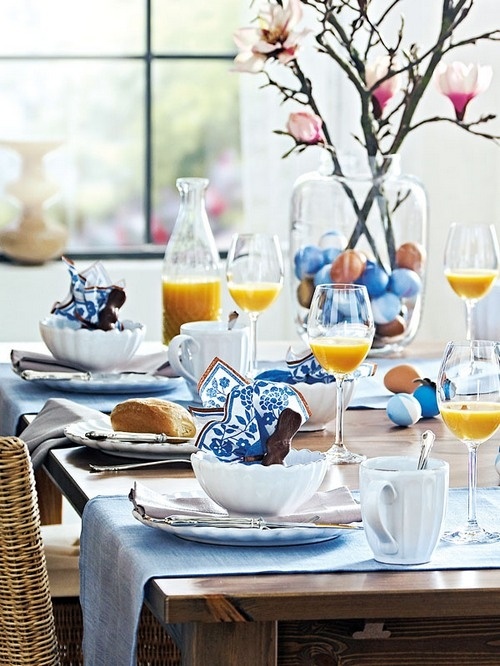
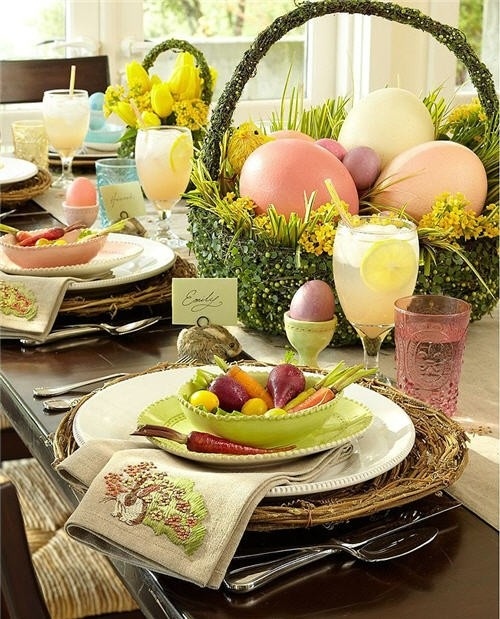
A side cart or windowsill can hold overflow décor—extra flowers, a bowl of chocolate eggs for later—so the eating surface stays usable after the first course. Overflow staging is how garden moods stay abundant without trapping guests behind a wall of jars.
When to go bold and when to edit
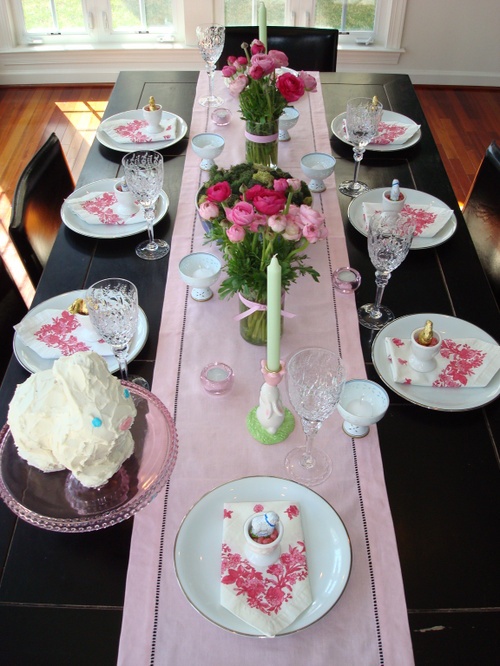
Bold color blocking—lavender cloth, yellow napkins, green buds—suits large rooms and short guest lists where the table is part of the entertainment. Editing hard—white-on-white with one green stem and two eggs—suits small spaces and multi-course meals that need real estate for plates. If you are unsure, style the table, leave the room for five minutes, and come back: whatever you notice first that is not a plate or a face is probably what to remove.
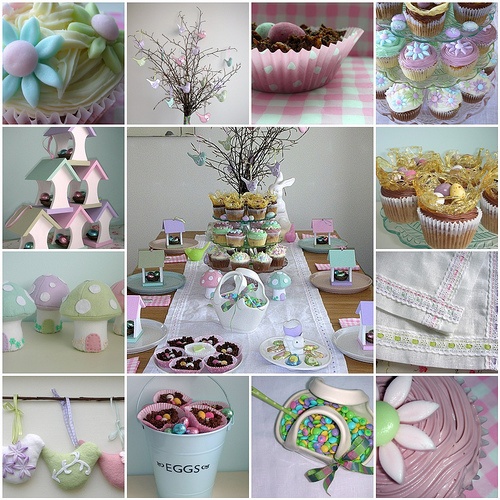
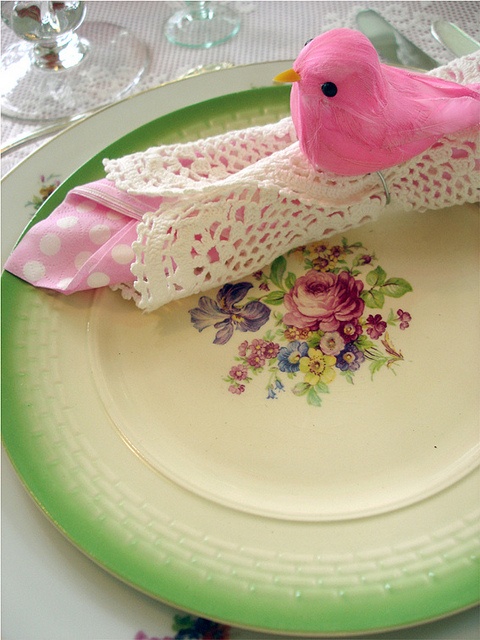
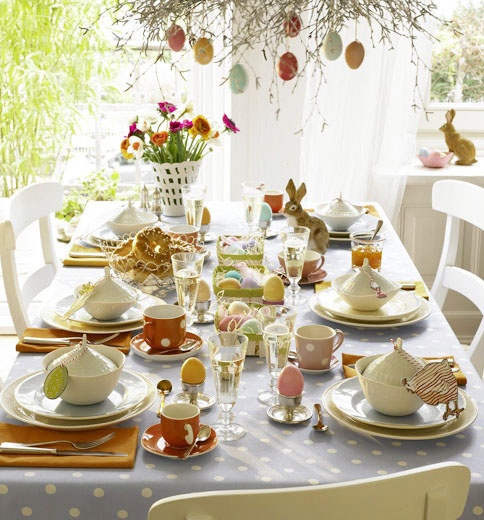
Pack away by mood next year: a “garden” box of jars and moss trays, a “rustic” box of wood and twine, a “polished” box of matched napkin rings. You will rebuild faster than starting from a single mixed bin of everything Easter, and you will be less tempted to force last year’s rustic pieces into this year’s polished plan.
Which mood fits this year’s guest list—garden spill, rustic calm, or polished pastels—and what is the one DIY detail you will actually finish the night before?

Comments
Continue reading
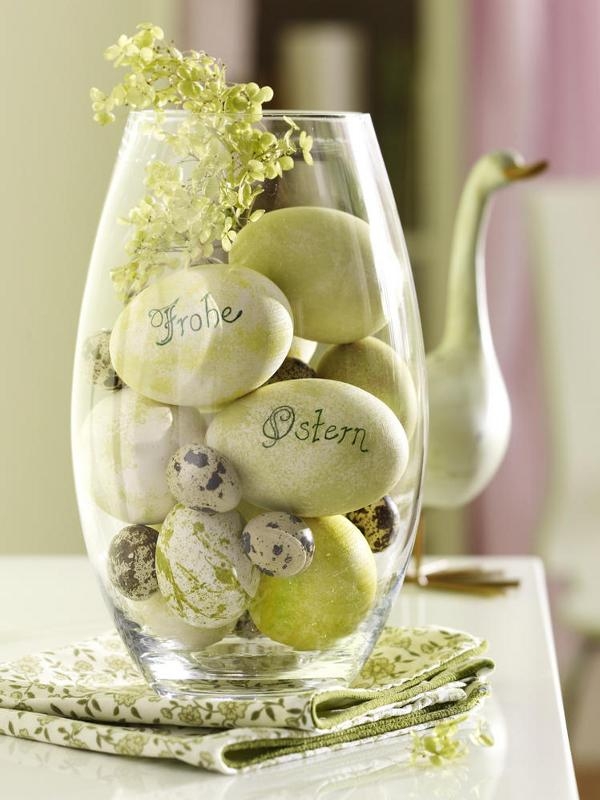
Easter Table Decorations: Linens, Low Centerpieces, Place Settings
Build a whimsical spring Easter table from the ground up—linens, conversation-friendly centerpieces, one cue per place, and a calm color story.
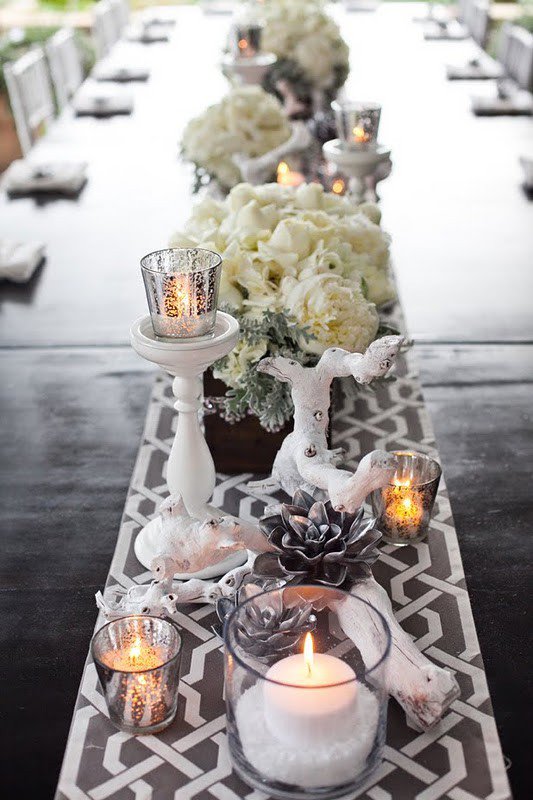
White Winter Creamy Tablescapes
Ivory runners, candlelight, and pale centerpieces — how to build a creamy white winter table that feels seasonal without crowding every place setting.
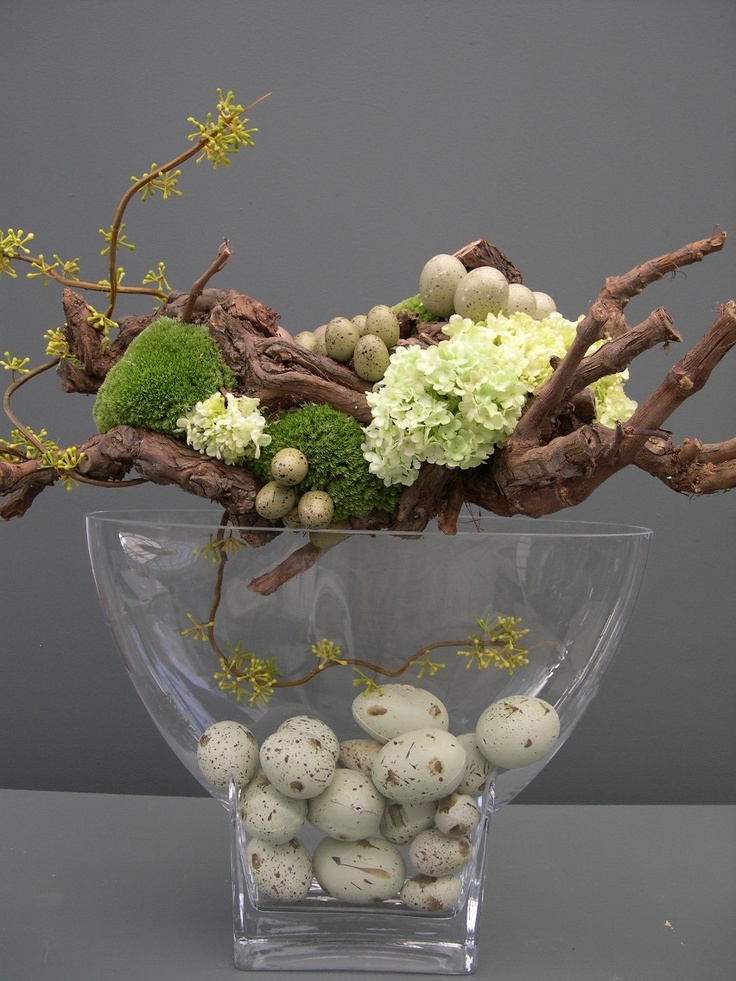
Decorate Your Home for Easter: Eggs, Branches, and Easy Tables
Wake rooms for Easter with a short color story, egg displays, forced branches, low table settings, and mantel vignettes you can pack away in one box.