
Creative Mom and Baby Dream Adventures: Queenie Liao’s Wengenn in Wonderland
California artist Sioin Queenie Liao turns her son Wengenn’s naps into storybook photos—fabric moons, star ladders, and household props arranged as dream adventures.
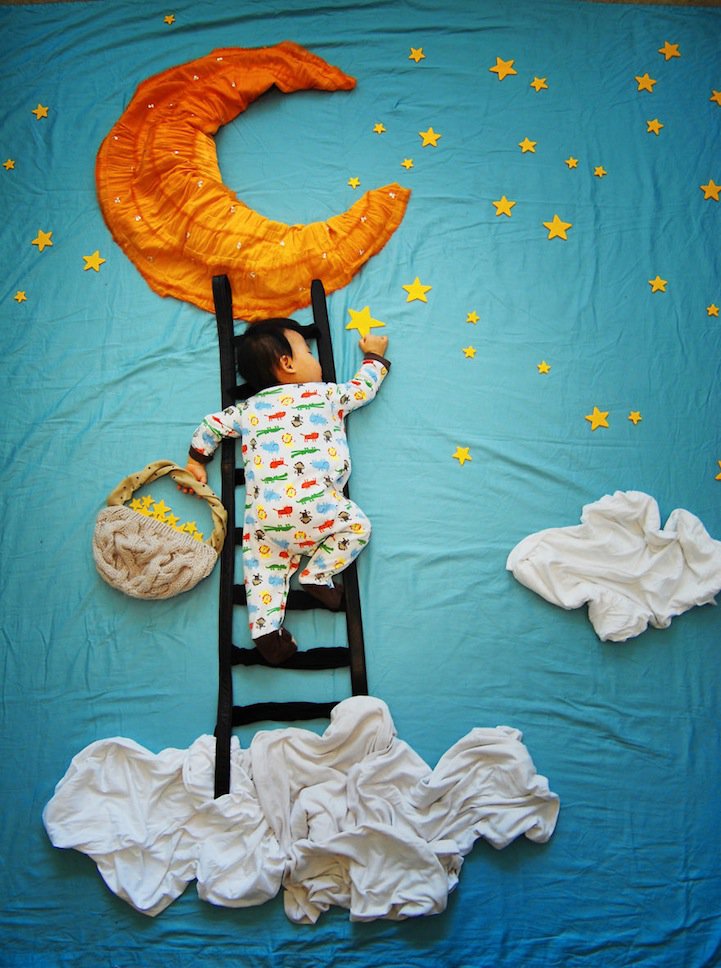
Naptime is usually a pause in the day—a chance to wash bottles, answer email, or simply sit down. For Sioin Queenie Liao, it became studio time. While her son Wengenn slept, the California-based freelance artist arranged blankets, clothes, stuffed toys, and ordinary household scraps into storybook sets on the floor. Then she placed the sleeping baby at the center and photographed the scene from above. The series, titled “Wengenn in Wonderland,” turns a nap into a silent adventure: climbing toward a moon, collecting stars, wandering through fairy-tale props that never ask the hero to smile for the camera.
The work sits in a lineage of parent-artists who stage sleeping children. Anne Geddes made soft, iconic baby portraits; Adele Enersen’s fabric dreamscapes showed what a living-room floor could become with enough cloth and patience. Liao has cited that tradition while grounding her own images in a childhood habit of rereading fairy tales and staring at their illustrations. Those remembered pages became a shot list. A Chinese-language book collecting the photographs—often referred to through its “sleepy baby” framing—was published in Taiwan in 2012, and international features, including BBC coverage, followed as the pictures traveled online. What looks effortless is a tight production window: prepare the set, wait for sleep, shoot quickly, and clear the props before the next waking demand.
Older write-ups sometimes described Liao as a “Chinese mother” under a shortened spelling of her name. The fuller public record is clearer: Sioin Queenie Liao, an artist and mother living in California, building a dream diary around her youngest son with materials already in the house.
How a living-room floor becomes Wonderland
The method is deceptively simple. Liao “paints” with fabric the way an illustrator paints with wash. A blue sheet becomes night sky. White towels become clouds. Yellow felt or paper stars scatter into constellations. Strips of dark cloth form ladder rungs. A crescent of bright orange fabric becomes the moon. Then the sleeping child is nestled into the composition so hands and feet land on the story’s crucial spots—gripping a rung, reaching for a star, holding a tiny basket already half full of light.
One of the most recognizable frames shows exactly that climb. From above, Wengenn lies on his stomach in animal-print pajamas, body aligned with a fabric ladder rising from rumpled white clouds toward a textured orange moon. Yellow stars float across the blue field; one sits at his reaching hand; more rest in a chunky knit basket by his other hand. Nothing in the scene requires a rented studio. The magic is arrangement, color contrast, and the tender fact that the climber is actually asleep.
Across the wider series—well over a hundred photographs by the time the album was compiled—the same toolkit sends him into different genres without changing the tools. Stuffed animals become co-stars. Clothes become landscapes. Holiday props mark seasons. Outer-space scenes appear when a toddler’s imagination (and a parent’s patience) are ready for them. Because the camera looks straight down, the floor reads as a page and the baby reads as a drawn character who somehow still has weight, warmth, and breath. That hybrid of illustration and documentary is the series’ signature.
Why the pictures feel like storybooks
Part of the charm is narrative clarity. Each photo has a goal a child could understand: catch a star, reach the moon, meet a soft companion, survive a gentle pretend scare. Viewers get the plot in one glance. Soft household textures keep the tone warm rather than uncanny. Sleep softens the face; the surrounding props supply the drama. Parents recognize the logistics—the race against a short nap—while everyone else enjoys the finished fairy tale.
There is also an emotional honesty that marketing cannot fake. Liao has described how photography shifted toward her children after motherhood, and “Wengenn in Wonderland” is both art practice and love letter. The baby does not perform. He rests while the adult does the imaginative labor around him. That division of work—child sleeping, parent inventing—is familiar to anyone who has ever stayed up folding laundry into something more interesting than laundry, or who has watched a nap and thought, briefly, that the quiet looked like a painting waiting for a frame.
As Wengenn grew, the themes adjusted. Infant-scale fairy tales gave way to toddler-friendly adventures; Halloween scenes and other seasonal ideas appeared in later chapters. The constant was the overhead dream logic: real child, fabricated world, one quiet afternoon at a time. By the time the collection filled a book, it had become a visual diary of early childhood told almost entirely in naps—proof that a domestic archive can also be a public art project without losing its tenderness.
Practical lessons if the series inspires you
You do not need Liao’s full catalog to learn from her approach. A few principles travel well into any careful home project:
- Build as much of the set as you can before the child falls asleep; the nap is the shooting window, not the prep window.
- Commit to one strong color field—sky blue, grass green, deep night—so small props read clearly against it.
- Place interactive props at hands and feet so the body completes the story without forced posing.
- Shoot from directly above with even light; harsh shadows can break the “illustration” illusion.
- Stop the moment the child stirs. The series works because it never demands performance.
Safety and respect matter more than cleverness. Keep fabrics breathable, never cover the face, do not leave a sleeping baby unattended in a pile of props, and treat the photos as private family art until you consciously decide otherwise. Liao’s public success does not mean every nap needs an audience or a social feed.
What endures
“Wengenn in Wonderland” spread online because it offered a rare combination: technical inventiveness and uncomplicated tenderness. The images suggest that imagination does not require travel tickets—only attention, a blue sheet, and the willingness to work inside a twenty-minute window. They also freeze a stage of parenting that vanishes quickly: the months when a child can still be arranged into a dream without protest, when a living room can still double as a storybook page.
Looking again at the star-catching climb, you can almost hear the quiet of the room—fabric rustle, camera click, a baby’s steady breathing. The moon is only cloth. The ladder is only strips. The adventure is entirely real in the only place adventures need to be real for a sleeping child: inside the picture, and inside the parent who built the page before the nap ended.

Comments
Continue reading
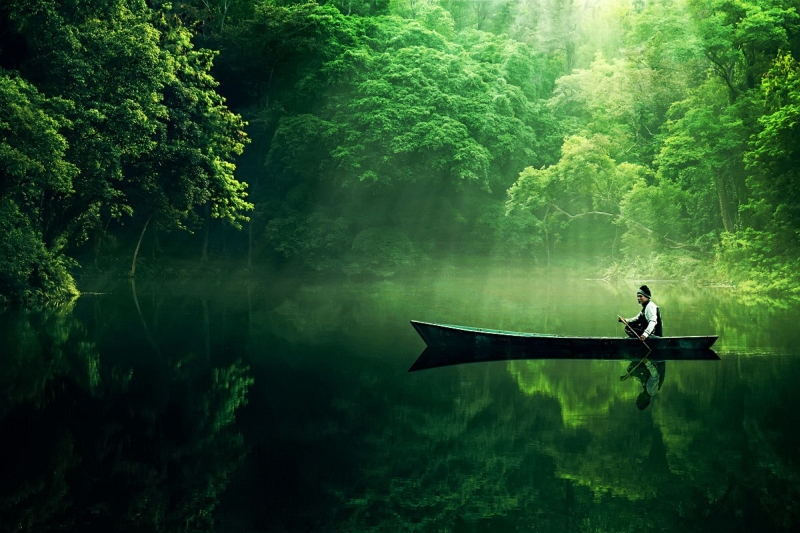
Dramatic Photo Art by Sukron Ma’mun (Ipoenk Graphic)
Cirebon, Indonesia photographer Sukron Ma’mun uses theatrical natural light to frame village life, play, and place in lyrical photo art.
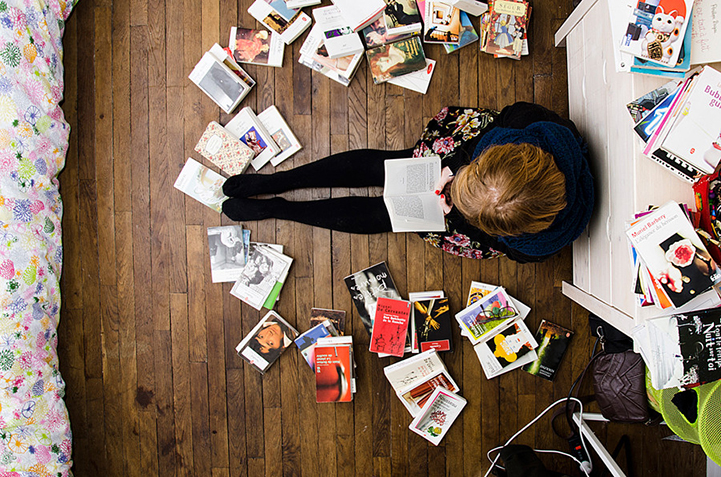
Bird’s-Eye Views: Florian Beaudenon’s Instant Life
Paris photographer Florian Beaudenon’s Instant Life series captures people in their rooms from above—intimate, collaborative overhead portraits of everyday joy.
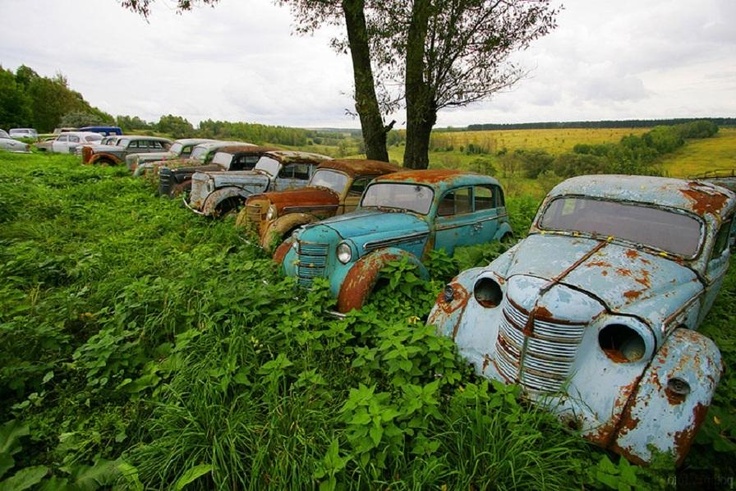
Abandoned Cars Reclaimed by Nature: Rust, Growth, and Quiet Ruin
When neglected vehicles are left outdoors long enough, rust, moss, and trees rewrite them into strange still lifes—sad, photogenic, and slowly returning to the ground.