
Kilian Schönberger’s Brothers Grimm’s Homeland: Fairy-Tale Landscapes in Fog
Kilian Schönberger’s Brothers Grimm’s Homeland series turns misty Middle European forests, ruins, and quiet architecture into fairy-tale photographic illustrations.
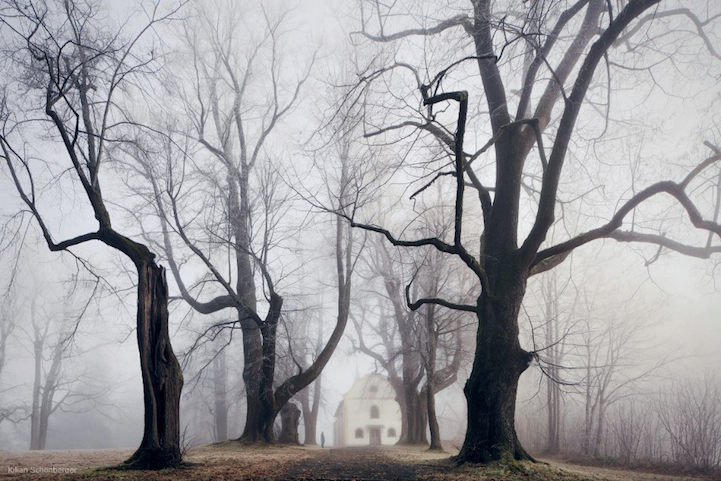
Kilian Schönberger grew up with dense woodland close enough to feel like a second room of the house. That childhood landscape—and the stories that haunt such forests—feeds the photo series known as Brothers Grimm’s Homeland: atmospheric views of rural Middle Europe where mist, shadow, and quiet architecture suggest fairy tales without illustrating any single plot. Schönberger has described certain haunted-looking places as dark homes you hope are abandoned. The photographs invite you into that hope and that fear at once.
Captured in remote countryside across regions such as Germany and neighboring Central European terrain, the series treats fog, ruins, chapels, bridges, and forest paths as “photographic illustrations” for the Grimm world—less costume drama than weather and place. The gallery below is small but concentrated: each frame asks for a pause rather than a skim.
Fairy-tale geography without costumes
The Brothers Grimm collected stories rooted in oral tradition, many of them sharp-edged long before later adaptations softened them. Forests in those tales are not parks; they are thresholds where rules change. Schönberger’s landscapes honor that older temperature. You will not find posed princesses here. You will find moss, empty roads, structures half-claimed by green, and skies that withhold easy blue.
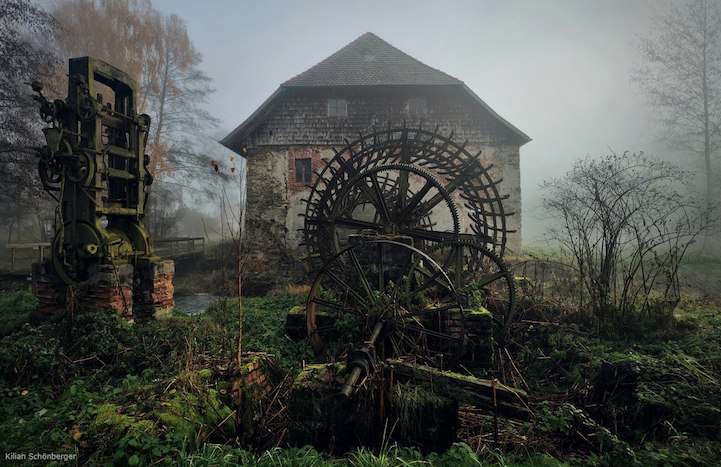
That choice matters. Illustration usually means adding characters. Schönberger subtracts them—or keeps human presence as residue: a bridge, a machine left outdoors, a chapel standing alone. The viewer becomes the traveler at the edge of the woods. Unease arrives because the land looks ready for a story to begin, not because a storyboard has already been filled in. The pictures work like unfinished sentences: you supply the next footstep, and you are not sure you want to take it.
Growing up inside the motif
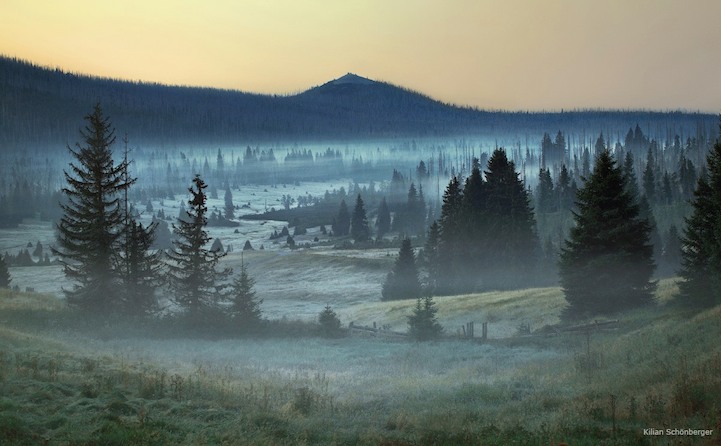
Artists often chase exotic subjects to find mystery. Schönberger found mystery in the familiar. A heavily wooded hometown trains the eye early: how trunks close ranks, how paths vanish after rain, how a building can look inhabited and forsaken in the same afternoon. Those memories become a lifelong subject when adulthood adds craft—lens choice, patience for fog, willingness to hike into damp light that tourists skip.
In interviews around the series’ wider circulation in the early 2010s, he spoke of a cultural longing for tranquil naturalness inside technology-heavy life. The photographs answer that longing without turning nature into wellness branding. Tranquility here is not spa calm; it is the quiet before a twig snaps. Rest and dread share the same clearing. That double feeling is closer to the Grimm archive than any prop wolf or spinning wheel would be, because the old tales always mixed comfort with warning.
Structure over spectacle
Schönberger is known to be color blind—a fact often mentioned in profiles because it reframes how these images work. Rather than treating limited color discrimination as pure deficit, he has described an advantage in chaotic forest environments: less compulsion to sort every hue, more freedom to build composition from structure, tone, and line. Friends may check color before print, but the underlying design is already strong in shape.
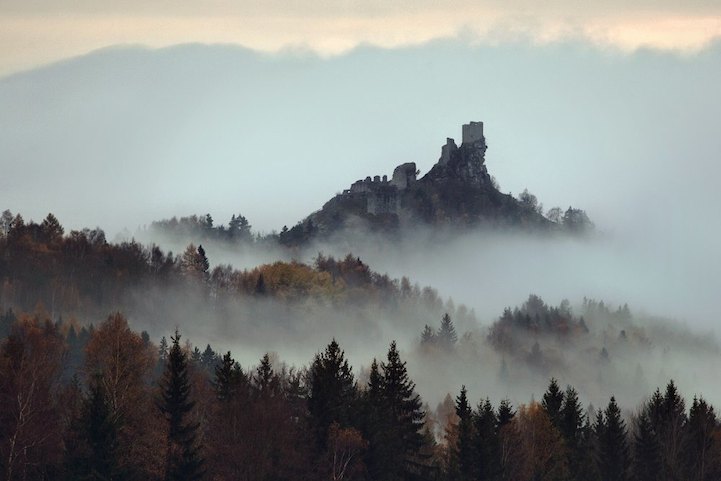
Look at the frames with that in mind. Branches form nets. Roads pull the eye like drawn ink. Buildings sit as dark geometry against pale mist. The mood is cinematic, yet the craft is architectural. Wide and tilt-shift lenses associated with his landscape practice help keep verticals disciplined so the uncanny feeling comes from atmosphere, not from warped walls. In forests, where color can overwhelm, structure is what keeps a picture from dissolving into green noise—and what makes fog readable as space instead of flat gray.
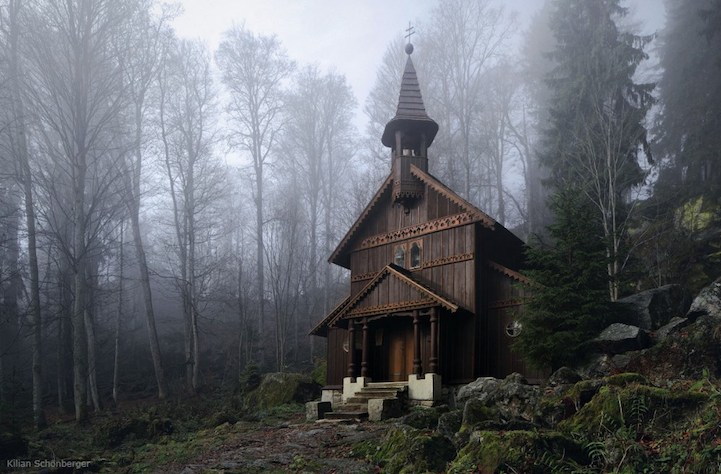
Fog, ruin, and the pause before fright
Fog is the series’ frequent collaborator. It softens distance, erases horizon certainty, and turns trees into silhouettes. Ruin and abandonment do similar work: they imply time without explaining it. An ivy-covered span or a lonely chapel suggests human stories ended or paused. The photographs sit in what writers have called the quiet before fright—nerves waiting for sound.
That psychological timing is why the work lands as Grimm-adjacent rather than generic “moody landscape.” Many landscapes are beautiful. These are beautiful and slightly unsafe. Beauty invites you forward; unsafety makes you listen. Fairy tales operate on the same double pull. Childhood nostalgia and adult caution meet in the same grove of trees, which is exactly where so many of the old stories begin.
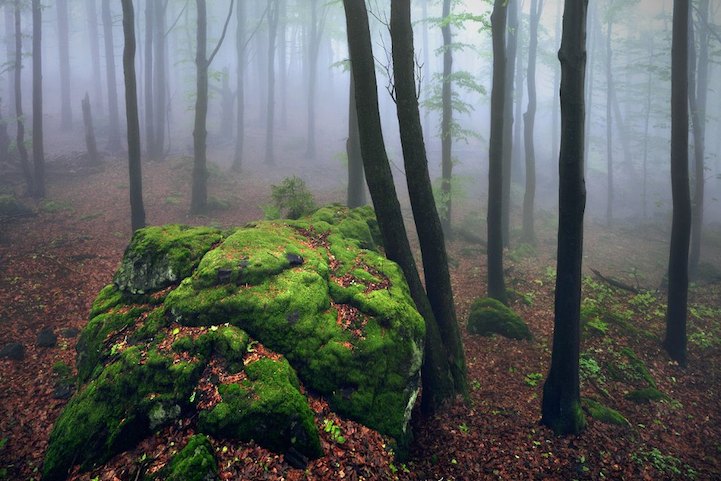
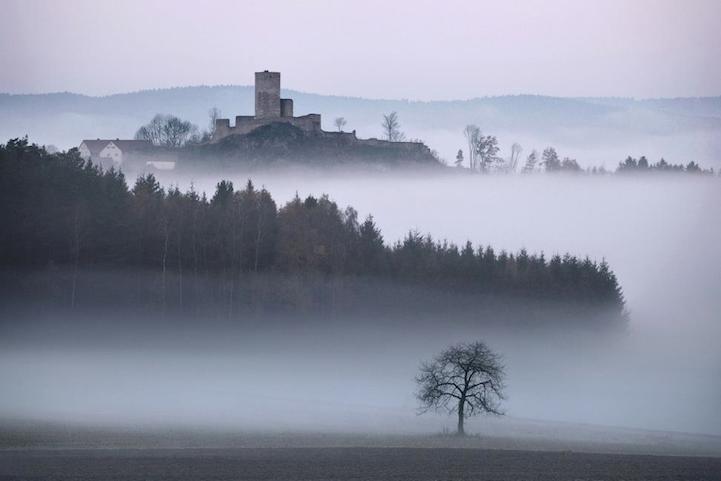
Middle Europe as story country
Shooting in remote rural Middle Europe is not incidental branding. The Grimm collection itself is bound to German-language folk tradition, and Central European forests, villages, and weathered sacral architecture carry visual kinship with that archive. Bohemian chapels, mountain weather, and woodland edges become credible “homelands” for the tales because culture and terrain already share history.
Still, the photographs avoid tourism checklists. They do not caption themselves as “the real Sleeping Beauty castle.” They remain open enough that any viewer can project a different tale—or none. Openness is part of their hospitality and their chill. A specific GPS pin would shrink the myth; a carefully chosen anonymous clearing expands it. Homeland, in this series, is less a pinpoint than a climate of mind.
How to look—and what photographers can steal
Move slowly. Let each image establish foreground, mid-distance, and the soft wall of fog or trees beyond. Notice where human-made forms interrupt wild growth, and where growth reclaims what people built. Ask what sound the scene would make: drip, crow, wind, nothing. The best response to these pictures is rarely a quick scroll; it is a few seconds of imagined footfall on wet leaves.
Photographers can borrow methods without copying mood filters: arrive early for ground mist, underexpose slightly to keep skies from bleaching mystery, use leading lines sparingly, and leave people out when absence is stronger. Scout after rain. Return to the same path in different weather. Above all, walk until the postcard viewpoint is behind you. Schönberger’s frames feel found at the end of patience—after the easy overlook has been rejected for something quieter and stranger.
Later projects and books extended related fairy-tale and German landscape themes, but Brothers Grimm’s Homeland already contains the essential proposition: that the old stories were never only ink on paper. They were weather, timber, stone, and the feeling that a path continues after the map ends. These photographs do not retell the tales. They return you to the kind of ground where such tales once seemed inevitable—and where, on the right foggy morning, they still might.

Comments
Continue reading
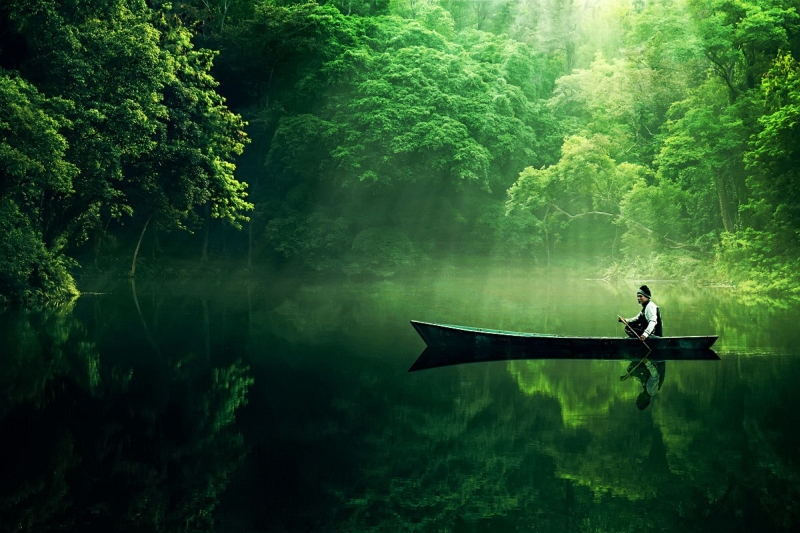
Dramatic Photo Art by Sukron Ma’mun (Ipoenk Graphic)
Cirebon, Indonesia photographer Sukron Ma’mun uses theatrical natural light to frame village life, play, and place in lyrical photo art.

Bird’s-Eye Views: Florian Beaudenon’s Instant Life
Paris photographer Florian Beaudenon’s Instant Life series captures people in their rooms from above—intimate, collaborative overhead portraits of everyday joy.
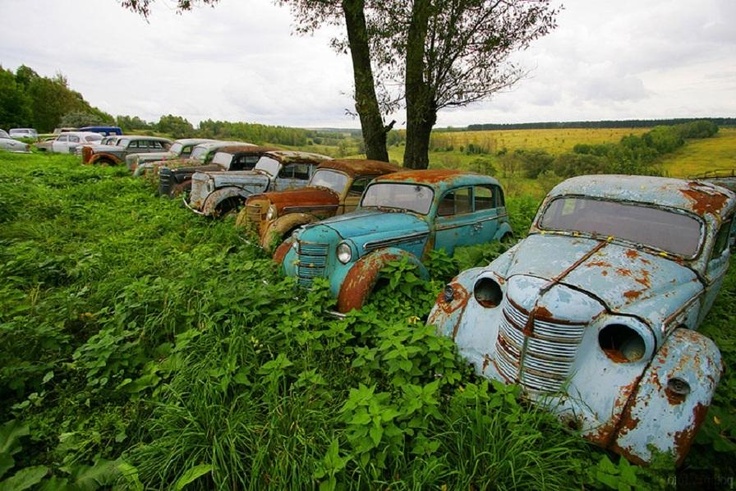
Abandoned Cars Reclaimed by Nature: Rust, Growth, and Quiet Ruin
When neglected vehicles are left outdoors long enough, rust, moss, and trees rewrite them into strange still lifes—sad, photogenic, and slowly returning to the ground.