
Bodies with No Regret: Sandro Giordano’s IN EXTREMIS
Staged falls, clenched objects, and dark irony—Sandro Giordano’s photo series on material obsession and bodies that hit the ground holding on.
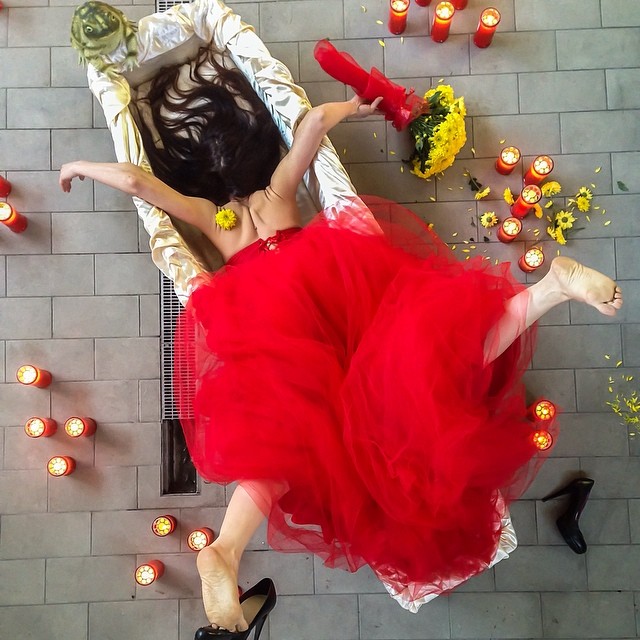
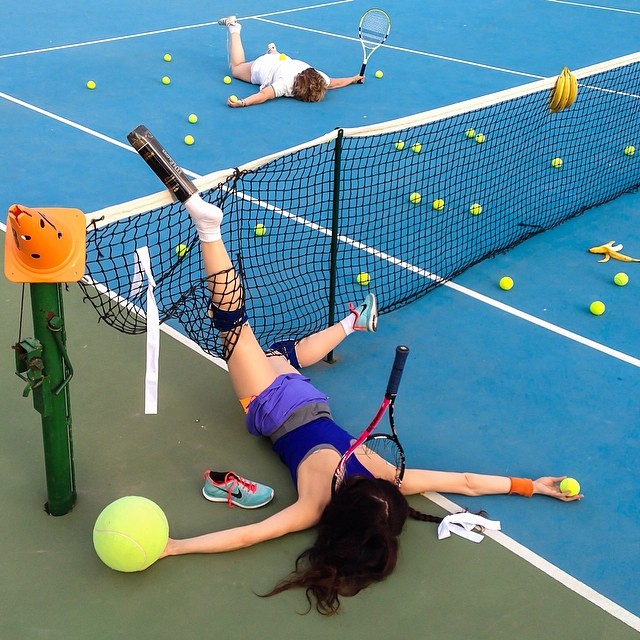
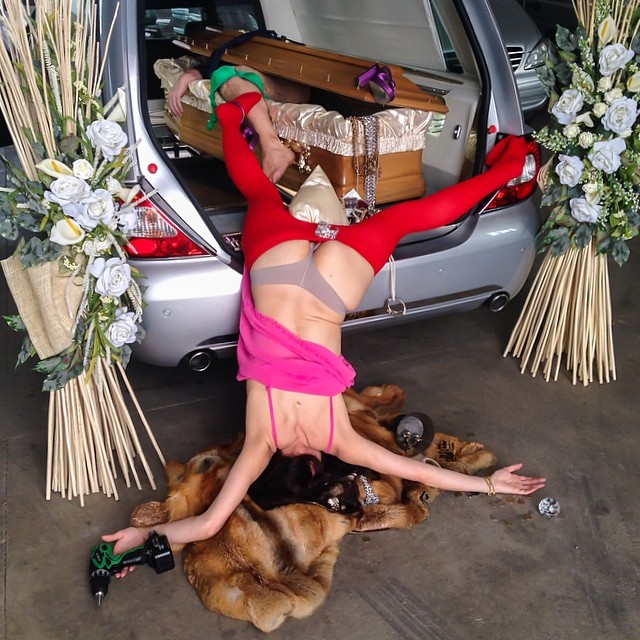
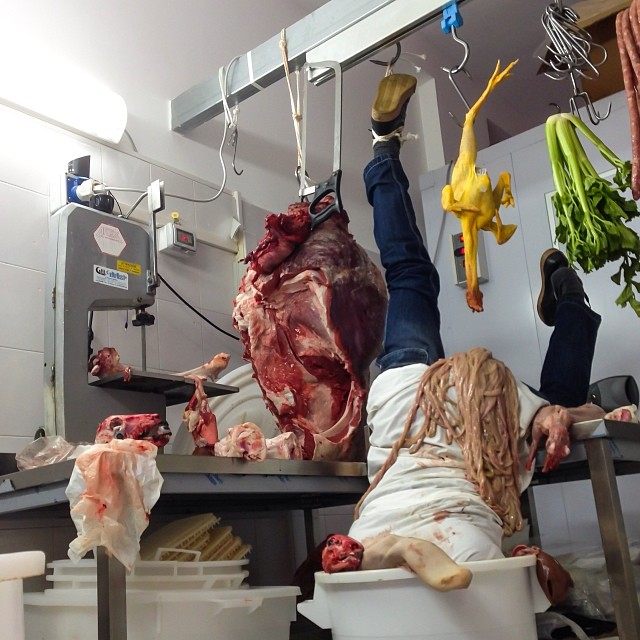
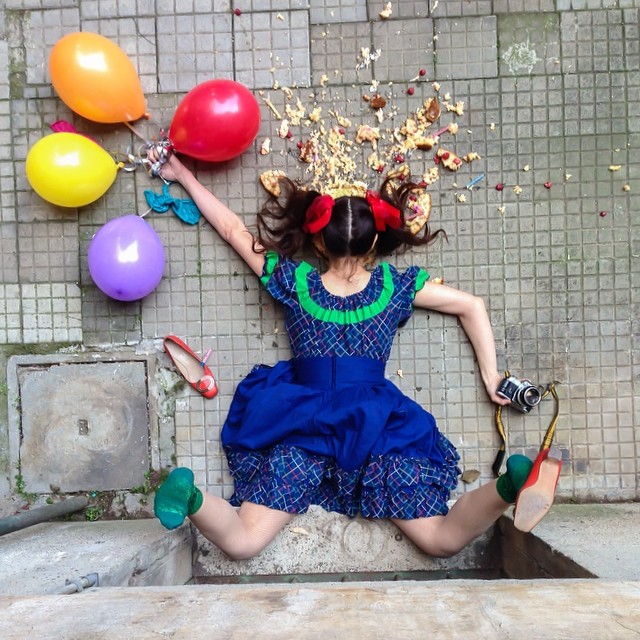
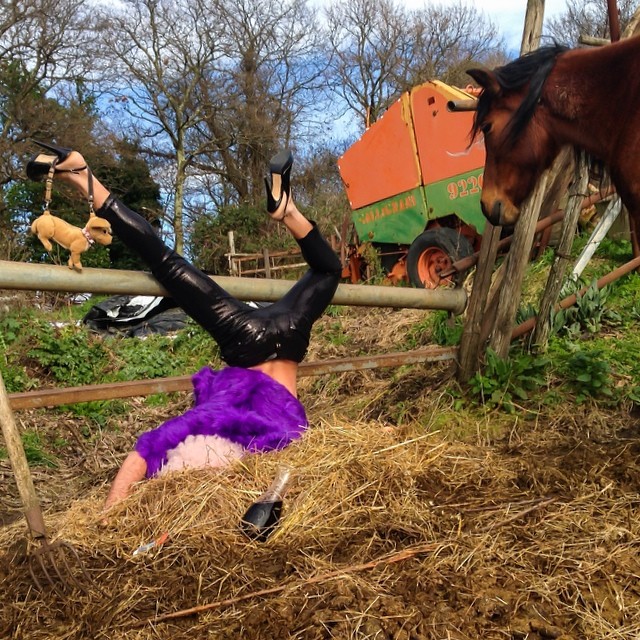
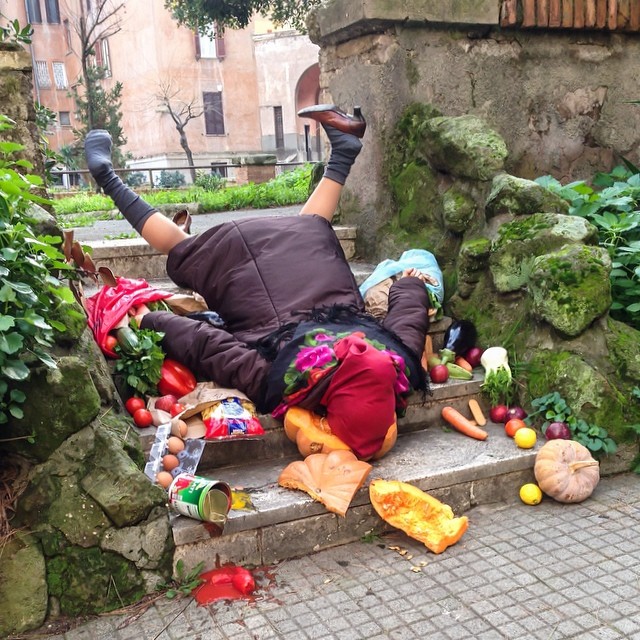
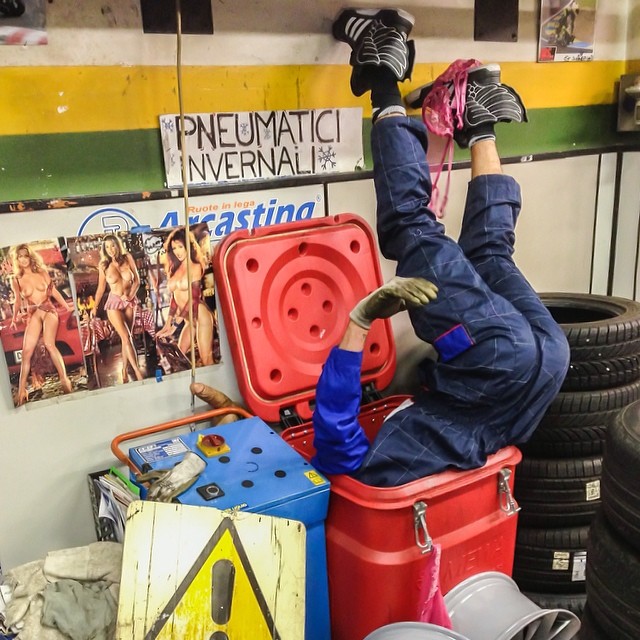
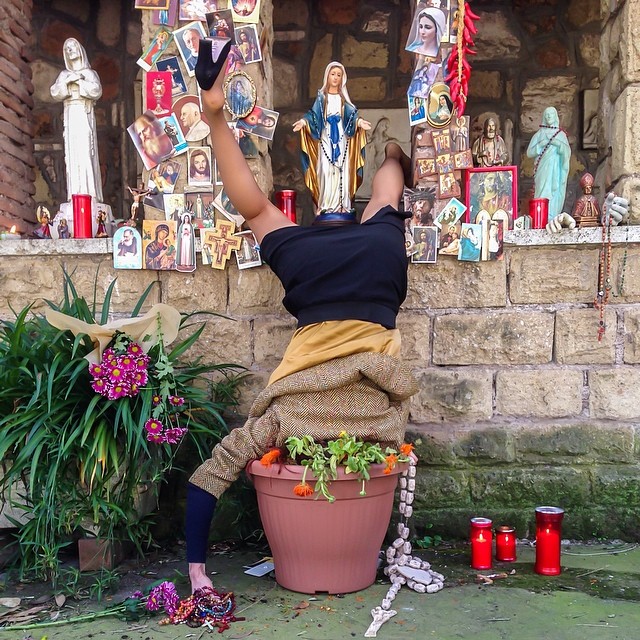
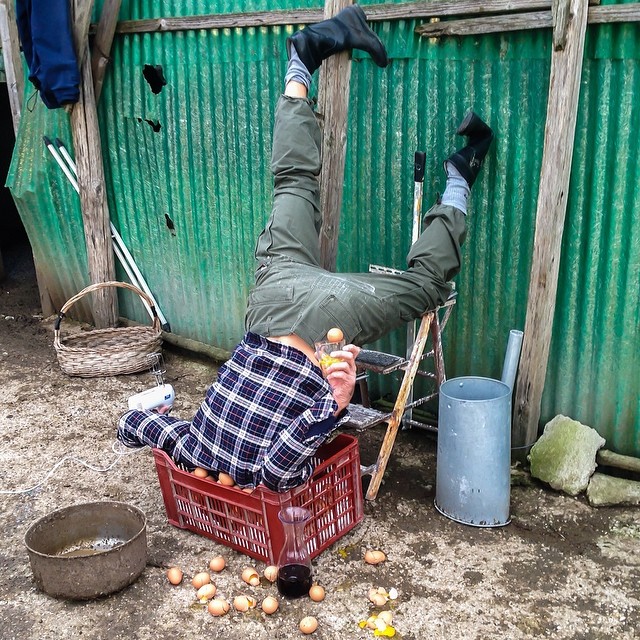
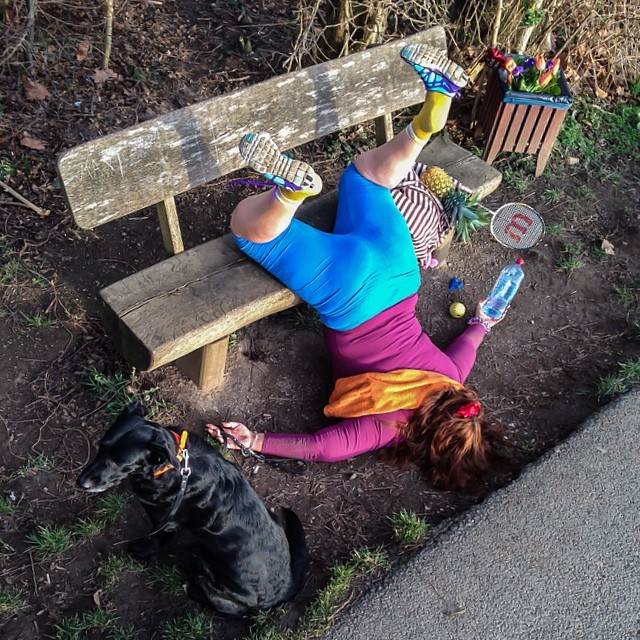
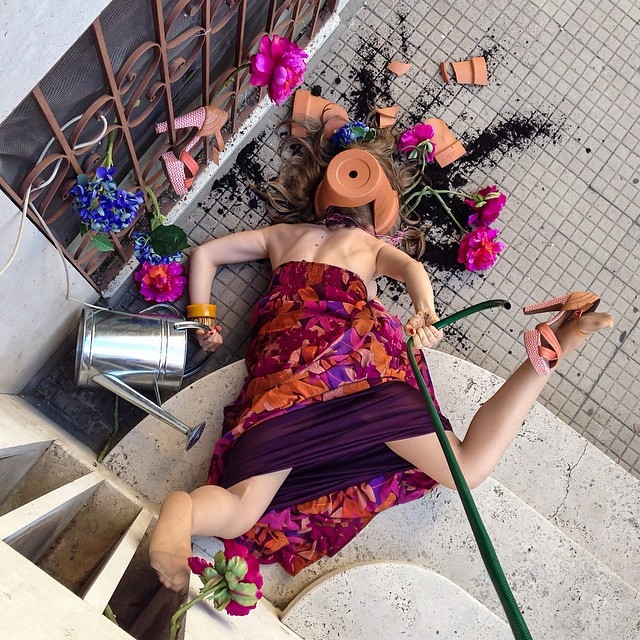
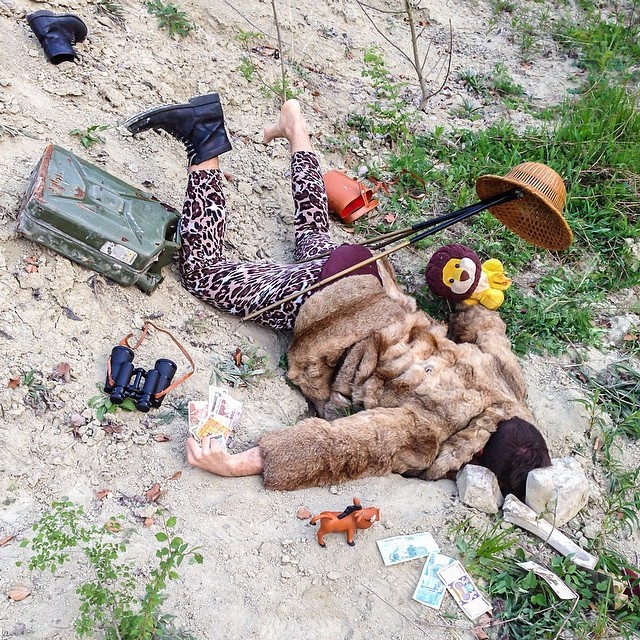
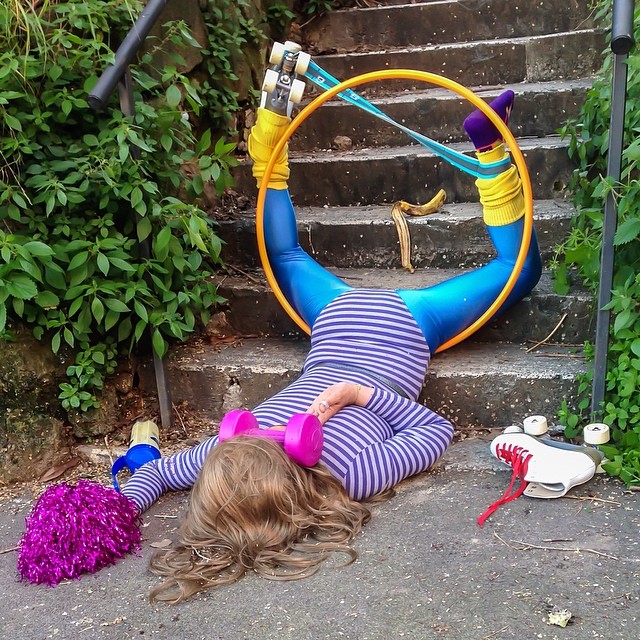
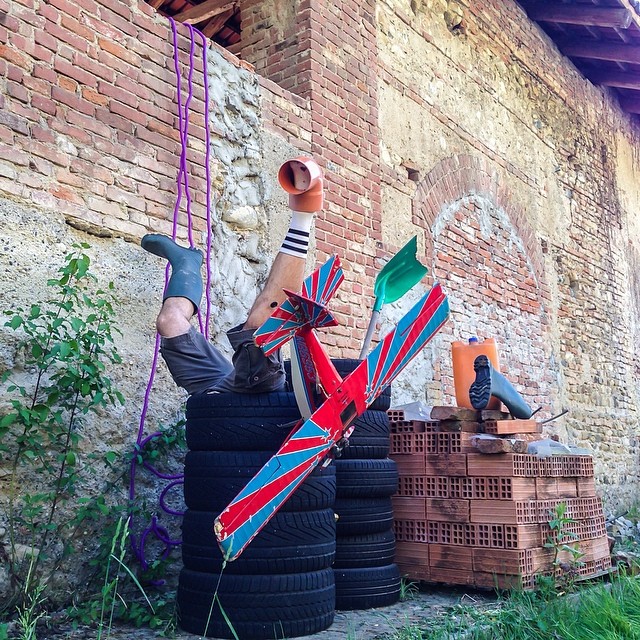
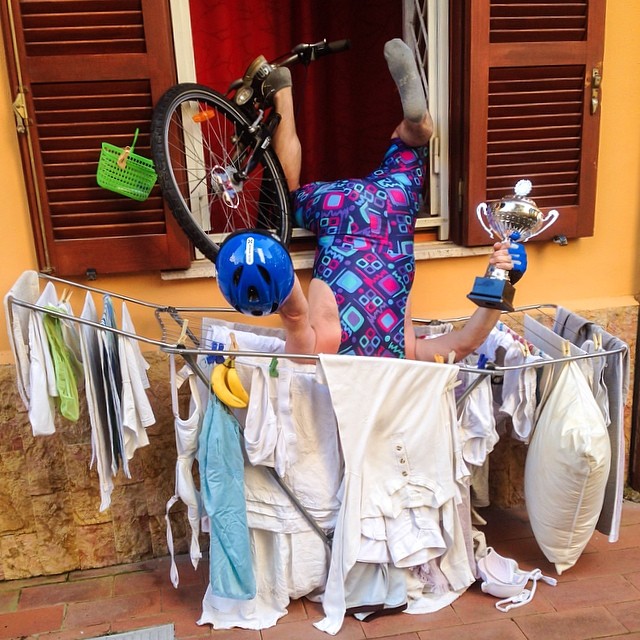
Italian photographer Sandro Giordano’s ongoing series IN EXTREMIS (bodies with no regret)—in Italian, corpi senza pentimento—stages people in the awkward instant after a fall. Bodies sprawl face-down or twisted on floors and pavement. Hands still grip a phone, a glass, a bag, a shoe, a plate of food. The scenes look like accidents caught mid-consequence, but they are carefully composed short stories about a culture that will risk the body to protect the object.
Giordano has described the worry directly: we live in a time when material things risk becoming more important than our own lives. The photographs make that idea visible without a lecture. First you flinch. Then you laugh. Then you notice what the fallen person refused to drop.
From accident to series
The project did not begin as a mood board about consumerism. It began with pain. Around 2013, Giordano had a bicycle accident in which holding on to an object cost him significant function in one hand. Soon after, a friend broke a leg while trying to save a smartphone from water. Those two events—small in the scale of world news, large in the scale of a body—pushed him toward images of impact.
Born in Rome in 1972, Giordano studied set design and later acting, working in theatre and film before shifting more fully into photography while living in Barcelona. That background shows. IN EXTREMIS is not candid street photography. It is directed: models, props, wardrobe, locations, and camera angles arranged so the “fall” reads as both slapstick and diagnosis. He has said he felt an urgency to capture the moment of impact and to speak about obsessions, neuroses, and the frailties of the present through personal experience.
The series title matters. In extremis suggests a limit point. Bodies with no regret suggests that even at that limit, the characters do not release what they were performing with—status objects, beauty props, work tools, comfort devices. The body hits the ground; the story the person was telling about themselves tries to continue in the clenched hand.
How the pictures work
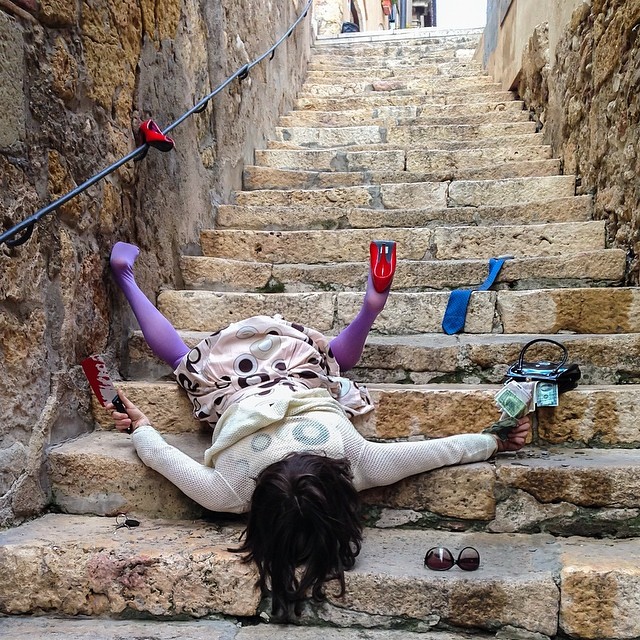
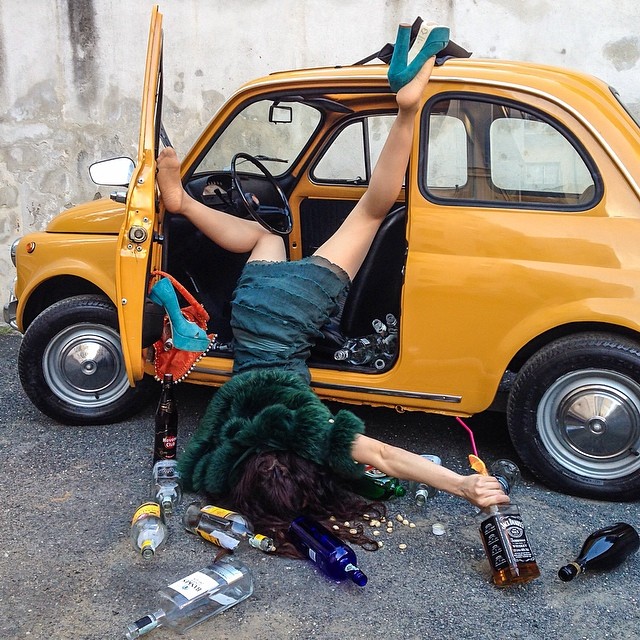
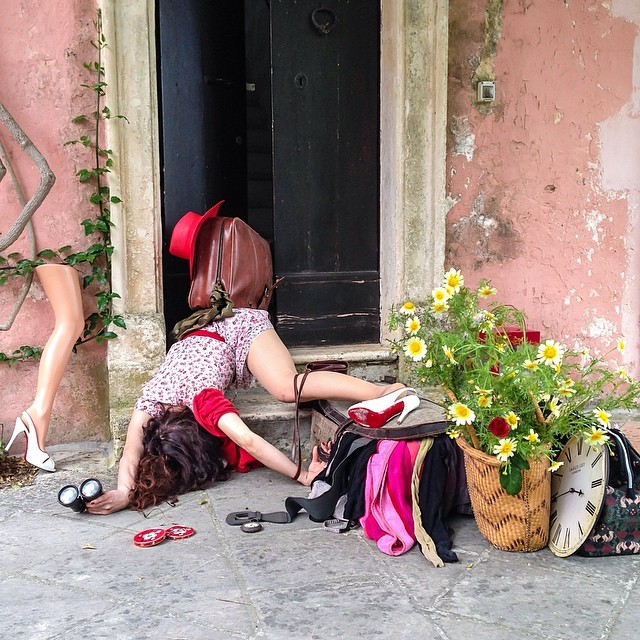
Each frame behaves like a one-act play after the curtain has already fallen—literally. Giordano often hides or turns away faces, which keeps the images from becoming portraits of individuals and turns them into types: the partygoer, the shopper, the beauty devotee, the office body, the romantic, the food worshipper. Clothes, hairstyles, and settings complete the costume of a social role. The clutched object is the punch line and the thesis.
He has described the characters as worn out by the daily performance of living—oppressed by appearance instead of simply existing—until mind and body black out and they crash without trying to save themselves. That language is dramatic, but the photographs need it. Without the idea of performance, a face-plant is only a stunt. With it, the fall becomes the moment a false self can no longer stand upright.
Humor is structural, not decorative. The viewer’s sequence is predictable and intended: bewilderment at the unlucky pose, then a liberating laugh, then recognition. Giordano has said he wants to tell tragedy through irony. The laugh is not cruelty toward the model; it is recognition of a shared absurdity. Who has not lunged for a phone? Who has not treated a possession as an extension of the self for one stupid second too long?
Objects as evidence
In IN EXTREMIS, objects are not still-life decoration. They are evidence of what the character valued in the half-second before impact. A smartphone is the most on-the-nose emblem, but Giordano’s inventory is wider: fashion items, food, bottles, shopping bags, beauty tools, party debris. The point is not that phones are evil. The point is the hierarchy revealed under stress. When the body is already falling, what do we still try to save?
That question ages well because the props update while the grammar stays stable. Mid-2010s coverage of the series often emphasized gadgets and shopping culture; the same compositional joke now reads just as clearly with whatever fetish object a given year prefers. The series is satirical, not documentary. It exaggerates to make an ordinary reflex visible.
Color, wardrobe, and location do quiet work. Saturated clothes against plain floors, mess scattered with intentional chaos, limbs arranged past comfort—these choices keep the images from looking like medical illustrations. They look like cinema stills from a film about fatigue. Giordano’s theatre training is useful here: blocking matters. A leg angle, a shoe kicked sideways, a wig spilling across tile—each detail sells the fiction of sudden collapse.
Reading the series as art, not only as meme
Online, these pictures travel easily as “hilarious falls.” They are funny. They are also a coherent project with a stated ethics: dark irony as a way to look at obsession without moralizing from a pulpit. The models are collaborators in a staged crash, not strangers humiliated on the street. That distinction matters. The satire targets a shared condition, not a random person’s worst afternoon.
Giordano’s own statements about perfection living in imperfection, and about strong contrasts and frailty, help explain the look of the work: hard light or graphic color, unflattering angles, bodies denied the dignity of a heroic pose. Beauty, when it appears, is the beauty of styling and control—the opposite of the pose’s supposed loss of control. That contradiction is the joke’s engine.
Seen as a sequence, the series becomes a catalog of contemporary roles pushed past endurance. One image is a gag. Twenty images are a worldview: modern life as continuous performance until the body files a complaint by hitting the floor.
What to notice as you scroll the set
Look first at the hands. Whatever they refuse to release is the caption the photograph will not print. Then look at the mess around the body—the props that fell when the person did not. Then look at costume and place: what social script was underway before the blackout? Finally, notice your own laugh. That reflex is part of Giordano’s design. The series wants recognition, not only amusement.
Giordano has shared much of this work through his Instagram presence associated with the project name Remmidemmi. The photographs repay slower looking than a feed usually allows: they are staged moral comedies about attachment, exhaustion, and the strange loyalty we show our things when gravity stops negotiating.

Comments
Continue reading

Dramatic Photo Art by Sukron Ma’mun (Ipoenk Graphic)
Cirebon, Indonesia photographer Sukron Ma’mun uses theatrical natural light to frame village life, play, and place in lyrical photo art.
Bird’s-Eye Views: Florian Beaudenon’s Instant Life
Paris photographer Florian Beaudenon’s Instant Life series captures people in their rooms from above—intimate, collaborative overhead portraits of everyday joy.
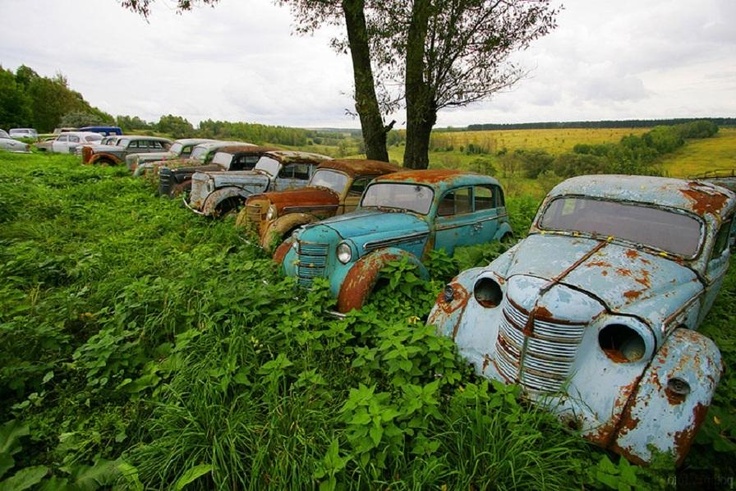
Abandoned Cars Reclaimed by Nature: Rust, Growth, and Quiet Ruin
When neglected vehicles are left outdoors long enough, rust, moss, and trees rewrite them into strange still lifes—sad, photogenic, and slowly returning to the ground.