
Ana Pais Eternal Moments: Soft Cinematic GIFs
Ana Pais’s Eternal Moments series—spectral fashion-adjacent cinemagraphs from the early 2010s GIF wave, with collaborators André Tentugal and Christian Unterdechler.
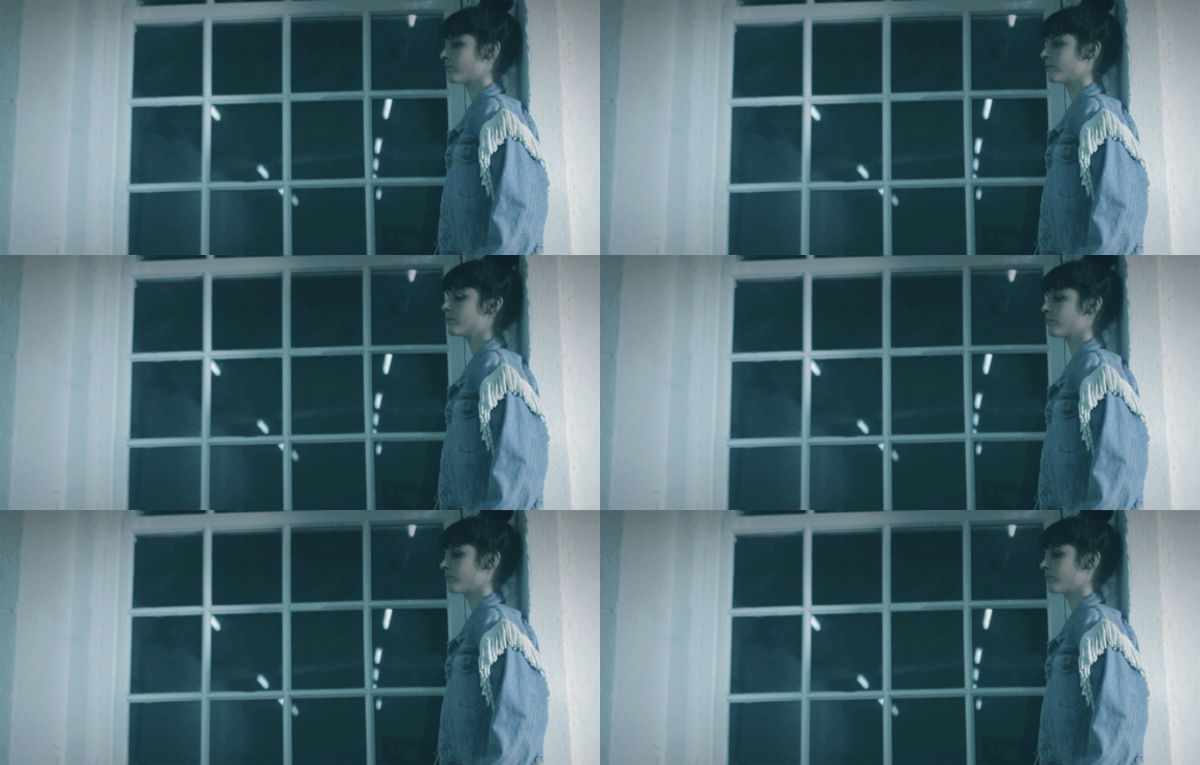
While New York photographers were teaching the internet the word “cinemagraph,” other artists were exploring the same hybrid territory with quieter temperaments. Portuguese designer and photographer Ana Pais—whose work circulated through Behance and European design blogs around 2011–2012—built a series often shared as Eternal Moments. The animated GIFs collected here belong to that wave: fashion-adjacent, almost spectral, and built from gestures small enough to feel like memory rather than performance.
Pais’s public profile presented her as a graphic designer and photographer with a cinematic eye, later associated with art-direction and branding work in Lisbon and beyond. Collaborators frequently credited with the series include André Tentugal and Christian Unterdechler. Several frames drew from imagery connected to Tentugal’s music-video direction for X-Wife’s “Keep on Dancing.” That pedigree matters. These loops are distilled cinema stills that refuse to finish the scene, not random novelty animations pasted onto portraits.
If you come to this page looking for living photographs rather than punchline GIFs, start by lowering your expectations for spectacle. The pleasure here is delay. A blink. A turn of the head. Smoke that never quite clears. The stillness around those motions is not empty; it is atmosphere carefully protected so the moving fragment can stay tiny and still feel decisive.
Compared with high-gloss studio cinemagraphs from fashion week backstages, Pais’s palette often feels cooler, mistier, or more desaturated. Soft color and restrained contrast make the loop read as dream logic instead of product demonstration. Where some living images announce luxury through polish, these announce mood through haze, silhouette, and unfinished gesture. Both dialects belong to the early 2010s GIF renaissance; they simply speak to different nerves.
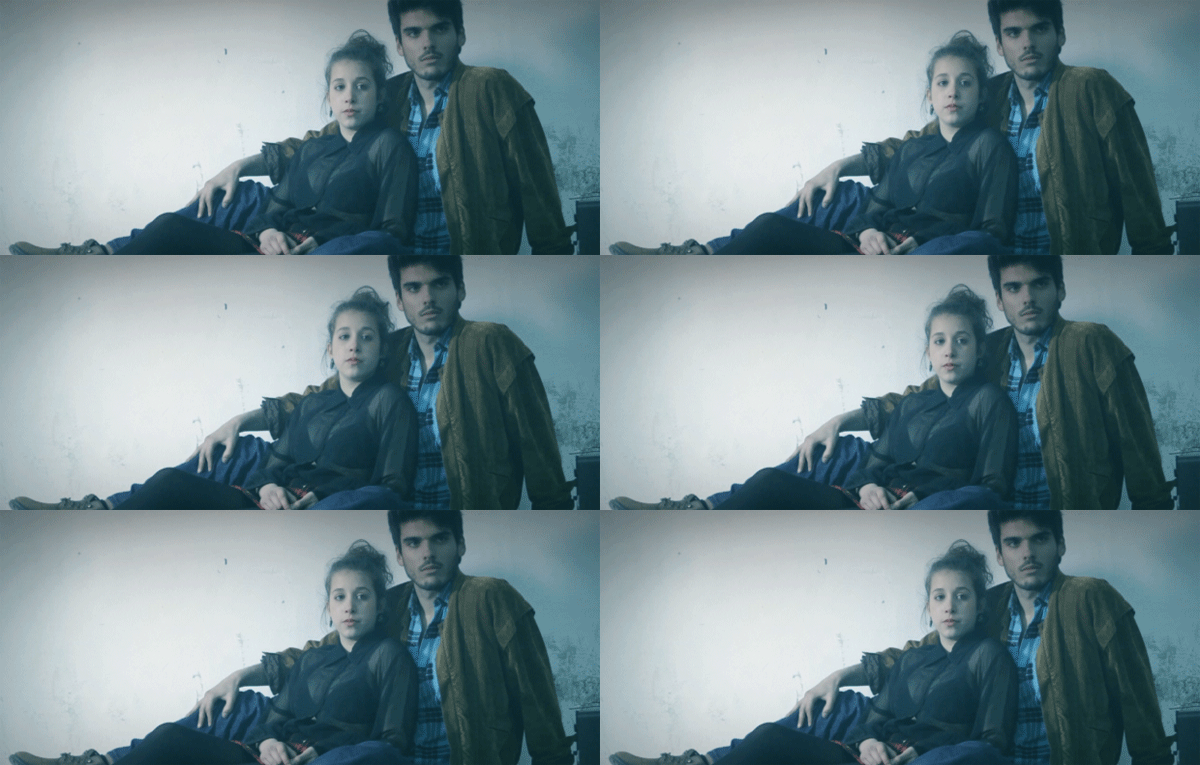
The series title does conceptual work. An “eternal moment” is a paradox photography already loves. Critics have long noted that a photograph repeats what can never be repeated existentially; animation tightens that paradox until it becomes a loop you can watch. A once-only gesture becomes an infinite present. That undertone separates this gallery from gag culture and from purely commercial living ads. You are invited to linger inside a feeling, not to decode a joke.
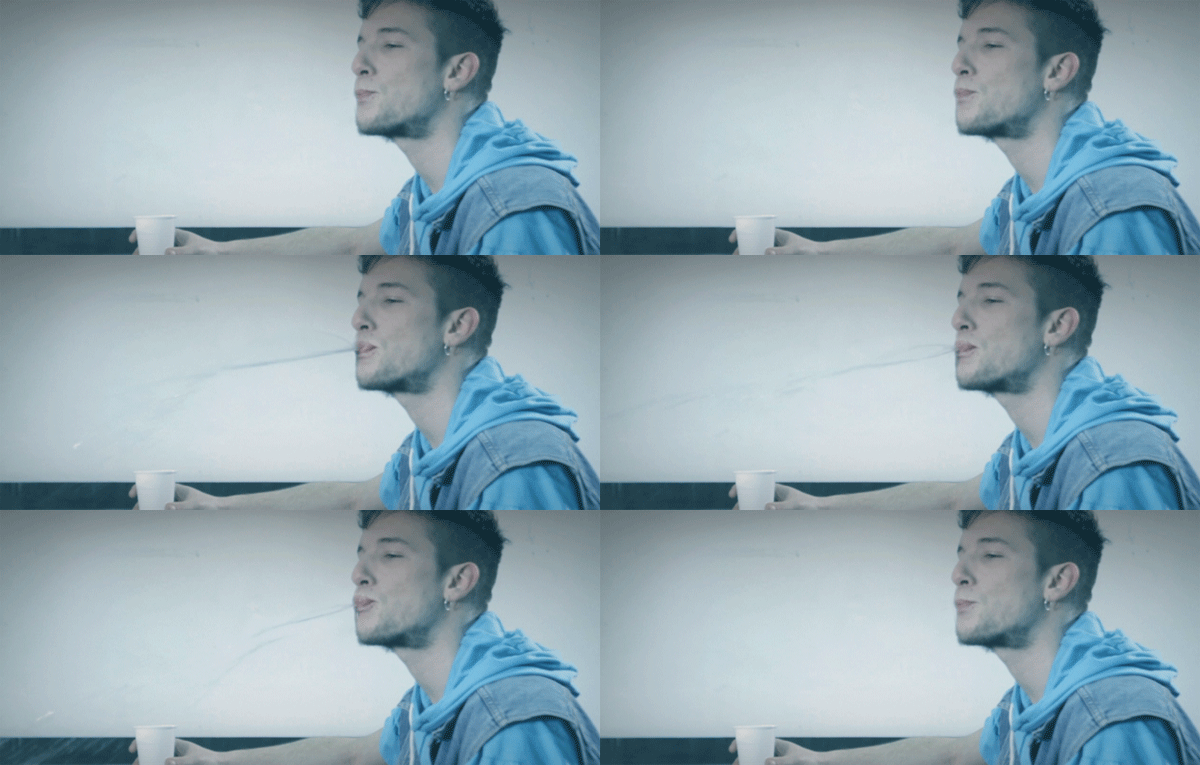
Wide cinematic crops dominate many of these pieces. The roughly 600-pixel-wide frames stretch horizontally like film stills, which changes how motion is placed. Instead of a centered portrait that animates jewelry or hair on a pedestal, the moving detail can sit like a secondary actor in a larger scene. Your eye travels the composition first—negative space, tonal bands, costume silhouette—then discovers life at the edges. That delayed discovery is part of the design.
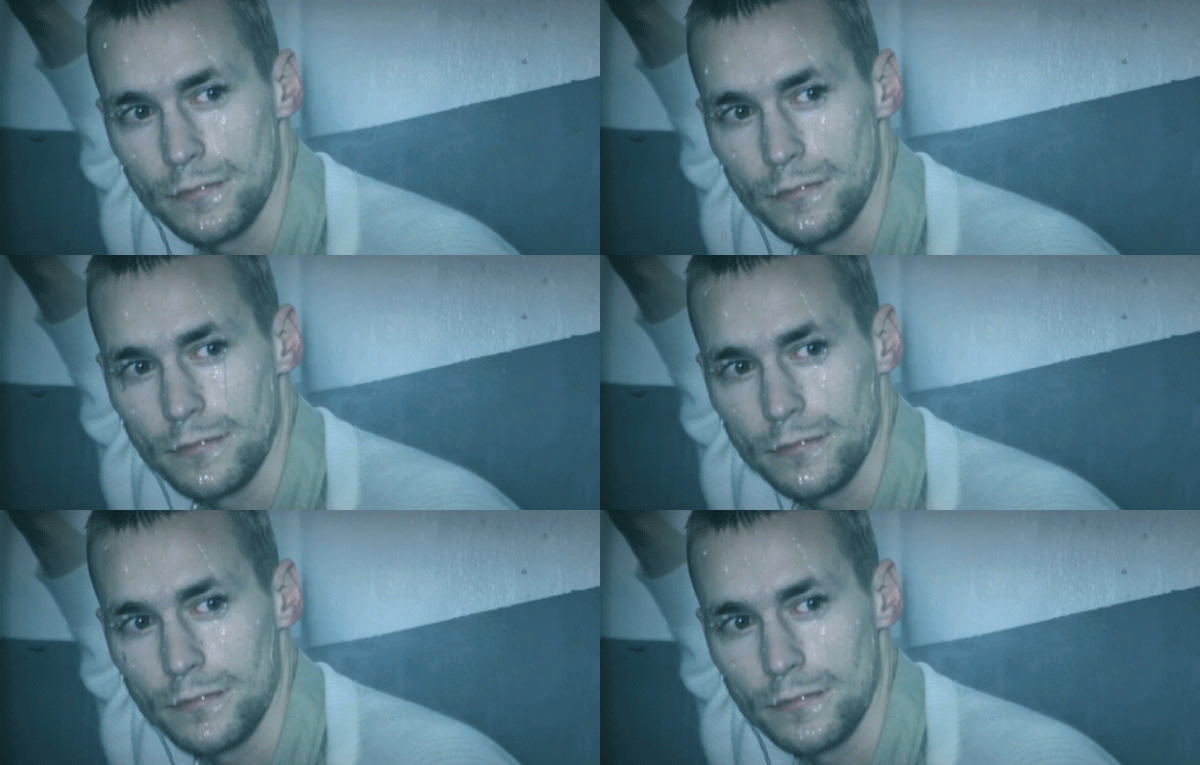
Fashion and beauty remain present, but the tone is less campaign and more nocturne. Makeup, costume, and posture support the loop without shouting brand polish. If the better-known New York studio work often feels like luxury print brought to life, Pais’s frames often feel like a paused art-house reel that somehow kept breathing. Studying both side by side is useful: same hybrid medium, different emotional contracts with the viewer.
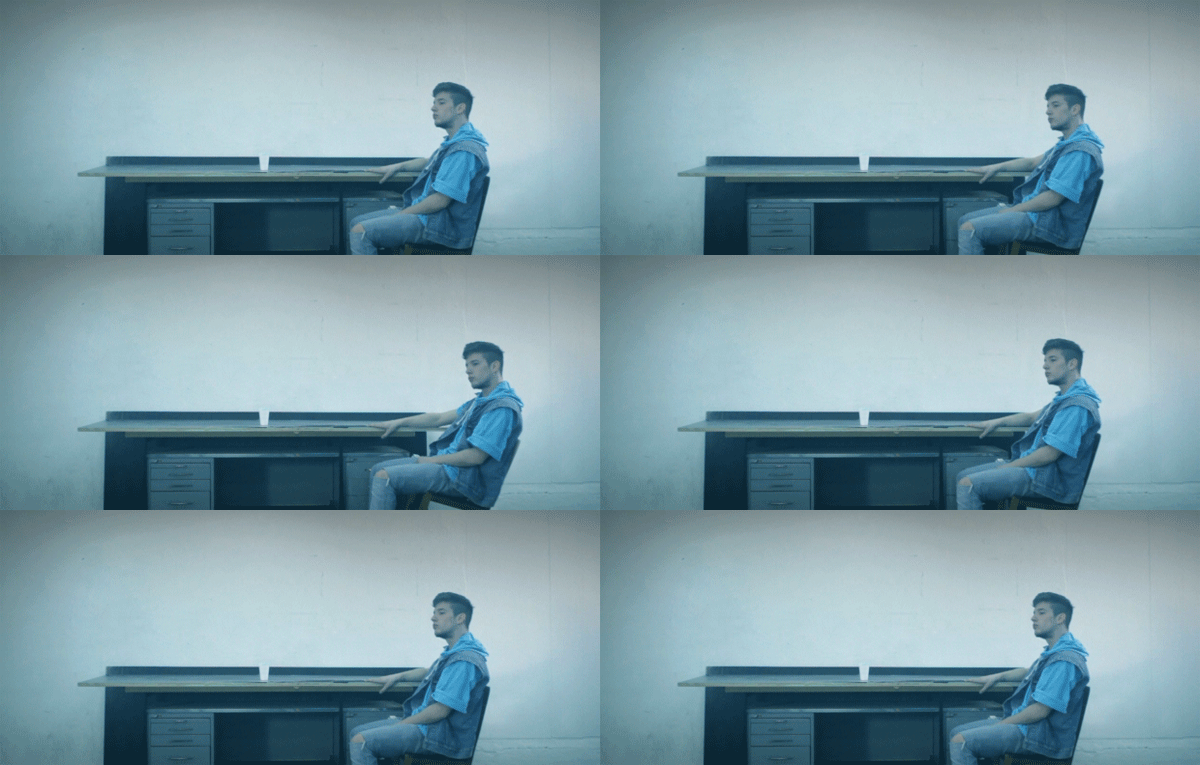
For designers tracking motion-graphics history, this set is also a reminder that the GIF revival was international and multi-vocal. Lisbon and Porto creative circles, Behance portfolios, French and Japanese design blogs, and Tumblr fashion feeds all circulated related work in the same seasons. No single studio owned the idea of a still that moves. What Pais’s series contributed was a softer spectral register—less runway sparkle, more unfinished cinema.
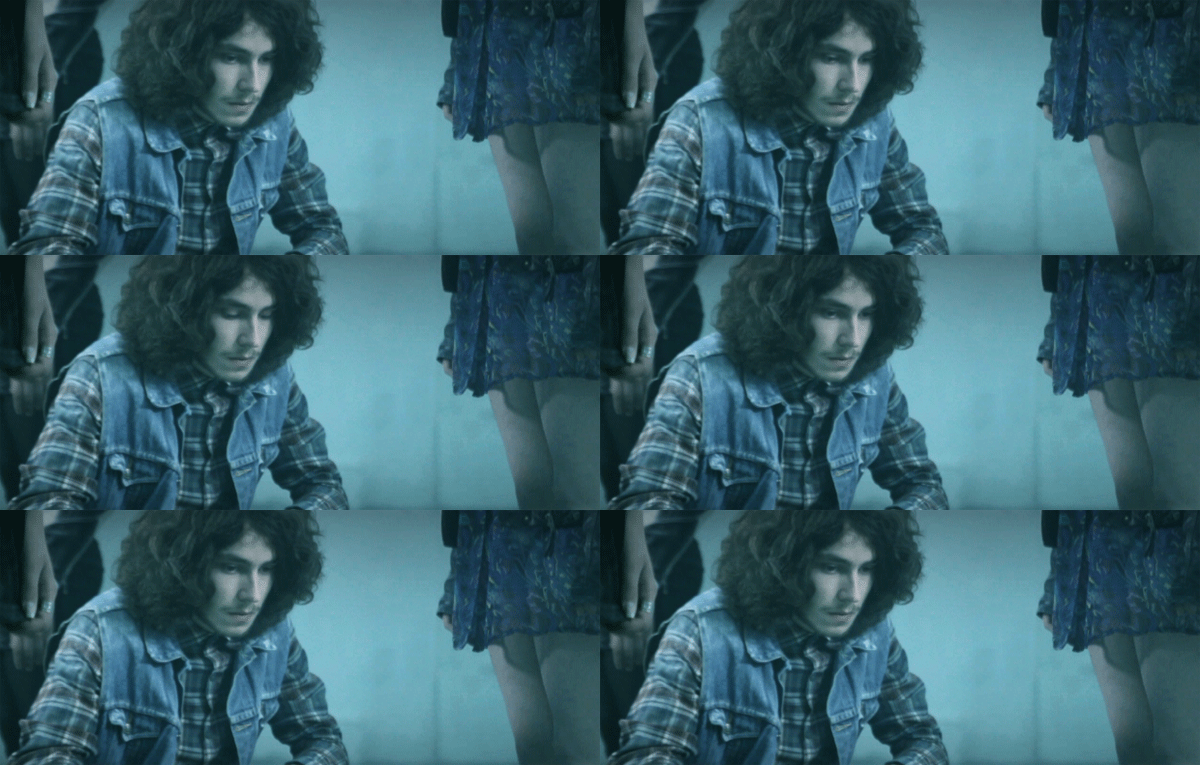
How to look while you scroll. First, identify the still zone—the part of the image that behaves like a photograph and refuses to twitch. Second, find the moving fragment and measure how little it needs to do. A tiny oscillation can carry more emotion than a large gesture because the contrast with stillness is sharper. Third, notice color temperature and grain: they cue whether the loop wants intimacy, distance, romance, or unease. Fourth, watch the join of the loop; when it disappears, craft is doing invisible labor.
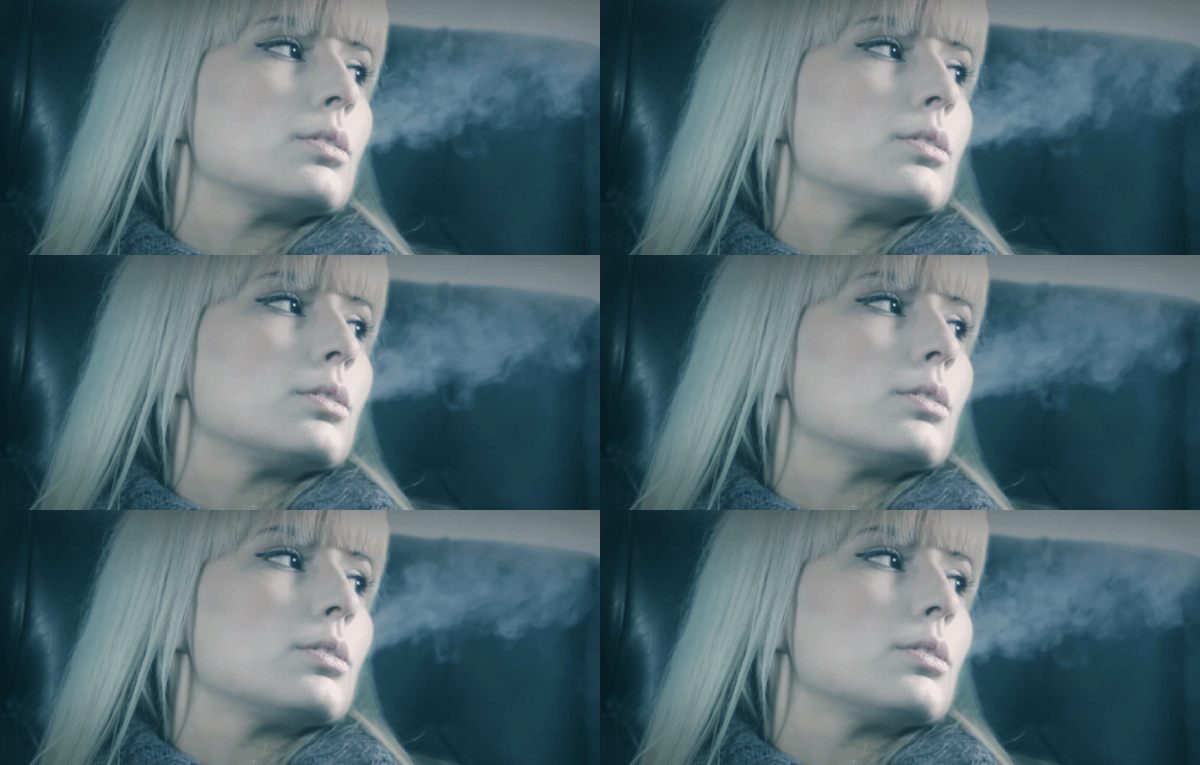
Some motions here are so gentle you may need a second glance to confirm they are looping at all. That delayed recognition is not a flaw; it is the aesthetic. It asks for attention in an era that already rewarded speed. The GIF becomes a small test of patience. If you stay, the image rewards you with a living detail. If you skim, you may leave thinking you saw only a still. The medium quietly sorts its audience.
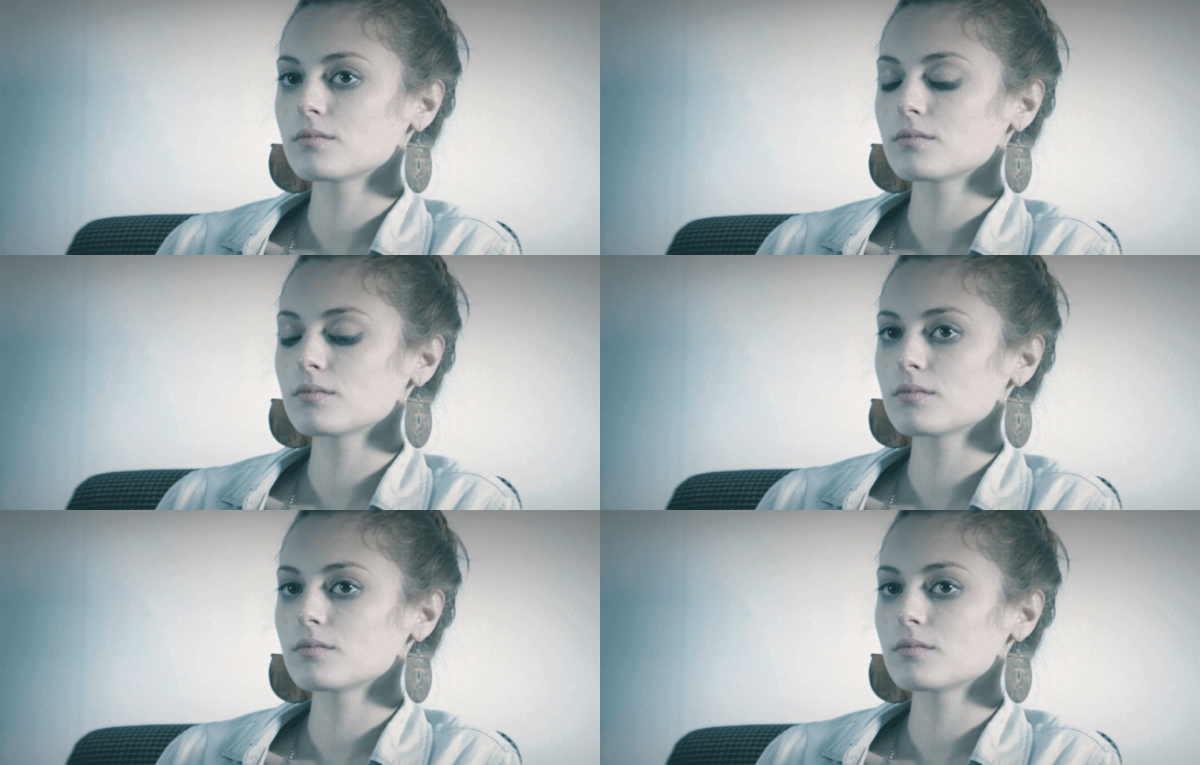
There is a practical lesson for anyone editing video into still-motion hybrids today. Source material from music videos or narrative shoots can yield richer atmospheres than purely posed studio plates, provided camera lock and masking stay clean. Pais’s series shows how borrowed cinematic light—fog, backlight, soft practicals, muted wardrobes—gives the loop a world to inhabit. Motion without atmosphere is a fidget. Atmosphere without motion is a still. Together they become a spell that holds on a blog page without sound or plot.
Technical constraints of the period still show. GIF color tables and compression can soften gradients and muddy shadows. The stronger frames anticipate that loss: they rely on clear silhouettes, simple tonal separation, and motion that remains readable after quality drops. That is a useful lesson even now. Design for the weakest display you expect, not only for the studio monitor.
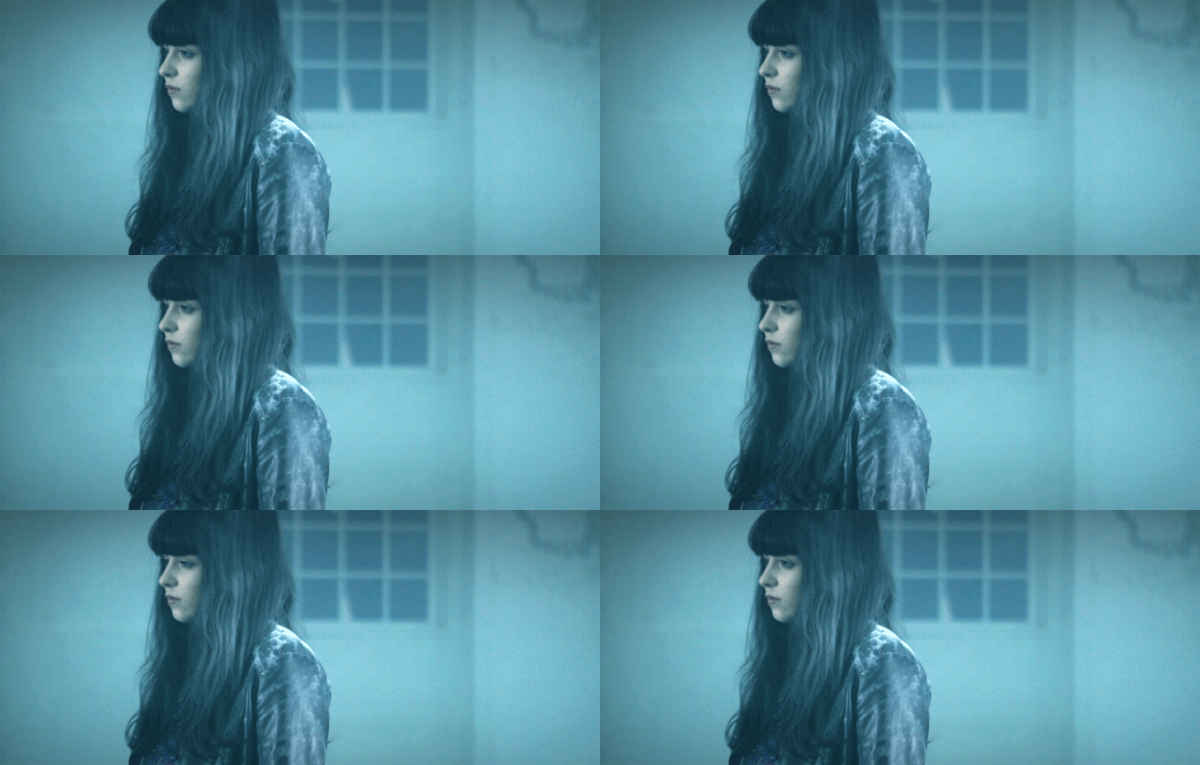
Where does this leave a 2012-era viewer—or anyone revisiting the form later? Somewhere between photography gallery and short film. You do not need a plot synopsis. You need a feeling that refuses to resolve. Smoke that never clears, a glance that never completes, fabric that never settles: these unfinished actions are the point. They hold the door open on a second that should have ended, which is why the series title still fits.
If one frame in this collection stops you, stay with it longer than feels efficient. Ask whether the motion is narrative (something is happening) or atmospheric (a place or person is simply alive). Pais’s best loops usually answer “both, barely.” That barely is the craft. It is also why Eternal Moments still reads as a distinct voice in the early cinemagraph conversation—not louder than studio fashion work, just differently haunted, and still willing to let a single unfinished gesture carry an entire mood.

Comments
Continue reading
Cinemagraph Gallery: Living Photographs from 2013
A stand-alone collection of cinemagraph GIFs from the medium’s early boom—still frames with one looping detail, including Ann Street Studio–era craft.
A Beautiful Collection of Cinemagraphs by Jamie Beck and Kevin Burg
Living stills from the early cinemagraph era—Jamie Beck and Kevin Burg’s looped motion inside otherwise frozen photographs.
Sarah Johnson’s Ordinary Batman Adventures: The Dark Knight Off Duty
Animator Sarah Johnson’s GIF series puts Batman in cereal, chores, and quiet Gotham downtime—cape on, crime wave optional.