
DIY Crafts Roundup #3: Mason Jar Lights, LEGO Walls, and Salvage Projects
Mason jar chandeliers, crayon street-art canvases, belt handbags, LEGO play walls, and salvaged-door mirrors—DIY projects that change how a room works.
The third installment in this DIY series shifts from small tabletop crafts toward projects that change how a room works: lighting, storage walls, wearable upcycling, and salvage furniture. Several of the originals survive only as titles in the archive, so the guidance below rebuilds each idea into something you can actually attempt—while keeping the two remaining photographs that still document the roundup.
Mason jar chandelier
A mason jar chandelier is one of those projects that looks complicated from the sofa and simple once you have a canopy plate, lamp cord, and jars on the workbench. Choose jars of the same height if you want a calm silhouette, or mix sizes for a cascading look. Drill or punch a hole in each lid (or use threaded lamp lids made for this purpose), feed cord through, wire to a proper canopy rated for the fixture weight, and hang the jars at staggered lengths.
Use LED bulbs that stay cool inside glass. Soften the look with a wash of frosted spray on the jars, or leave them clear so the filament shows. Sketch the footprint on paper before you drill the ceiling canopy: uneven spacing is harder to forgive than an imperfect jar finish. If the chandelier hangs over a dining table, keep the lowest jar high enough that guests do not bump it when they stand.
Banksy-inspired crayon art
Street-art silhouettes meet childhood color when you melt crayons down a canvas above a stenciled figure. Tape a Banksy-style outline—or any high-contrast silhouette—onto the lower half of a stretched canvas. Affix whole crayons along the top edge with hot glue, tip down, then warm them carefully with a hair dryer so wax runs in vertical streaks. Remove the stencil when cool.
Work outdoors or on a drop cloth; melted wax travels farther than you expect. Primaries give a comic-book punch; muted tones feel more gallery-ready. The point is not to copy a famous stencil illegally for sale—it is to borrow the graphic language of street silhouettes and let color do the rest at home.
Picture-frame vase
A deep picture frame, a sheet of glass or acrylic for the back, waterproof sealant, and a narrow cavity between them can hold stems like a living photograph. Build or buy a shadow-box depth, seal every seam that will touch water, and leave a discreet fill gap at the top. Lean the frame on a mantel or hang it securely if the hardware can carry water weight.
Use sturdy stems—tulips, eucalyptus, single roses—rather than delicate sprays that flop in a shallow volume. Change the water often; stagnant water in a sealed cavity smells worse than a forgotten jar on the counter. For a dry version, skip the sealant and fill the cavity with dried flowers or seasonal foliage.
Handbag from discarded leather belts
Worn belts still hold years of tensile strength. Weave or stitch overlapping belt lengths into a flat panel, fold into a tote or clutch shape, and finish with a buckle strap as the closure or handle. Punch new holes where the weave needs them; old buckle holes rarely land where a bag wants them.
Clean and condition the leather first so the bag does not crack at fold lines. Mix black, brown, and cognac belts for a patchwork look, or stick to one color family for something quieter. Reinforce stress points with heavy thread or rivets. The finished bag reads as intentional salvage, not a craft-fair accident, when edges are trimmed clean and the silhouette stays simple.
LEGO wall
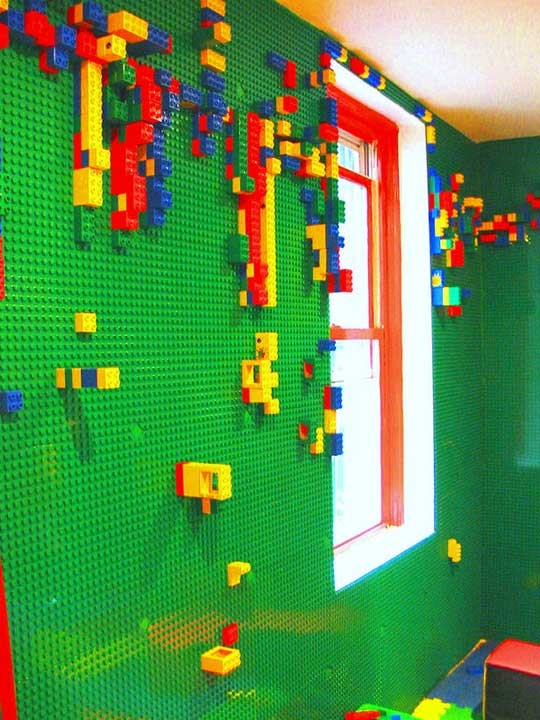
Covering a playroom wall in green baseplates turns vertical surface into a permanent building site. Mount baseplates edge to edge from floor toward ceiling (or full height if studs and adhesives allow), wrap a corner if the room invites it, and leave a window frame as a bright contrast—red trim against green studs works especially well.
Kids—and adults—can build stalactite drips from the ceiling line, tiny shelves that actually hold a small figure, or temporary mosaics that change weekly. Keep a shallow bin for loose bricks so the floor does not become a hazard. This is a larger commitment than a weekend trinket: measure twice, use construction adhesive rated for the wall type, and accept that removing baseplates later will mean patching paint. In return you get a room that invites making instead of only displaying.
Handmade crochet rainbow bag
A crochet market bag in rainbow stripes is portable color therapy. Use a sturdy cotton or cotton-blend yarn so the bag holds groceries without stretching into a sad oval. Work a solid base, then stripe the body in a sequence you like—ROYGBIV is classic; fewer colors look more modern. Add lined fabric inside if you carry keys or phones that might slip through open stitches.
Handles deserve extra rows or a doubled strand; they fail first. Block the finished bag so stripes sit evenly. Gift it filled with yarn or produce rather than empty—the gesture lands better when the bag already has a job.
Broken baubles, keys, and kitchen metal
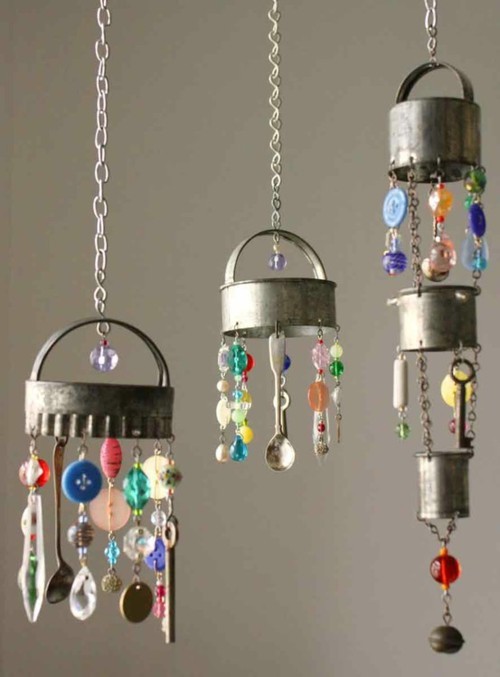
Shattered ornaments and orphan keys rarely feel useful until you hang them from vintage tart molds and cookie-cutter rings. Thread beads, buttons, tiny spoons, glass prisms, and skeleton keys onto chains or wire so they dangle at uneven lengths. A purple bead in the handle arc, a spoon as a central pendant, a bell at the bottom—each strand can be different as long as the metal bases relate.
Hang the finished mobiles indoors near a window where they catch light, or outdoors as gentle wind ornaments if the materials can take weather. This is the craft for the junk drawer: nothing matches until you decide the mismatch is the design.
Kitchen décor and picture rails
“Kitchen décor” in a DIY roundup usually means small, wipeable objects that earn counter space: painted utensil crocks, framed recipe cards under glass, chalkboard panels for weekly menus, or open shelves with consistent jar heights. Pick one wall or one stretch of counter and edit ruthlessly. A kitchen full of crafts feels busy; two or three well-made pieces feel collected.
A picture rail—molding mounted high on the wall with a narrow ledge or groove—lets you lean frames and rotate art without a constellation of nail holes. Paint the rail to match trim, or contrast it so it becomes a horizontal line that calms a tall wall. Use plate hangers or rail hooks rated for the weight of your frames. In hallways and stair landings, a rail turns changing photography into a habit rather than a renovation.
Magnetic makeup board
A magnetic board for makeup keeps metal-backed pans, scissors, and tweezers visible instead of buried in a drawer. Cover a steel sheet or magnetic primer board with fabric or contact paper, frame the edges, and mount it inside a cabinet door or on a vanity wall. Add small magnetic pots for brushes if you want everything vertical.
Label zones lightly with washi or vinyl if multiple people share the board. Keep liquids elsewhere; magnets organize tools and pans, not spillable foundations. Wipe the surface weekly—powder dust accumulates faster than you notice.
Salvaged door mirror
An old paneled door, stripped or gently painted, can hold a full-length mirror in one of its recessed panels or across a cut section of the door’s face. Secure the mirror with appropriate clips or a mirrored panel inset, hang the door on sturdy wall anchors or lean it in a bedroom corner with anti-tip hardware, and leave enough of the door’s character—hinge scars, original knob hole filled cleanly—to show it had a previous life.
If the door is heavy, treat mounting like furniture, not like hanging a poster. A salvaged-door mirror anchors an entry or dressing area with more presence than a frameless rectangle from a big-box aisle, and it costs mostly time and careful measuring.
Work through this list by difficulty, not by how photogenic the result looks online. A magnetic makeup board or picture rail can improve daily life within an afternoon; a LEGO wall or belt handbag asks for planning and materials you may need to gather first. Finish the small win, live with it for a week, then decide whether the next project should light the room, store the toys, or simply hang and catch the afternoon sun.

Comments
Continue reading

DIY Craft Ideas Roundup: Pin Cushions, Upcycled Furniture, and Seasonal Décor
From cupcake pin cushions and crayon wreaths to pallet herb shelves and wine-barrel chairs—practical DIY crafts built from scraps, salvage, and weekend patience.
5 Creative Ways to Turn Old Items into New Art: Bend, Sit, Collage, Combine, Sew
Bend ladders and metal, build suitcase seating, collage scrap, combine broken pieces into mosaics, and sew worn fabric into bags—five upcycling methods for new art.
DIY Craft Ideas: Ornaments, Upcycling, and Kitchen Hacks
Beaded spiders, melting snowmen, cork trees, sock animals, mason-jar cranberries, and kitchen upcycles—handmade projects from thrift finds and leftovers.