
Brilliant Nail Art Examples: French Variations, Florals, Geometry, and Gradients
A practical tour of nail art styles—colored and geometric French, florals, negative space, and ombré—plus prep, tools, and habits that keep designs wearable.
Nail art turns a small surface into a complete composition. Ten nails—or even one accent finger—can carry geometry, florals, gradients, negative space, and tiny illustrations without needing a gallery wall. The craft sits between fashion and miniature painting: color theory, line control, and wearability all matter. A brilliant manicure should look intentional in daylight, survive a week of typing and washing, and still feel like your hands rather than a costume.
This guide walks through the design families that keep showing up in strong nail art—classic French variations, florals, geometry, ombré, and minimal line work—plus the practical habits that make those ideas last. You do not need every bottle in a salon wall. You need a short palette, a few tools, and a clear idea of scale.
Start with shape and base
Design follows silhouette. Squoval and soft square tips suit graphic French and geometric tips because the edge gives the pattern a clean horizon. Almond and coffin shapes elongate the finger and favor vertical motifs, vines, and long-line art. Round shapes forgive slight asymmetries and wear well for everyday life. File toward the center; uneven free edges make even perfect polish look unfinished.
Prep is unglamorous and decisive. Push cuticles gently, dehydrate the nail plate, and use a base coat suited to your polish system (regular lacquer, gel, or builder). Art applied to oily or peeling bases chips first at the stress points—sidewalls and free edge. If you are painting freehand, a smooth opaque base in nude, sheer pink, white, or a solid color gives your details something to sit on.
French manicure, rewritten
The classic white tip on a pink bed remains a template, not a prison. Colored tips—coral, forest, black, chrome—keep the French structure while shifting the mood. Ombré French softens the smile line into a gradient. Geometric French replaces the curve with tape-sharp triangles, blocks, or half-moons. Floral French tucks tiny blooms into or above the tip so the design feels seasonal without covering the whole nail.
Smile-line control is the skill. Guides and stickers help beginners; experienced painters freehand with a liner brush, bracing the pinky for stability. Clean the underside of the free edge so the tip color does not look ragged when hands move. A thin, opaque tip usually photographs better than a thick, streaky one.
Florals and botanical details
Floral nail art ranges from five-dot daisies to detailed hibiscus petals. Dotting tools make quick petals: place a center dot, surround with four to six color dots, drag lightly if you want teardrop shapes. Fine brushes handle stems and leaves. Blooming gels and wet-on-wet techniques let a second color feather into a tip for soft, watercolor edges.
Scale is the usual failure point. A rose that looks elegant on a mood board can overwhelm a short nail. On smaller nail beds, prefer single blooms near the cuticle or tip, or micro florals scattered with breathing room. Leave negative space; crowded petals read as mud from conversational distance.
Color stories for florals work best when limited: two petal colors, one leaf green, one center accent. Matching florals to an outfit or bouquet—especially for weddings—feels considered when you sample the real-world colors in daylight before painting.
Geometry, lines, and negative space
Geometric nail art rewards precision tools: striping tape, striper brushes, and steady removal timing. Paint a base, apply tape for barriers, fill sections, remove tape before the polish fully locks if you want the cleanest edge (timing varies by formula). Triangles, color-blocked tips, thin vertical lines, and half-moon cuticle accents all belong to this family.
Negative-space designs leave bare or sheer nail showing between painted shapes. They look modern and grow out more gracefully because the boundary between art and natural nail is already part of the composition. Matte top coats over graphic work can push geometry toward an editorial finish; glossy tops keep it playful.
Metallic liners and chrome powders add architecture without more color. Use them as thin borders or small corner blocks so the nail does not become a mirror disco ball unless that is the brief.
Gradients and color play
Ombré and gradients soften transitions across the nail or across the full set. A makeup sponge dabbed with two or three shades remains the accessible method for lacquer; gel artists may brush-blend or use pigment fades. Keep the darkest or brightest value where you want focus—often the tip or the accent nail.
Monochrome gradients in browns, pinks, or greens feel sophisticated and pair easily with clothes. Multicolor gradients read festive; contain them with a nude neighboring nail so the hand does not vibrate. Always clean sidewalls after sponging; haze on skin ruins otherwise good blending.
Accent nails and wearable sets
A full set of identical maximalist art can fatigue both artist and wearer. Many of the best looks use seven quieter nails and three accents—or nine quiet and one statement thumb/ring finger. Repeating a motif at smaller scale on neighboring nails ties the set together without cloning every finger.
Think about lifestyle. Heavy embellishments (large crystals, thick 3D clay) catch on hair and sweaters. Flat art with a tough top coat survives keyboards better. If you type all day, keep height low and edges sealed. If you want drama for an event, plan a simpler take-down manicure afterward rather than forcing party nails into a workweek.
Tools worth owning
A short kit covers most designs: base and top coat, two liner brushes (long striper and short detail), a dotting tool (or a ballpoint-pin substitute), striping tape, a cleanup brush with acetone, and a lamp if you work in gel. Good lighting matters more than a huge polish collection. Paint in daylight or under a bright neutral lamp so blues and reds do not shift after you leave the desk.
Practice on nail tips or a plastic wheel before committing to both hands. Muscle memory for a smile line or a five-petal flower arrives faster when mistakes are cheap.
Longevity checklist
- Cap the free edge with every coat, including top coat.
- Avoid thick, gummy layers; thin coats cure and dry more evenly.
- Reapply a thin top coat mid-week if you wear regular lacquer.
- Wear gloves for long dishwashing sessions; water softens edges.
- Push back cuticle oil to the skin, not the art, if oils soften your top coat.
When a design chips, repair one nail rather than stripping the set if the rest is sound. Matching a custom mix is easier if you noted the polishes you used—another reason to keep a small, repeated palette.
Pick one idea for your next sitting: a colored French, a single floral accent, a taped geometric tip, or a two-tone sponge gradient. Finish that idea cleanly before adding rhinestones “just because.” Nail art reads as brilliant when the last step is restraint—wipe the skin clean, seal the edge, and stop while the composition still has air.

Comments
Continue reading
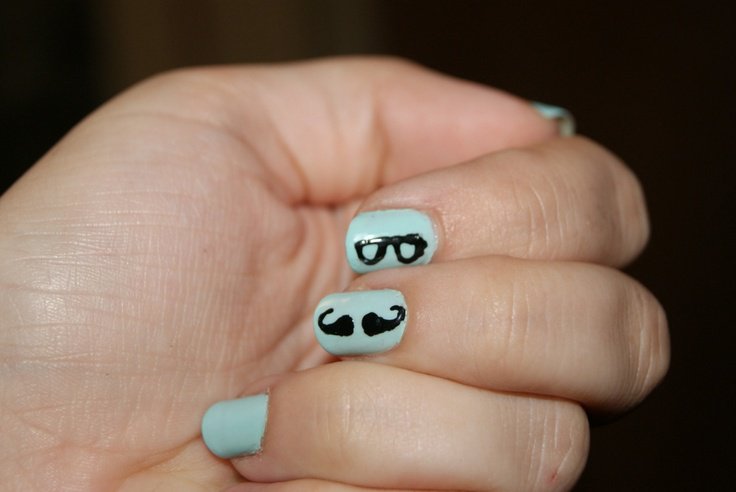
Cool Mustache Nail Art: Handlebars, Accents, and Playful Manicure Layouts
Mustache-themed nail art ideas—pastel bases with black handlebars, stickers and stamping shortcuts, color stories, and layouts from one accent nail to a full set.
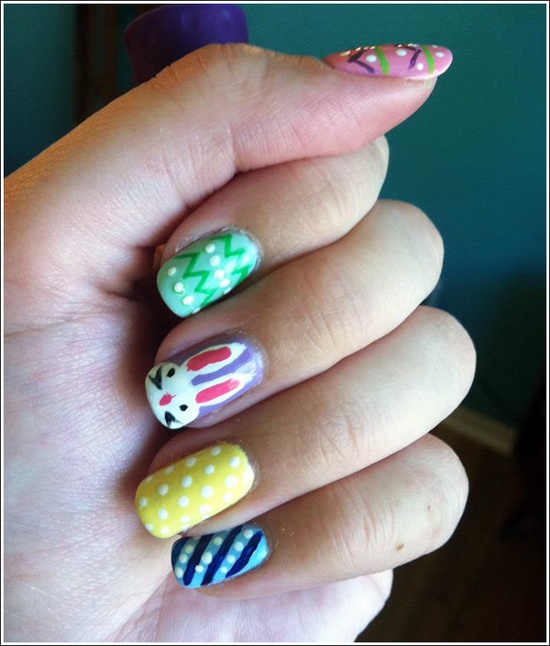
Easter Nail Art Ideas: Palettes, Motifs, and Wearable Accents
Spring nail art criteria for Easter—pastel bases, simplified motifs, accent nails vs full sets, and salon or at-home briefs that last through the week.
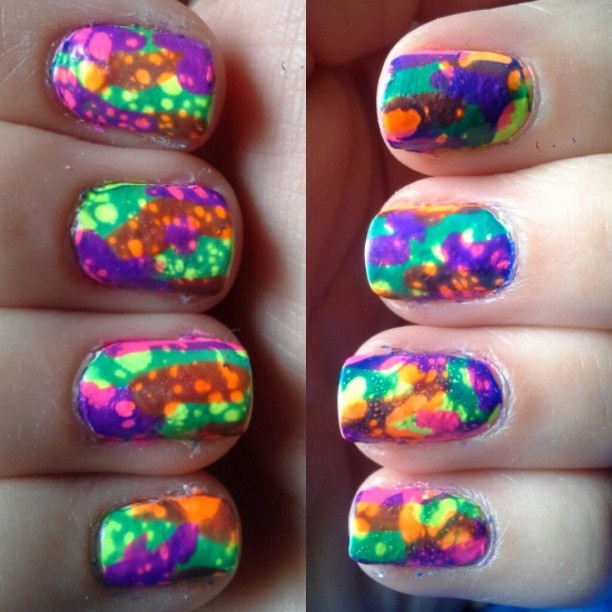
Neon Nails for Summer: Bright Colors, Wearable Looks, and Application Tips
How to wear neon manicures in warm weather—color families, white-base application, French tips and accents, plus longevity in sun and water.